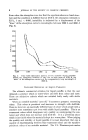
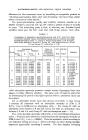
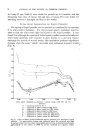
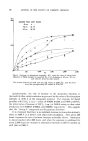
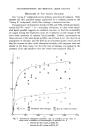
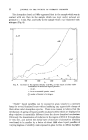
2 JOURNAL OF THE SOCIETY OF COSMETIC CHEMISTS Hydroaromatic molecules are more difficult to sulphonate than aromatic hydrocarbons, and they are also more difficult to remove. Even with modern methods of refining, these partly unsaturated hydrocarbons tend to remain in the oil when it has been treated to medicinal liquid paraffin quality. For these highly refined materials the British Pharmacopoeia Acid Test loses the significance which it had in earlier days, and its results bear not necessarily any direct relation to the amount of residual carbonisable bodies. A very sensitive method of assessing quantitatively the "impurities" left in medicinal liquid paraffin is based on its ultra-violet absorption spectrum. The near ultra-violet absorption spectrum of liquid paraffin shows sufficient structure to identify the chemical nature of the remaining impurities and to formulate a definite quality and stability criterion. In this latter respect the spectro- photometric method goes beyond the aspirations of the sulphuric acid test. Two groups ("A" and "B") of compounds can be isolated from medicinal liquid paraffin which fulfils the conditions laid down in the British Pharma- copoeia. The "Group A" compounds, which are alkylated symmetrical octahydrophenanthrenes, absorb radiation mainly in the region of 2710 A. The 3, transfer the absorbed energy to the "Group B" compounds, which are -a mixture of alkylated asymmetrical octahydrophenanthrenes, alkylated tetrahydrophenanthrene, and sulphonates. In this way the excitation of the "Group A" compounds triggers off a chemical reaction of the "Group B" compounds. •UALITY AND STABILITY OF LIQUID PARAFFIN Medicinal liquid paraffin must be water-white and free from odour and taste. A petroleum distillation cut of suitable viscosity may still contain some aromatic or hydroaromatic molecules even though it has been treated to tt•e extent of making it water-white. Sulphuric acid reacts with unsatur- ated hydrocarbons, and the amount of sulphonates formed when using given proportions of oil and acid is a measure of the concentration of unsaturated molecules in the oil, as long as the acid employed in the test does not react with any naphthene-paraffin molecules. This is the basis of the B.P. Acid Test, which stipulates that an acceptable liquid paraffin must not reach more discoloration than 2.5 Red, 6-5 Yellow on the Lovibond scale as a result of 10 minutes' reaction with a similar volume of 96 per cent sulphuric acid at boiling water temperature. It can be shown by spectrophotometric evidence that when in an oil the mnount of unsaturated hydrocarbons becomes very small, the acid applied for the B.P. test dehydrogenates some of the naphthenic molecules and then sulphonates them. This may lead to the rejection by the B.P. Acid Test of a material which by spectrophotometric evidence has a very high degree of purity.

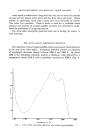
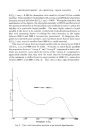
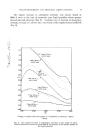
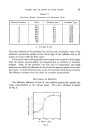
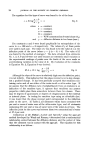
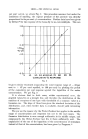
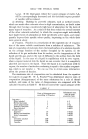
SPECTROPHOTOMETRY AND MEDICINAL LIQUID PARAFFIN Some liquid paraffins have a long shelf-life, they can be stored for periods of years and yet remain water-white and free from odour and taste. Others assume an unpleasant odour after a short time and eventually go yellow. This raises two questions. There is firstly a need for a yardstick which measures the stability of a liquid paraffin, and then it is desirable to under- stand the mechanism of its ageing reaction. The ultra-violet absorption spectrum helps one in finding the answer to both questions. THE ULTRA-VIOLET ABSORPTION SPECTRUM The spectrum of most liquid paraffins shows pronounced band structure in the near ultra-violet region. Absorption intensity plotted as a function of wavelength decreases steeply between 2300 /k and 2400 /k. At about 2490 A the absorption intensity reaches a minimum value followed by a maximum at about 2710 A, with a subsidiary maximum at 2780 A (Fig. 1). 005 004 003 002 2,a00 2,500 I I 2,600 2,700 2,800 WAVEL[NGTH IN ,•U i Fig. 1. Ultra-violet absorption spectrum of a stable liquid paraffin.
Purchased for the exclusive use of nofirst nolast (unknown)
From: SCC Media Library & Resource Center (library.scconline.org)