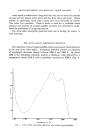
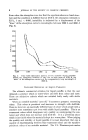
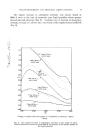
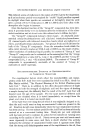
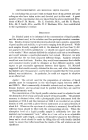
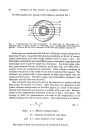
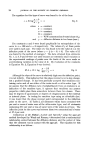
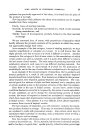
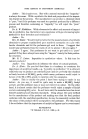
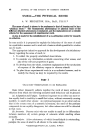
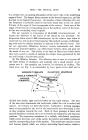
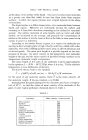
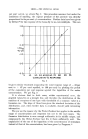
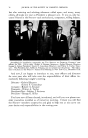
JOURNAL OF THE SOCIETY OF COSMETIC CHEMISTS Even when the absorption is so low that the spectrum shows no band struc- ture and the condition is fulfilled that at 2710 A the absorption intensity is E(1%, 1 cm.) 0.006, instability is indicated by a displacement of the "knee" of the absorption curve to wavelengths between 2500 A and 2650 A (Fig. 3). 0016 0014 0012 o • 0010' ,.- ,.,., 0.008' 0 006 0.002 200 2,400 2,6ffi [ 2,8• 3,•0, 32• Fig. 3. Ultra-violet absorption spectra of two unstable liquid paraffins. Whilst the absorption intensity is very low in both cases at 2700 J•, the "knee" of the absorption curves is at the comparatively long wavelength of 2600 A. DAYLIGHT EXPOSURE OF LIQUID PARAFFIN The ultimate commercial criterion for liquid paraffin is that the user demands a product which is water-white and free from odour and taste. These are subjective criteria which are satisfied fairly easily with stable materials. When an unstable material "goes off," it assumes a pungent, nauseating odour. This odour is persistent and increases in strength with shelf-life. There is, however, an essentially different type of odour which people with a sensitive nose sometimes spot even with stable liquid paraffins. This is an evanescent odour which disappears very quickly on unstoppering the con- tainer and which does not increase with shelf-life. It is a petroleum odour which is inevitable when the material is kept in a warm place. When judging the quality and stability of liquid paraffin it is most important that one is capable of discriminating between this evanescent odour and the repulsive persistent odour of an unstable material. The U.S. Pharmacopoeia makes

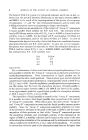
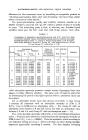
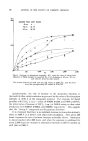
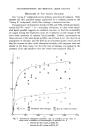
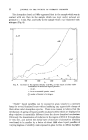
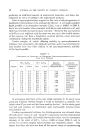
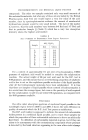
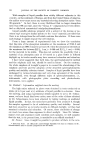
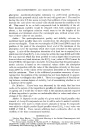
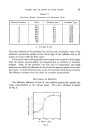
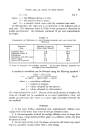
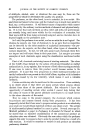
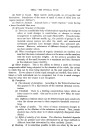
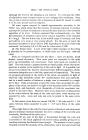
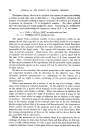
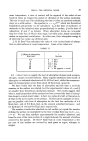
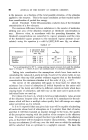
SPECTROPHOTOMETRY AND MEDICINAL LIQUID PARAFFIN 7 , allowance for the evanescent odour by describing an acceptable product as "odourless and tasteless when cold" and developing "not more than a faint . odour of petroleum when heated." The spectrophotometric quality predict whether a material will "go or years. The interesting point is paraffins which pass the B.P. Acid and stability criterion enables us to off" within a period of days or months that, in selecting, say, fourteen liquid Test with flying colours, their ultra- TABLE I Comparison of absorption spectrophotometric and B.P. Acid Test data of different stability classes of medicinal liquid paraffin (ordered according to their absorption ratios, i.e., Group I, those having ratios • 2.0, Group II, with ratios between 1.8 and 2-0, Group III, with ratios between 1.2 and 1.8, and Group IV, with ratios 1.2). Group -- I II III IV Absorption at Maximum Minimum :(i%, A E(lo/o, A qoband structure,E{1%,[• 0.0004 [ I cm.)[ 0'0099 I 2719 I 0'0037 I 2500 0'0492 I 2718 I 0'0209 I 2492 0.0133 I 2710 I 0.0060 I 2470 0.0557 2714 0'0253 2506 0'0411 I 2716 0.0189 2492 0'0640 I 2708 I 0.0327 2508 0'0363 I 2705 I 0.0188 2482 0.0769 I 2729 I 0.0422 I 2492 0.1003 I 2713 I 0.0550 I 2501 0.0726 I 2707 I 0'0478 I 2518 0.0897 I 2706 I 0.0601 I 2512 0.0704 2735 I 0.0595 / 2555 0.0954 I 2717 10.0809 I 2530 Ratio of absorption intensities at maximum and minimum 9 at 2700 2.68 2.35 2.22 2-20 2.18 1.96 1.93 1.82 1-82 1.52 1.49 1.18 1.18 B.P. Acid Test Re•d I Yellow Stability 2 years + 7 months q- 6 months q- 6 months q- 5 months q- 6 months q- 2 months 5 months {slight trace of odour) 10 days 2 months 21 days 14 days 33 days 31 days violet absorption spectrum presents a simple means of grouping them into classes of widely different stability. The same order of merit is arrived at by determining the period of daylight exposure before a persistent odour can be noticed. Let us arbitrarily decide upon four groups of stability so that Group I contains all materials with an absorption intensity at 2710 A of E(1%, 1 cm.)% 0.100 and an absorption ratio 2.0, Group II with an absorption ratio between 1.8 and 2.0, Group III with an absorption ratio between 1.2 and 1.8, and Group IV with an absorption ratio 1.2. Five of the fourteen materials with E(1%, 1 cm.)-• 0.100 had absorption ratios 2.0 and a sixth showed no band structure (its absorption intensity at 2700 A was E(1%, 1 cm.)= 0.00049). These six materials, which according to our definition belong to Group I, did not develop an odour during daylight exposures appreciably exceeding 5 months. The four samples belonging
Purchased for the exclusive use of nofirst nolast (unknown)
From: SCC Media Library & Resource Center (library.scconline.org)