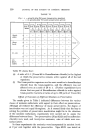
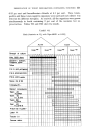
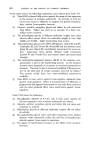
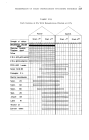
PRESERVATION OF TOILET PREPARATIONS CONTAINING NONIONICS 211 used, the pH is often between 5 and 7, and permits a more favourable growth environment. Now that so many toilet preparations are made to a pH that is nearly neutral or acid, more efficient preservatives are needed because bacteria and fungi can live and multiply more readily in nearly neutral conditions. The subject of this paper, however, is not the efficiency of preservatives at lower pH levels, as many function more effectively under acid conditions, but it deals with their effectiveness in the presence of nonionic materials. During the last few years there have been many references in the technical press concerning the effect of nonionics on germicides. In 1950, Bolle and Mirimanoff • reported that Tween 60, Tween 80, Span 20 and Arlacel 83 inactivated such germicides as Nipagin M, oxyquinolin sulphate and G-4, while Carbowax 1,500 did not. These assessments were made using fungi (penicillium and aspergillus) as the test organisms. Work along similar lines, again using fungi, was reported by de Navarre in 1956 and 1957.'•,• For many years nonionics have been used to stimulate growth in culture media, but little detailed work has been reported about the way in which they act on micro-organisms. It is known that because nonionics do not denature protein they do not inhibit the growth of micro-organisms (Glassman4). Dubos and Davies 5 have reported that Tween 80 encourages the growth of tubercle bacilli in culture media, and this they attribute to the surface activity of the nonionic. It is interesting to note that, for many years, tubercle bacilli, notoriously difficult to culture, have been grown successfully in egg yolk media. Egg yolk contains lecithin, which is a non- ionic surfactant. Engler 6 and Williams, et al.,7 have reported that nonionics stimulate the growth of certain micro-organisms. Several theories have been put forward concerning the physico-chemical mechanisms that might influence the inactivation of germicides by nonionics. Wurster and Rath 8 mention that complexes are formed between certain preservatives and Carbowaxes, while Arkins • states that organic preservatives are more soluble in the fatty part of certain compounds than in water and inactivation may be caused by this factor. Barr and Tice lø report that certain micro-organisms are capable of splitting the ester linkages of non- ionic surfactants of the fatty acid ester type, and have also commented on the failure of various phenolic preservatives to protect solutions of non- ionic surfactants from microbial attack. Higuschi and Lach" indicate that the hydrogen of the phenolic hydroxyl group in certain preservatives reacts with the basic oxygen in the ether group of polyethylene glycols, forming a complex. Hall and de Navarre" describe chromatographic evidence of the formation of complexes and indicate the possibility of hydrogen bonding. The activity of germicides is affected by several factors, for instance, proteins, both soluble and insoluble, have been known for many years to reduce their efficiency. Likewise, soap solutions markedly depress some

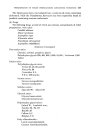
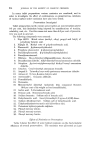
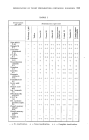
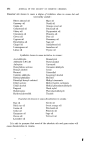
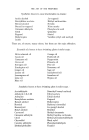
212 JOURNAL OF THE SOCIETY OF COSMETIC CHEMISTS germicides, while they boost the activity of others. Although the finding that nonionics depress the action of germicides has only come to light in recent years, experience of the inactivation of germicides, of proteias and soap solutions probably has some bearing on the phenomenon. Although soaps adversely affect some preservatives, their presence in toilet preparations did not create a problem in the past for the very good reason that soaps did not provide a suitable environment for the growth of micro-organisms. For this reason the task of the preservatives included in soap-based formulae was far easier than it will be when nonionic emulsifiers are used instead. EXPERIMENTAL Several classes of nonionic, both surface-active and non-surface-active, have been studied at concentrations ranging from between 2 and 6 per cent, as these levels are frequently used in toilet preparations. The preservatives or germicides were initially tested at the concentrations at which they have been used in the past, that is, between 0.1 and 0.5 per cent, depending on the type. Plan of the Experiments The experiments were designed to provide information on: (i) the virulence of the test culture (ii) the activity of the preservative against each micro-organism (iii) the effect of the nonionic on each micro-organism (iv) the activity of the preservative against each micro-organism when a nonionic or mixture of nonionics was also present. For tests involving bacteria, nutrient broth or nutrient agar were used as the medium. The test media were inoculated with six dilutions of each bacterial culture to ascertain the greatest number of bacteria against which each concentration of preservative was effective. When fungi were involved, the medium was potato dextrose agar. Organisms used in the Experiments (a) Bacteria Representative Gram-positive and Gram-negative bacteria were used, and organisms which were thought to be most likely to contaminate toilet preparations in general were selected. The Gram-positive bacteria were: Staphylococcus albus S tr ep tococcus .bovi s Bacillus subtills. The Gram-negative organisms were: Bacillus coli Proteus vulgaris Pseudomonas fluorescens
Purchased for the exclusive use of nofirst nolast (unknown)
From: SCC Media Library & Resource Center (library.scconline.org)