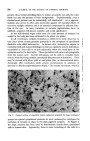
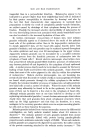
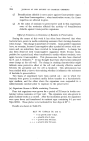
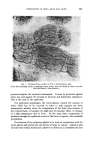
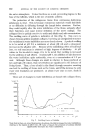
200 JOURNAL OF THE SOCIETY OF COSMETIC CHEMISTS permits these bottom-dwelling fishes to mimic accurately not only the color shade but also the pattern of their backgrounds. Experimentally, even a checkerboard pattern can be remarkably wall duplicated. • As a pigment, melanin also serves to offer some protection against the harmful effects of excessive sunlight radiation and is an essential component for efficient func- tion of the eye. In man, variations in melanin pigmentation have, in addition, acquired well-known cosmetic and social significance. In the full-blooded negro adult man the total amount of melanin by weight in the body has been estimated to be about one gram. • In all vertebrates, melanin formation is believed by most observers to take place about certain granules primarily in the cytoplasm of specializeinappear dendritic cells called melanocytes. In human skin, melanocytes routinely fixed and stained histologic sections as regularly spaced, individual, vacuolated or clear cells in or just adjacently below the basal layer of the epidermis and in the hair bulbs. These specialized cells arise embryologically from the neural crest. Several techniques can be used to visualize them clearly, with their long, slender, pseudopod-like processes or dendrites. They may be stained with silver, gold or methylene blue, or demonstrisofhisto-whichsolutionsintyrosinase, chemically after incubation under proper circumstances tyrosine or dihydroxyphenylalanine (dopa). 7 The enzyme : .... J• • _ •:: • ' r 4/1•,- ' ' -'•' '--' ' :• ß • ' ' • ' • ' - •' •- ' -" ':: :"• ' • , •.•.. . . . • ,• i• ' •' i•.•:.-- ...:•..,• . -: -• L• •---% •'.: •?-•: • . •' •:•,' ,,i*:!•.•':•..•. ' --,• ..... -'.•. ': •i• *..}:.s.•... •. • . '- '•'.-'... •,• - • •-:-- •,• •.• --: -•. • -.' ?:. :'• • -- '•:•q. --'.. .... - .-?'4• - .- •.' --.• -.•'--.- -,:-•-•-,' .. • '• :•. • •- -•,.: ...•:• - - -.•.• ." • ---.. •.,-? • - .: •. • .-:•. ,•:½ ,- . :•-• -- .•-- -- - •? ,?,s•- . - ... - "'•.•. -.- . -- ..• •-.• :/ - .• :: ........ -•,:•. -•...• .•,• :, t:-•F•.. -•• •:•' • ..- '.• -. •' '-'" i' ' * -•:• •'•[.' i:•:, "'•: ':: . .... '. ' '2 "•-•' --.':- • :. •.:•- :-• -•% • r • •d' •:" ::, • .:} • •.. -(.. ' . -' - .' : •..": •:.•' r• .-' cc • ...•. : • •- * • J' .. •-• . ..-•:• :• ..... -•.. •%•-•.. •. .:..:.•-•:• .•..'•.. .:-•.,-•..•, :'•.- .•..•:• ..• ...... g :-• -•:•. •,-:% .'-•:-i•.. •---•-. -.:"•- . .... •.•,• t• . .•?•. * • •5 .... . .• •'. . .: .:• • -. • . ....• . - . , •, • ..•.. •: • % -• •.•' • Fig. 2. Dermal surface of separated human epidermis prepared by dopa technique. ? present on special cytoplasmic granules in most melanocytes, catalyzes-the oxidation of tyrosine or dopa to the dark pigment melanin. In Figure 2 the dopa reaction has been used to demonstrate clearly these specialized cells in human skin. Apparently, there is more branching of the cells in a

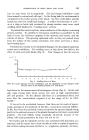
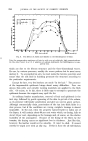
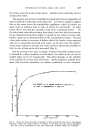
SKIN AND HAIR PIGMENTATION 201 tangential than in a perpendicular direction. Melanocytes appear to be hydrated to a greater degree than their neighboring basal cells as indicated by their greater susceptibility to destruction by freezing 8 and also by the fact that their characteristic clear appearance in routinely fixed preparations is chiefly the result of cytoplasmic pseudo-vacuole formation, an artifact caused by shrinkage of their cytoplasm during the process of fixation. Possibly the increased selective destructibility of melanocytes by the very short-lasting intense heat associated with atomic-bomb flash burns 9 can also be related to the increased hydration of these cells. In routine, microscopic cross-sections of human skin, most melanin granules ordinarily appear as if clustered above the nuclei of the palisade basal cells of the epidermis rather than in the dopa-positive melanocytes. In deeply pigmented skin, all the basal cells appear heavily laden with granules of melanin, and such granules may be scattered upward throughout the entire epidermis and may even fill macrophages in the upper corium. Apparently melanin granules can be inoculated by a so-called cytocrine secretory process from the dendritic processes of melanocytes into the cytoplasm of basal cells.•0 Recent electron microscopic observations show that actual bits of melanin-granule-filled dendritic processes of melanocytes may become pinched off and deposited in the cytoplasm of basal epidermal cells. A similar process clearly needs to be invoked to account for the heavy loading of hair shafts and feathers with melanin granules. Some observers claim that most of the active pigment in the skin lies within the cytoplasm of melanocytes. 7 Modern electron microscopists, too, are becoming less certain of just what lies inside or outside of cells as various systems of tubules are found which permeate through the cellular cytoplasm to the surface. Possibly the terminal dendritic processes of melanocytes actually penetrate into basal cells as such a system of tubules. Wherever most of the melanin granules may ultimately be found to lie in the epidermis, it is clear that some of them can be found in a free state in the cytoplasm of basal cells. Although melanin granules were at one time believed to develop as self- replicating mitochondrial particles, • recent electron microscopic observations clearly show that such granules form about cytoplasmic structures which make up the Golgi apparatus TM and that they are therefore, in a sense, analogous to the secretory granules which occur in enzyme-secreting glandu- lar cells such as those found in the pancreas. Melanin granules isolated from various mammalian sources by differential centrifugation are fairly uniform rounded bodies about 0.3 microns in diameter." The melanin polymer of such granules isolated from mouse melanomas is chemically linked with protein having pseudo-globulin properties and a minimum molecular weight of 20,000. When such melanin- protein granules are progressively digested by pancreatin, the sulfur content of the protein remaining attached to the melanin moiety increases. • This
Purchased for the exclusive use of nofirst nolast (unknown)
From: SCC Media Library & Resource Center (library.scconline.org)