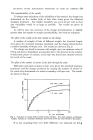
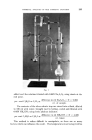
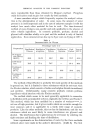
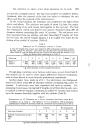
CHEMICAL ANALYSIS IN THE COSMETIC INDUSTRY 267 •nore reproducible than those obtained by Morgan's method. Propylene oxide derivatives tend to give low results by both methods. A more mundane subject which frequently requires the analyst's atten- tion is the determination of water. In some cases, the amount of water present is in itself important and in the case of unknown samples it tells the analyst how much other material he has to seek. The time-honoured •nethod of oven drying is non-specific and only applicable in the absence of other volatile ingredients. In cosmetic products, perfume, alcohol and glycerol will volatilize wholly or in part and the method is only of limited application. Even mineral oil can lose up to 5 per cent on drying at 105 ø C. Table 2 DETERMINATION OF WATER Percentage water w/w Preparation Distillation Distillation Distillation Distillation Karl Loss at Toluene n-heptane Xylene Benzene Fischer 105 ø C. W/O Emul- sion Theory 58-65% 55.8 55.75 58.2 59.6 70.7 61-9 -- O/W Emul- sion 78.5 77.4 78.7 -- 81.4 80-4 Toothpaste Theory 20.7% 20.5 20.6 21.8 19.9 30-3 23.2 Toothpaste Theory 21.4% 30.3 25.3 32-8 21-1 -- -- The method of Karl Fischer is probably the most specific of the methods in general use, but it is limited to those substances which do not react with the Fischer solution, which consists of iodine and sulphur dioxide in methanol and pyridine. Unfortunately, many cosmetic products contain perfume ingredients which interfere with the Fischer method. The method which seems to be most generally applicable to cosmetics is distillation with an immiscible solvent, originally due to Dean and Starke This method, which has been modified by a number of workers2•,22, TM, is not one of high precision, but it gives results which are accurate enough for most purposes and it is applicable to a fairly wide range of cosmetic products. Like the other methods, this too has its limitations, and the two substances which are most likely to cause interference are glycerol and alcohol. The interference due to glycerol can be overcome by selecting the right entrainer and limiting the time of distillation. Some experiments on the determination of water by the three methods outlined above were made in the author's laboratory. (Table oe.) The first

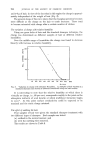
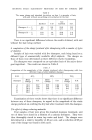
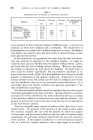
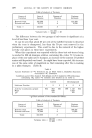
9•68 JOURNAL OF THE SOCIETY OF COSMETIC CHEMISTS Table $ •)ETERMINATION OF WATER IN GLYCEROL SOLUTION Per cent Per cent Per cent Per cent glycerin Method in distillate 1 hr. 2 hr. 3• hr. 1 hr. Calculation 71.75 Detn. of Glycerol 71.70 Distillation Toluene 71.3 73.3 76.3 1.2 ,, I-Ieptane 71-5 72.5 -- 3.0 ,, Xylene 75.6 76.0 -- 7.0 Benzene 71.9 -- -- 0.15 Ove•'drying 105 ø 72.3 series consisted of three cosmetic products of different types--a water-in-oil emulsion, an oil-in-water emulsion and a toothpaste. The second series of determinations were made with a solution of glycerol in water. Distillation with toluene was found to give the best results in almost all cases, except where glycerol was present. In the second series of experiments, the water from the Dean and Starke trap was analysed for glycerol by the periodate method. As might be expected, most glycerol distilled with the highest boiling solvent, xylene, and least with the lowest boiling solvent, benzene. Moreover, the longer the boiling is continued, the more glycerol is distilled. Obviously there is more scope for further experiments, but the tentative conclusion to be drawn from these results (Table 3) is that distillation with toluene for 45-60 minutes is satisfactory in the absence of glycerol. If glycerol is present, benzene should be used, but in that case the water is entrained more slowly and the distillation time has to be increased to about 90 minutes. It is noteworthy that even benzene entrains some glycerol, particularly if the time of distillation is prolonged. The Dean and Starke method cannot be employed directly with samples containing appreciable proportions of alcohol. Alcohol will also be entrained, and some of it will be dissolved in the water collected in the trap, according to the partition coefficient of alcohol between water and the entrainer. The amount of actual water in the lower layer from the trap can be determined by the Karl Fischer method. There are naturally many aspects of analysis other than those I have touched upon. The question of the accuracy of the results is often raised. The accuracy required will vary with the purpose for which the analysis is being made, and the accuracy attained will vary with the mixture under examination, the particular methods selected and the care and experience of the operator. If the purpose of analysis is to reveal the general composi- tion of a relatively complex unknown, then a high degree of accuracy is
Purchased for the exclusive use of nofirst nolast (unknown)
From: SCC Media Library & Resource Center (library.scconline.org)