J. Soc. Cosmetic Chemists, 17, 157-169 (1966) Surface Modifying Effects Lanolin Derivatives of LESTER I. CONRAD, B.S., HENRY F. MASO, B.S. and SHIRLEY A. DERAGON, B.S.* Presented March 1 O, 1965, A ustralian Society of Cosmetic Chemists, Sydney Synopsis--The influence of lanolin derivatives on the physical aspects of dispersions is dis- cussed. Particular reference is made to pigment wetting, rheological patterns in emulsion systems, solubilization, emulsification and spreading coefficients. Practical applications of these phenomena are illustrated by typical cosmetic formulations. INTRODUCTION This presentation is concerned primarily with the influence of lanolin derivatives on the physical aspects of dispersions. Lanolin is known to contain many chemical groups and configurations which are potentially surface-active. However, due to the manner in which these groups are chemically bound, they cannot achieve that potential. As a result, lanolin itself is relatively poor when considered from the view- point of surface activity. Fortunately, by means of chemical and phys- ical procedures lanolin can be converted into very useful functional deriv- atives of predictable surface activity. Whereas formerly lanolin was employed mostly for the marketing advantages of having "Contains Lanolin" on the label, derivatives of lanolin are now widely used for their ability to modify the surfaces of dispersed systems as well as for emollient effects on the skin. * American Cholesterol Products, Inc., Edison, N. J. 157

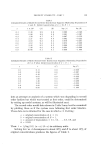
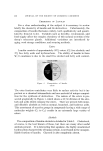
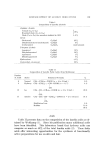
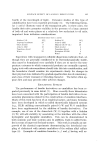
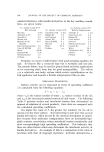
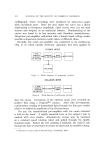
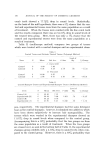
158 JOURNAL OF THE SOCIETY OF COSMETIC CHEMISTS CHEMISTRY OF LANOLIN For a clear understanding of the subject it is necessary to review briefly the chemistry of lanolin and its derivatives. Unfortunately, the composition of lanolin fluctuates widely, both qualitatively and quanti- tatively, from lot to lot. Variables such as heredity, environment, and food supply affect the complex chemistry of this natural secretion of the sheep's sebaceous glands. Additional variations are introduced by aging, wool storage conditions, and scouring methods. Esters Lanolin consists of approximately 95% esters, 4% free alcohols, and free fatty acids and hydrocarbons. The ability of lanolin to form W/O emulsions is due to the small free alcohol and fatty acid content. Figure 1. Composition of lanolin esters The ester fraction contributes very little to surface activity but is im- portant as a chemical intermediate and raw material of unique composi- tion for the synthesis of derivatives. The nature of the esters is pre- sented graphically in Figure 1, which shows a 50/50 division of the alco- hols and acids which compose the esters. There are present both mono- and dihydric alcohols as well as normal, branched, and hydroxy acids. This assortment of reactive groups in compounds having a wide range of molecular weights (Co to C3,) results in an extremely large variety of esters. Alcohols The composition of lanolin alcohols is detailed in Table I. Cholesterol, of course, is the best known of these, but there are many other useful alcohols present. It is interesting that squalene, the highly unsaturated hydrocarbon characteristic of human sebum, is not found in the unsapon- ifiable fraction of lanolin. Glycerol is also completely absent.
Purchased for the exclusive use of nofirst nolast (unknown)
From: SCC Media Library & Resource Center (library.scconline.org)