SURFACE EFFECT OF LANOLIN DERIVATIVES 161 to obtain the surface-active fraction, which can then be processed further to form multi-sterol extracts and absorption bases. Cholesterol is pro- duced from this fraction by crystallization. By ethoxylating cholesterol, a derivative with hydro-alcoholic solubility properties is obtained. Other lanolin alcohol products are prepared directly from the surface- active alcohol fraction by ethoxylation. Another process employed is esterification. Steps such as ethoxylation and acetylation are then car- ried out on esterified lanolin alcohols. g2uaternization has resulted in interesting experimental products with unusual substantivity when ap- plied to skin and hair. K•SULTS AND DISCUSSION Pigment Wetting The effect of lanolin derivatives on the wetting and dispersing of finely ground solids in various liquid vehicles has been explored exten- sively. Lanolin products differ considerably in their pigment wetting action, a number of them being outstanding in this regard. It was as- sumed that wetting and dispersing implied deflocculation or reduction of agglomerated particles to the primary particle state. Consideration was given to the role of the derivative in terms of its orientation to and ad- sorption on the particle surface. The hydrophilic-lipophilic contrast within the molecule and association tendencies of portions of the deriva- tive molecule were all regarded as important factors contributing to compatibility between the particle surface, the lanolin derivative, and the vehicle. Lanolin products probably also function by lubricating the particle surface and by displacing therefrom materials which might interfere with their adsorption onto the surface. Wetting is regarded as a significant interfacial phenomenon involved in dispersing solids. After preliminary studies, a simple technique was selected to evaluate the comparative wetting performance of lanolin derivatives. The method employed was adapted from the paint indus- try where it has been used extensively (4). Recent studies have also ap- plied this method to materials of interest in cosmetics (5). The test consists of adding increments of vehicle from a burette to powders containing lanolin derivatives as additives. The incorporation of each increment is accomplished manually, and the mixture is worked to a uniform consistency. When a cohesive mass is formed, an end point is read, referred to as the "Wet Point." Further vehicle additions soften the mixture until a point is reached at which it flows this volume is called the "Flow Point."

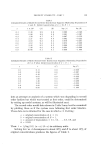
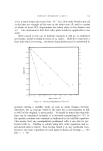
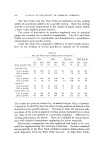
162 JOURNAL OF THE SOCIETY OF COSMETIC CHEMISTS The Wet Point and the Flow Point are indicative of the wetting ability of a particular additive for a specific system. Since the wetting activity is inversely proportional to the volume of liquid vehicle added, a lower value signifies greater activity. The ratios of derivatives to powders employed were in practical ranges for eventual use in finished formulations. The Wet and Flow Points were found to be reproducible and demonstrated a quantitative relationship in each specific system. Table III shows the comparative efficiency of three lanolin deriva- tives in the wetting of several powders in mineral oil (70 Saybolt). Table III Wet and Flow Points in Mineral Oil (70 Saybolt) TiO2 Tale Oxy Red D&C Red #9 Wet Flow Wet Flow Wet Flow Wet Flow Deriv./powder ratio Pt. Pt. Pt. Pt. Pt. Pt. Pt. Pt. Amerchol L-101 10% of powder 30 238 31 174 30 113 28 105 20% of powder 12 47 18 165 7 58 16 83 A cetulan lO% of powder 34 242 28 198 30 129 32 98 20% of powder 14 34 15 184 7.5 109 18 86 A merlate P 10% of powder 23 61 27 127 11 43 3,5 93 20% of powder 16 51 18 106 3 35 20 81 Control (Min. Oil) 10% of powder 44 258 33 259 38 124 33 108 20% of powder 36 249 23 247 26 112 23 96 The results are given in terms of cc. of mineral oil per 100 g. of powder. Controls at 10 and 20% show the effect of using mineral oil instead of the derivative in the powder mixture. The data in Table III represent only one phase of the work on pigment wetting and are included here to show the value of the test method as a screening technique. Differences in wetting performance are shown. These are validated by actual experi- ence with finished formulations employing the above materials. Microscopic examination was also employed and found to be very useful for supplementing Wet and Flow Point data. Systems examined microscopically at the Flow Point exhibited complete deflocculation and good dispersion when the Flow Point was low. At high Flow Points
Purchased for the exclusive use of nofirst nolast (unknown)
From: SCC Media Library & Resource Center (library.scconline.org)