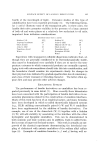
SURFACE EFFECT OF LANOLIN DERIVATIVES 165 fourth of the wavelength of light). Extensive studies of this type of solubilization have been reported previously (6). The following formu- las (c and d) illustrate some of the transparent gels in these cases, the lanolin derivative promotes stability in the presence of a large amount of both oil and water phases at a relatively low surfaetant to oil ratio, important from irritation considerations. Ernollient Clear Gels (c and d) Solulan C-24 15% Solulan 16 10% Isopropyl myristate 25 Atlas G-1292 10 Oleyl alcohol 5 Mineral oil (70 vis.) 20 Atlas G-1292 15 Oleyl alcohol 4 Propylene glycol 5 Propylene glycol 5 Water 35 Hostaphat KL340 4 Water 47 Experience with transparent colloidal dispersions indicates that, al- though they are generally considered to be thermodynamically stable, they must be formulated very carefully if they are to survive the tem- perature extremes to which commercial products are normally exposed. Aging tests with microemulsions should take this into consideration, and the formulator should examine his experiments closely for changes in their physical state indicated by gradual opacification, loss of consistency, and a loss of their resonant or vibrating character. The latter often ap- pears first and may precede other adverse changes. EMULSIFYING EFFECTS The performance of lanolin derivatives as emulsifiers has been re- ported previously in some detail (7). More recently these laboratories have been concerned with the participation of lanolin derivatives in as- sociation phenomena related to the construction of emulsion interfaces. Much of this work has been of an empirical nature, and many formulas have been developed in which so-called theoretically balanced systems (e.g., HLB) utilizing conventionally paired O/W and W/O emulsifiers have been supplemented by the addition of lanolin derivatives. For example, use of one of the Amerchols (W/O) together with a Solulan (O/W) will add stability by associating at the interface with the other hydrophilic and lipophilic emulsifiers. This can be demonstrated in both nonionic and ionic systems and, in addition, leads to added bene- fits in terms of improved feel and texture. This work is actually an out- growth of the classical experiments demonstrating the interfacial cou- pling of cholesterol with anionic emulsifiers of the sodium alkyl sulfate type (8). Examples of emulsion formulas (e, f, and f) having well as-

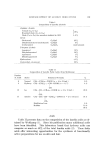
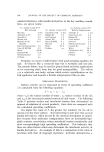
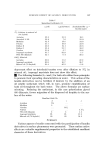
166 JOURNAL OF THE SOCIETY OF COSMETIC CHEMISTS sociated interfaces, with lanolin derivatives as the key auxiliary emulsi- tiers, are given below: (e) Anionic Lotion O/W (g) Nonionic Lotion O/W Hair Dressing (f) Cationic Lotion O/W Roll-On Antiperspirant Waxolan 5.0% Amerchol L-101 5.0% Amerlate P 1. $% Amerchol L-101 4.0 Solulan 98 2.0 Amerehol L-101 3.5 Amerlate P 3.0 Cetyl alcohol 1.0 Solulan 98 2.0 Stearic acid 2.0 Arlacel 165 4.0 Cetyl alcohol 2.0 Mineral oil (70 10.0 Emcol E-607S 0.1 Glycerol 2.0 Saybolt) Glycerol 2.0 Polyoxyl 40 stearate 4.0 Glyceryl monostearate 1.0 Water 85.9 Veegum HV 1.0 Ucon 50 HB 660 5.0 Perfume q.s. Water 38.0 Water 68.86 Chlorhydrol, 50% 36.0 Carbopol 941 0.15 Alcohol 10.0 Triethanolamine 1.0 Perfume q.s Perfume q.s. Formula e is a heavy bodied lotion with good grooming qualities for hair. It behaves like a cream-oil type but is washable and non-oily. The cationic lotion f may be used for general hand and body applications or for removing static from hair for good manageability. The roll-on g is a relatively non-tacky system which resists crystallization on the ball applicator and deposits a flexible antiperspirant film on skin. SPREADING PROPERTIES Surface activity can be expressed in terms of spreading coefficient (S) calculated from the following equation: S = ?B- 3•A- 3'A• where •B is the surface tension of water •A surface tension of the oil and %• is the interfacial tension between oil and water. The following Table V presents surface and interfacial tension data determined on mineral oil solutions of several products these data are compared with the calculated spreading coefficients. The higher the value of S, the greater the tendency for the oil to spread over the water surface. It is interesting to note here that several lanolin derivatives, which do not fit the classical description of emulsi- fiers because their molecular configurations show no hydrophilic-lipo- philic contrast, nevertheless reduce interfacial tension considerably and show correspondingly high spreading coefficients. This indicates that there are other factors which may determine the interfacial activity of lanolin derivatives. An example of this is a comparison of the value of Acetulan with that of isopropyl myristate: Acetulan demonstrates a
Purchased for the exclusive use of nofirst nolast (unknown)
From: SCC Media Library & Resource Center (library.scconline.org)