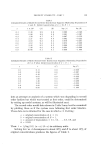
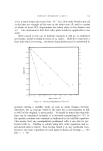
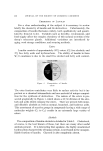
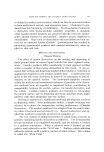
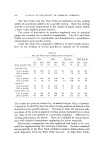
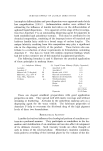
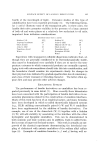
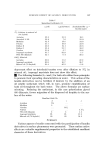
SURFACE EFFECT OF LANOLIN DERIVATIVES 163 incomplete defiocculation and poor dispersion were apparent under fairly low magnification (100X). Sedimentation studies were utilized for estimating the influence of lanolin derivatives on the deflocculation of agitated liquid dispersions. It is apparent at this stage of the investiga- tion that Amerlate P is an outstanding dispersing agent for pigments in both emulsified and anhydrous systems. This may be attributed to its chemical composition, consisting of the isopropyl esters of branched and hydroxy lanolin fatty acids in a broad range of carbon lengths. The unique lubricity resulting from this composition may play a significant role in the dispersing activity of the product. These factors also con- tribute to a reduction of shear requirements in formulations containing Amerlate P. The data in Table III confirm empirical findings which had led to the extensive use of this material in pigmented products. The following formulas (a and b) illustrate the practical application of these principles in makeup items: (a) Anhydrous Makeup Acetulan 6% Amcrlate P 3 Mineral oil (70 Saybolt) 36 Microwax, m.p. 170 ø F 15 Talc, TiO2, Pigments 40 Perfume q.s. (b ) Liquid Crearn Makeup (Highly Pigmented) Amerchol L-101 4.0 Amerlate P 3.0 Stearic acid, XXX 2.0 Glyceryl monostearate 1.0 Mineral oil (70 Saybolt) 15.0 Triethanolamine 0.8 Propylenc glycol 5.0 Water 69.2 Perfume q.s. 100.0 Parts Pigments 15-25 Parts These are elegant emollient preparations with good application properties on skin. They spread well with matte coverage and without streaking or leathering. Acetulan in the anhydrous makeup acts as a degreasing agent for the waxy vehicle. The lubricant properties of Amerlate P help to overcome the frictional drag of the high pigment levels of these two formulations. RHEOLOGICAL ACTIVITY Lanolin derivatives influence the rheological pattern of emulsion sys- tems in a profound manner. They participate as emulsifiers in the for- mation and stabilization of an emulsion and can also affect development of its ultimate viscosity. Such viscosity trends are often thought of only in terms of the external phase. Elementary emulsion considera- tions point to crowding of the external phase by the volume of the dis-

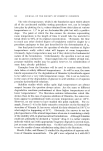
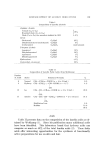
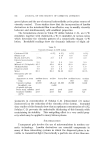
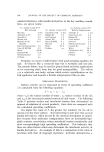
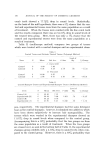
164 JOURNAL OF THE SOCIETY OF COSMETIC CHEMISTS persed phase and the use of external hydrocolloids as the prime sources of viscosity control. These studies show that the incorporation of lanolin derivatives in the interfacial film is an effective way to modify viscosity behavior and simultaneously add emollient properties. The formulations shown in Table IV utilize Solulan C-24, an O/W emulsifier, together with cholesterol, a W/O emulsifier, in various ratios which determine the viscosity pattern of a cosmetically elegant O/W lotion. Brookfield readings show the dramatic influence of slight ad- Table IV Viscosity Changes in O/W Lotion Cholesterol USP ... Solulan C-24 ... Stearic Acid XXX 3.0% Glyceryl monostearate (pure) 3.0 Mineral oil (70 Saybolt) 25.5 Triethanolmnine 1.0 Propylene glycol 4.0 Water 63.5 Observations after one month: Appearance at room temp. Viscosity readings Brookfield--cps. #3 spindle •3 rpm Room temp. stability good Incubator stability good (42øC) 0.5% 0.5% 0.5½-• 0.5% ß.. 0.15 0.3 0.75 3.0 3.0 3.0 3.0 3.0 3.0 3.0 3.0 25.0 25.0 25.0 25.0 1.0 1.0 1.0 1.0 4.0 4.0 4.0 4.0 63.5 63.35 63.2 62.75 medium heavy no flow heavy flow medium heavy medium flow flow flow 23,000 off-scale 39,000 26,000 9,400 (solid) good good good good good fair good fair justments in concentration of Solulan C-24 [ethoxylated (24 moles) cholesterol] on the reduction of the viscosity of the system. Extended time studies of this formula show that an optimum concentration of 0.3% Solulan C-24 prevents the undesirable thickening of this formula while maintaining its stability. This antigelling effect is a very useful prop- erty which may be applied to many lotion systems. SOLUBILIZATION Transparent gels involve the use of microemulsions in modern cos- metic technology. Lanolin derivatives are essential components in many of these interesting systems in which the dispersed phase is in- visible to transmitted light (theoretically a particle size of less than one-
Purchased for the exclusive use of nofirst nolast (unknown)
From: SCC Media Library & Resource Center (library.scconline.org)