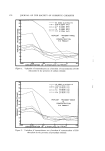
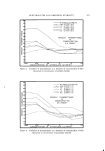
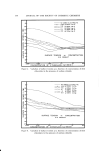
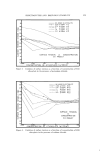
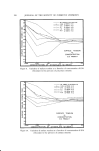
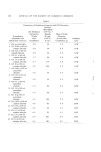
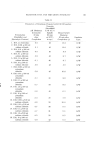
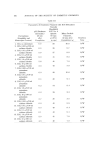
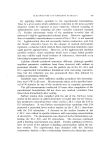
144 JOURNAL OF THE SOCIETY OF COSMETIC CHEMISTS living subjects difficult to evaluate. Admittedly, fairly good data can be obtained through large scale field testing of human subjects. How- ever, this is an expensive and time consuming procedure. Parke and Sperandio (5) published a photographic method of eval- uation which is too complicated for routine use in the laboratory Riegelman (6) reported that the absorption spectrum can vary with the solvent used. In the final form of the formulation, a common solvent for spectrophotometric testing may not be easy to find. Thus, the need for a simpler and reliable method for the evaluation of sunscreens would appear to be welcome. EXPERIMENTAL Materials and Equipment 1. Urbach's System: A mixture of 62 mg methyl yellow, 120 mg hexachlorocyclopentadiene, 10 mg dibenzylamine, and 447 g Aloe's wax paraplast* is prepared as [ollows: The wax is melted and the other ingredients are added. The melt is poured into Petri dishes and allowed to cool before use. These dishes should be kept away from direct light. Upon exposure of this system to uv light, a free halogen radical is liberated from hexachlorocyclo- pentadiene which then combines with hydrogen to form an acid. The pH indicator, methyl yellow, then responds to changes in the acidity by turning from yellow to red. Thus, the amount of color change (from yellow to red) is a measure of incidental ultraviolet radiant energy absorbed by the system (7). 2. Brass Plate: This plate is slightly shorter than the size of the Petri dish and is about 167 u thick. A circular hole is cut in the center, and eight more holes surround the central one (hole radius approxi- mately 6 mm). The outside holes are numbered from one through eight. 3. Westinghouse Fluorescent Sunlam pt: This 20-watt lamp has an approximate range of 2.q00 to 3500 A, with a peak at approximately 3100 A. Minimum energy output is 47 •w/cm 2 at 1 m. Erythema is produced by this lamp in 140 seconds, whereas average sun produces it in 762 seconds. 4. Beckman DB Spectrophotometer with Sargent Recorder: All spec- tral curves were obtained with this instrument. Concentration of each compound was 0.0015% in methanol. Red Veterinary Petrolatum was * Available from Aloe's Scientific Co., 1831 Olive St., St. Louis, Mo. t Westinghouse lamp number S.S.20.

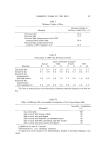
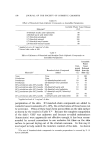
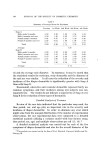
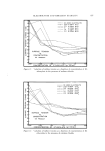
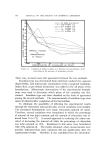
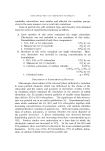
EVALUATION OF SUNSCREEN AGENTS 145 used at 0.015% because Veterinary Petrolatum is used per se for protec- tion, whereas 10% concentrations of other absorbers, like p-amino- benzoic acid, are commonly employed. Red Veterinary Petrolatum is not soluble in methanol therefore, the solution was made in chloroform. A curve for red veterinary petrolatum with vitamin B-2 could not be made because of the nonavailability of a common solvent. Results, the average of three readings at 2900, 3100, and 3300 A, appear in Table I. The results were calculated on the basis of the same solution strengths as those used in Urbach's system. 5. Polyethylene Glycol 1500 (Carbowax 1500'): This was found to be the best vehicle for all the sunscreen agents because, in itself, it does not absorb any uv radiant energy from the sunlamp. The prepared con- centrations of sunscreen agents were the same as those conventionally available on the market. Red Veterinary Petrolatum and Red Veteri- nary Fetrolatum with vitamin B-2 were not mixed or diluted with poly- ethylene glycol 1500. All the other sunscreen agents were prepared by thorough mixing with the melted polyethylene glycol 1500 at the indicated percentages. They were cooled to room temperature before testing. (a) 2-Ethyl hexyl salicylate 5% (b) 2-Ethoxy-p-methoxy cinnamate 1.5% (c) Homomenthyl salicylate 3% (d) Isobutyl-p-aminobenzoate 5% (e) p-Aminobenzoic acid 10% (f) 2-Hydroxy-4-methoxy benzophenone-5-sulfonic acid 10% Table I Average Absorption Values Between 2900-3300 A Agent Absorption a Rating ø 3.0 Fair Red Veterinary Petrolatum Red Veterinary Petrolatum with B-2 (No common solvent available) 2-Ethyl hexyl salicylate 2-Ethoxy-p-methoxy cinnamate Homomenthyl salicylate Isobutyl-p-aminobenzoate p-Aminobenzoic acid 2-Hydroxy-4-methoxy benzophenone-5-sulfonic acid 0.85 Poor 0.59 Poor 0.54 Poor 2.25 Fair 3.5 Good 4.5 Good Calculated on the basis of the percentage solution as used in the Urbach system. Assigned on the basis of light absorbed. * Trade •nark of Union Carbide Corp., 270 Park Ave., New York, N.Y. 10017.
Purchased for the exclusive use of nofirst nolast (unknown)
From: SCC Media Library & Resource Center (library.scconline.org)