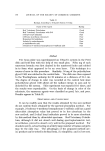
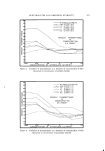
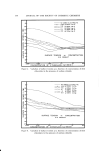
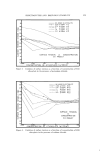
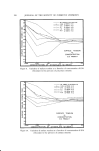
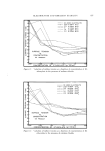
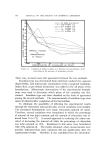
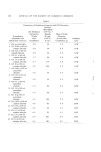
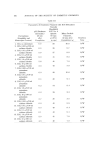
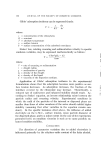
BACTERIOSTATIC SOAP 163 permitted to use a moderate amount of nonmedicated talcum powder. No other form of treatment or medication was administered. Clinical Evaluation The test period lasted 28 days. During this time the infants were examined once a week. An evaluation (score) was made each time of the following symptoms: Types of diaper dermatitis present (erythema, eczematoid dermatitis, scaly dermatitis, ulcerative dermatitis, vesicular dermatitis) severity of symptoms ranging from 0-7 (0--absent, 1- almost absent, 2--very mild, 3--mild, 4--moderate, 5--moderate to severe, 6--severe, 7--very severe) and total diameter of dermatitis (in inches). The results were recorded on individual standard test [orms. Evaluation of Results Clinical data of other investigators (1, 13) and examination of the results of this test indicated at once that sex and age play a significant role in the severity and incidence of diaper dermatitis. Both major subject groups were, therefore, subdivided into four subgroups classified as follows: Males (females) over (under) nine months. This age split was chosen because it divided the subjects into almost equal groups. A weekly average score was calculated for each of the resulting eight groups and for each type of diaper dermatitis under investigation. Difference Among Soaps The difference between the two soaps should be evaluated within the over-all framework of the experiment. The previous history of diaper dermatitis in the infants investigated in this study was used as a base line the changes in the weekly score--determined as previously de- scribed--was the variable. Table I lists the changes in the weekly average score of erythema--by far the most common symptom of diaper dermatitis. Comparison of the average previous score with the average weekly scores during the test period indicates that there is a drop of 2.30 (from 3.80 to 1.50) for the subjects using Soap A while there is a drop of only 1.38 (from 3.51 to 2.14) for the subjects using Soap B. The difference in these changes reflects the superiority of the bacteriostatic soap over the plain soap. Tables similar to the one discussed were prepared for scaly der- matiris, eczematoid dermatitis, ulcerative dermatitis, vesicular dermati-

164 JOURNAL OF THE SOCIETY OF COSMETIC CHEMISTS Table I Summary of Average Scores for Erythema Previous 1st Week 2nd Week 3rd Week 4th Week Soap A Male under 9 months 4.00 Male 9 months and over 4.30 Female under 9 months 3.64 Female 9 months and over 3.25 Total 3.80 Average: Soap B Male under 9 months 4.00 Male 9 months and over 2.92 Female under 9 months 3.75 Female 9 months and over 3.37 Total 3.51 O. 85 1.69 1.54 1.54 1.50 2.30 1.70 2.60 O. 55 1.27 1.09 2.36 O. 62 1.69 1.06 1.44 0.88 1.74 1.35 2 02 .f 1.50 1.22 2.89 2.22 3.22 1.31 2.38 2.69 2.69 1.50 2.50 1.90 2.30 1.00 2.25 2.00 2.37 1.26 2.50 2.20 2.64 Average: 2 •4 tis and the average rash diameter. In summary, it may be stated that the statistical results for erythema, scaly dermatitis and the diameter of the rash are very similar. In all cases the reduction of the severity and incidence of the diaper dermatitis is significantly greater with Soap A than with Soap B. Eczematoid, ulcerative and vesicular dermatitis represent fairly un- common symptoms, and their incidence among test subjects was con- sequently low. The results do not indicate a superiority of Soap A over Soap B in the reduction of these types of dermatitis. Detailed A nalysis of Variance Review of the raw data indicated that the particular soap used, the time period, sex, and age play an important role in the severity and incidence of diaper dermatitis. In order to eliminate any error which might arise from the unequal distribution of the number of experimental observations, the raw experimental data were subjected to a detailed statistical analysis utilizing a variance model with four factors (soap, time period, sex, age) and multiple observations per cell (15, 16).* A detailed statistical analysis was carried out for each of the five symptoms of diaper dermatitis and also for the overall diameter of the * This analysis was carried out by the firm of Peat, Marwick, Caywood, Schiller and Co., Chicago, Ill.
Purchased for the exclusive use of nofirst nolast (unknown)
From: SCC Media Library & Resource Center (library.scconline.org)