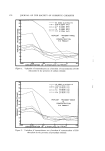
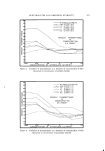
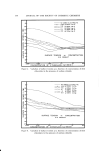
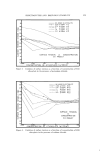
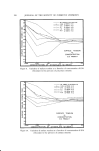
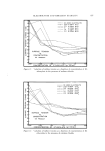
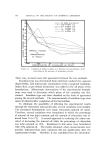
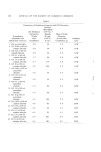
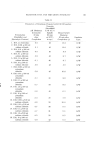
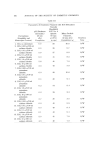
184 JOURNAL OF THE SOCIETY OF COSMETIC CHEMISTS number and the optimum quantity of added electrolyte which yields the lowest surface tension at the C.M.C. that is, the E5 product exhibits its lowest C.M.C. surface tension at 0.001 g/100 ml of electrolyte, the El0 at 0.1 g/100 ml, and the El5 formulation at 10.0 g/100 ml. Formulations containing sodium or potassium chloride in combination with the El0, El5, and E5 ethoxylates presented somewhat lower sur- face tensions at the C.M.C. at optimal (0.001 g/100 ml for the ES, 0.1 g/100 ml for the El0, and 10.0 g/100 ml for the El5) electrolyte concen- trations than those given by limiting quantities of calcium chloride. Relative to their C.M.C. surface tensions in the absence of included electrolyte, the El5 and El0 formulations exhibited greater reductions of surface tension than the E5 compositions after addition of optimum quantities of electrolyte (Figs. 5-13). In the absence of any electrolyte, C.M.C.s, determined by both dye and tensiometer methods, decrease with decreasing ethoxylate series number. In most cases, the inclusion of electrolyte was accompanied by decreases in the C.M.C. The decreases were directly related to the quantity of electrolyte. Exceptions were noted at 10% electrolyte when the dye method was used it is postulated that inclusion of 10% electrolyte may have interfered with the validity of the results obtained by this procedure (Figs. 1-4). It is also suggested, through correlation of decreases in C.M.C. sur- face tension, that specific quantities of electrolyte included in the presented experimental emulsions containing the ES, El5, and El0 ethoxylates cause increased interfacial coverage by the emulsifier through interactions favoring a decrease in the area occupied by the individual ethoxylate molecule. The ethoxylates used in the experimental formulations function by tightly binding water to the surface of the dispersed or oil phase (9). Coalescence of the dispersed oil droplets would occur if this water of hydration is displaced and if the emulsifier is desorbed into the internal phase. This mechanism is postulated on the premise that steric hindrance would prevent the desorption of emulsifier into the con- tinuous or water phase. Ethoxylate desorption and ultimate particle coalescence are retarded by the presence of an energy barrier which depends upon the number and type of hydrated groups on each molecule of the emulsifying agent and on the fraction of the interface covered (.•)). The greater the number of hydrated groups the greater is the energy barrier to displacement of water of hydration and ethoxylate desorption.

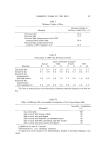
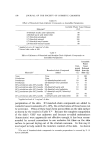
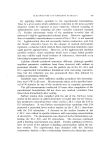
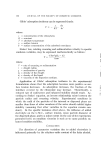
ELECTROLYTES AND EMULSION STABILITY 185 For optimum emulsion stability, it is essential that the ethylene oxide groups on the cetyl/stearyl alcohol not only hydrate with water mole- cules but occupy the greatest possible fraction of the emulsion inter- face. Therefore, the emulsifier should not only undergo maximum interfacial adsorption (thereby occupying the greatest fraction of the emulsion interface) but form a coherent desorption-resistant film. Since the ethoxylate will reduce surface tension, adsorption will occur, as postulated in Gibbs' adsorption equation (7). Adsorption does not in- crease infinitely in direct proportion to the quantity of ethylene oxide on the ethoxylate molecule. Adsorption and, consequently, interfacial coverage increase to a finite maximum with increasing ethylene oxide content. Increases beyond a limiting optimal quantity will, however, result in decreasing adsorption. A conflict arises between resistance to desorption, which depends only on number and type of hydrated groups, and interfacial adsorption, which depends on an optimal hydration energy. The addition of electrolyte to the experimental formulations will inhibit hydration of ethylene oxide groups. The presence of ions, released by the addition of electrolyte, will cause water molecules to be drawn toward themselves and prevent them from participating in hydro- gen bonding with other neighboring water molecules (10). Because of its interaction with the water molecules, the electrolyte reduces the energy of hydration and solubility of the ethoxylates. Even though hydration energy and solubility are decreased by added electrolyte, the experimental emulsions with the El5, El0, and E5 ethoxylates and with specific quantities of sodium, potassium, or calcium chlorides may show enhanced emulsion stability because of the nature of C.M.C. surface tension and particle size variations created by the included electrolyte. As mentioned earlier, surface tension data indicated reduced C.M.C.s and, consequently, increased ethoxylate adsorption in those formulations containing the El5, El0, and E5 ethoxylates in the presence of optimal quantities of electrolyte. Also, particle size variations (due to in- clusion of specific electrolyte concentrations) suggest decreased cream- ing velocities on the basis of Stokes' equation. Further clarification of the experimental results can be obtained by mathematical justification of the enhanced stability observed in experi- mental formulations containing electrolyte in conjunction with the El5, El0, and E5 ethoxylates (Tables I-III).
Purchased for the exclusive use of nofirst nolast (unknown)
From: SCC Media Library & Resource Center (library.scconline.org)