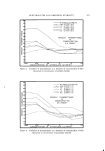
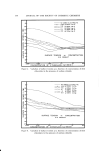
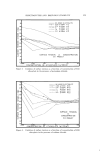
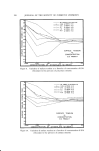
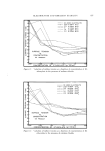
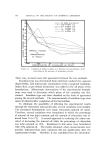
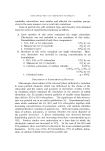
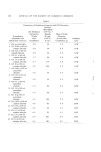
MICROBIOLOGY IN COSMETIC TESTING 197 The basic titration technique employed successfully on the hair con- ditioning lotion has been applied successfully to the development of preservative systems for a wide variety of cosmetic products. Included in these studies have been a variety of both o/w and w/o emulsions as well as dispersions and solutions. A broad spectrum of bacteria and fungi has been utilized in these evaluations of preservative systems in test products. In addition to Ps. aeruginosa, initial screening evaluations of test preservative systems utilize representatives of the gram positive cocci, gram positive rods, and molds. If contamination has been a problem previously with a product similar to the one under study, pure cultures of these contaminants are also employed in the screening program. Thus, a typical screening study might include a Pseudomonad (Ps. aeruginosa), an Aspergillus mold (Aspergillus niger), a Bacillus (Bacillus circulans), a Micrococcus (Micrococcus pyogenes v. aureus), and any organisms isolated from products similar to the one under test. The three most effective preservative systems, judged by the results of the screening tests, are then subjected to more extensive inoculation studies. During the extensive testing phase, organisms such as Candida albicans, Cephalosporiurn sp., Corynebacterium pseudodiphthericum, Es- cherichia coli, Fusarium oxysporum, Penicillium sp., and Streptococcus faecalis are utilized. The preferred preservative system is selected not only on the basis of its antimicrobial efficacy but on its product compatibility and medical acceptability as well. SUMMARY As a protection to both the cosmetic products and the cosmetic users, adequate microbiological controls are an important part of a cosmetic testing program. Contamination of the deionized water utilized in production can be minimized by ultraviolet radiation. UV treatment of the water accom- panied by periodic chemical decontamination of the equipment can hold counts on stored water to under 100 mmrobes/ml. Residual microorganisms finding their way into the finished cosmetic products are controlled through the development of effective preserva- tive systems. A titration technique has been developed to measure the antimicrobial activity of preservative systems in products. This tech- nique employs varying dosages of test microbes. The results indicate

198 JOURNAL OF THE SOCIETY OF COSMETIC CHEMISTS that preservative systems inactivating high dosages of test microbes are adequate under production conditions. ACKNOWLEDGMENT The author gratefully acknowledges the assistance of the following co-workers in the preparation of this paper: Mr. Aaron Efron, Chem- ical Engineer Mr. Carl Fraction, Microbiologist and Miss Barbara Warncoke, Secretary. (Received September 20, 1966) REFERENCES (1) Wedderburn, D. L., Hygiene in manufacturing plant and its effect on the preservation of emulsions, J. Soc. Cosmetic Chemists, 16,395-403 (June, 1965). (2) Foster, E. M., et al., Dairy Microbiology, Prentice-Hall, Inc., New York, 1957, pp. 97. (3) Hollaender, A., Radiation Biology, Vol. II, McGraw-Hill Book Company, New York, 1955, pp. 55. (4) Luckiesh, M., Germicidal, Erythemal and Infra-red Energy, D. Van Nostrand Co., New York, 1946. (5) Koller, L. R., Ultraviolet Radiation, 2nd Edition, John Wiley and Sons, Inc., New York, 1965, pp. 236-256. (6) Cruickshank, O. A., and Braithwaite, D. O., Sterilization of cation exchange resins, sulfonated phenol formaldehyde type, Ind. Eng. Chem., 41,472 (1949).
Purchased for the exclusive use of nofirst nolast (unknown)
From: SCC Media Library & Resource Center (library.scconline.org)