J. Soc. Cosmetic Chemists, 18, 199-203 (Mar. 4, 1967) Techniques for Evaluating Dermal Irritation ANNE WOLVEN, B.S., and IRVING LEVENSTEIN, Ph.D.* Presented May 10, 1,966, New York City Synopsis--The use of Sulphan Blue (sold as Alphazurinine 2 G) is an aid in visualizing the response of rabbiCs skin to mild irritants. In as short a period as one hour skin changes may be observed. Sulphan Blue can also be used as an aid in the visualization of those materials which induce photosensitivity in the guinea pig. INTRODUCTION In developing a preparation to be applied to the skin the cosmetic manufacturer must take into consideration the factors of public ac- ceptance and safety. In most cases the elegance of the finished product is the deciding influence in its promotion. The possibility of any ir- ritating effects that this product may have on the skin, either because of its final composition or because of one of its many components, is of equal importance. Since the use of these products is widespread and the usage directions are very general, it is of great importance that the introduction of a new preparation shall produce no irritation even in one individual in ten thousand. In order to check the innocuoushess of a new preparation animal test methods are utilized in the laboratory. Patch testing techniques employ the rabbit or guinea pig as the animal of choice. The time of application of the test samples is purposely lengthened to magnify the extent of reaction that may occur. * Lebereo Laboratories, 123 Hawthorne Street, Roselle Park s N.J. 0_7204• 199

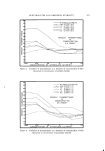
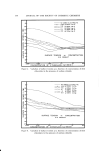
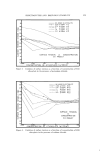
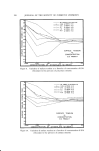
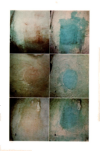
200 JOURNAL OF THE SOCIETY OF COSMETIC CHEMISTS The present animal test methods available to most laboratories have proven useful in eliminating those ingredients and products that have been found to be moderate to severe irritants. Those preparations which may produce only a very slight irritation, in an occasional animal, or to such a slight degree that it may be overlooked, must be evaluated by some method which shows greater sensitivity than the methods now available. The most important criterion is to be able to predict, from laboratory observations, the low order of sensitivity that may occur in the general public. The skin of the rabbit responds to the application of irritants through changes in its blood supply at the site of treatment. These responses are characterized by erythema, which involves vasodilation at the site of application, edema, which is an excessive accumulation of fluid in the tissue spaces, and necrosis, which is an actual damage of the cellular structure of the skin if the insult is sufficiently strong or pro- longed. The determination of the mildest form of erythema, oftentimes very difficult to evaluate objectively, is an important observation. Several methods have been reported in the literature which were used to increase the sensitivity of the erythema response. The basis of this increased reaction is the injection of a substance which permits greater visualization of the site and therefore magnifies the reaction obtained. This response is dependent upon substances, such as vital dyes, collecting in areas where vasodilation has occurred. Tainter et al. (1) and Hoppe et al. (2) indicated many years ago that Trypan Blue would be effective in this respect, and recently Finkel- stein et al. (3) have also used this material. Other dyes that have been used are Evans Blue, Kiton Green, and Pontamine Sky Blue. Most recently Brown and Clarke (4) have shown that Sulphan Blue is a dye which could be used as an aid in the visual assessment of mild erythema. In this laboratory a 6% solution of Sulphan Blue (sold as Alphazurinine 2 G by National Aniline Div. of Allied Chemical Co.) was prepared in sterile, distilled water and injected intravenously at a dose level of 1 ml per rabbit. Sulphan ue Blhas the distinct advantage of coloring the skin within minutes after it is injected and completely disappearing from the skin area within four hours after injection. METHODS AND RESULTS The patch test is performed by first removing the hair from the back of the rabbit with an electric clipper. The test material is applied to a 7,,.5 X 2.5 cm Webril patch (The Kendall Co.), which is in turn placed
Purchased for the exclusive use of nofirst nolast (unknown)
From: SCC Media Library & Resource Center (library.scconline.org)