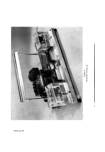
390 JOURNAL OF THE SOCIETY OF COSMETIC CHEMISTS wearing surface, many workers have preferred to measure dimensional changes, either directly with the aid of a micrometer or by contour measurement. For example, the examination of a dentine/enamel junction profile can give a quick assessment of dentine wear if one assumes that the enamel wear is negligible by comparison. Any test of abrasiveness should be made on human dental tissue in view of possible chemical interaction between the testpiece and the dentifrice. Also a brushing action should be employed to reproduce those changes in dentifrice concentration normally associated with oral tooth cleansing.The ideal measurement technique avoids the problem of water absorption, but is sufficiently sensitive for a test to be completed after a short period of brushing the natural surface of an extracted tooth. A high wear sensitivity is particularly important as it permits an accurate comparison of two dentifrices to be made without altering the surface geometry of the speci- men. This approach is nearly always more desirable than the employment of an accelerated test. A radiotracer technique appears specially attractive in studying the wear of dental tissues, since phosphorus is available as one of the elements of hydroxyapatite (5). The radionuclide P 32 is a high energy [• emitter having a half life of 14.3 days, whilst its large neutron cross-section enables one to obtain a convenient level of radioactivity after a few hours irradiation in the reactor. A specific activity of about 1 millicurie per gram (mCi/g) of tissue can be obtained for instance after five hours' irradiation in a neutron flux of 1012 neutrons/cm2/s. Using a mica end-window Geiger-Miiller counter for which the background estimated activity of a dried P 32 source is 10-4 gCi, it is possible to determine 10-? g of worn dental tissue. In the case of dentine, this is approximately the amount worn away by one stroke of a brush loaded with a conventional dentifrice. The wear experiments described in this paper have employed this radio- tracer technique in conjunction with a laboratory test rig that closely simulates an oral brushing action. To solve specific problems in the accurate measurement of dentifrice abrasiveness the investigation was divided into two parts: (i) A study of the relationships that exist between tissue wear and the hardness of the abrasive, and (ii) the effect of changes in dentifrice concentration on the wear rate produced by brushing. An understanding of (i) is essential if a standard test matehal is to be chosen, whilst a knowledge of (ii) will assist in the selection of test con- ditions for standardizing purposes.

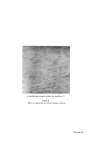
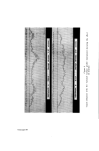
Facing page 391
Purchased for the exclusive use of nofirst nolast (unknown)
From: SCC Media Library & Resource Center (library.scconline.org)