MEASUREMENT AND INTERPRETATION OF DENTIFRICE ABRASIVENESS 393 are used in making up the slurries. Corrections for the decay in [• activity of the source may be necessary if a long time elapses between the measure- ments of different samples. The dried samples are rarely active enough to give rise to any health hazard, but the irradiated tooth specimens should be handled in accordance with the approved recommendations for a high energy • source of 1 or more mCi activity. Satisfactory shielding is obtained with 1 cm of water or Perspex, whilst tongs of at least 25 cm length and rubber gloves are recom- mended for handling the irradiated samples. Perspex goggles should be used to protect the eyes. By employing a water-moderated reactor, such as exists at the Scottish Research Reactor Centre, East Kilbride, for the specimen irradiation, it is possible to irradiate the specimens at temperatures below that of the human body and to keep them immersed in water for the whole irradiation period. Under such conditions of irradiation and low neutron dose, major changes in the physical properties of a tissue can be avoided. In view of the fact that human dentine and enamel contain different proportions of hydroxyapatite, the specific activity for a given radiation dose will not be the same for the two tissues. For comparative measure- ments on the same tissue this is unimportant, but for experiments com- paring the wear behaviour of different tissues any difference in specific activity must be allowed for. The ratio of specific activities for dentine and enamel is about 1:2, but it is usually desirable to include small fragments of the actual tissues with the main specimens so that the ratio can be accur- ately determined. The size of these fragments must be kept very small if the [• particle absorption error is to be minimized. A mass of less than 0.5 mg is recommended. RELATIONSHIP BETWEEN ABRASIVE WEAR RESISTANCE OF A DENTAL TISSUE AND ITS HARDNESS The technical problem of cleaning and polishing a surface by mechanical means presents many difficulties if it is composed of a number of elements of varying hardness. Thus the abrasives incorporated into dentifrices must assist not only in removing the relatively soft bacterial plaque and any other pellicle present, but also assist in repolishing the tooth enamel together with any cement or dentine exposed at the cervical margin. The most efficient manner of achieving the required cleansing action

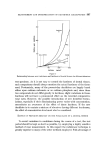
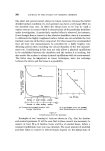
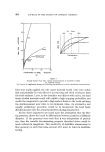
394 JOURNAL OF THE SOCIETY OF COSMETIC CHEMISTS without causinõ harm to the main dental tissues has yet to be established. Unfortunately many of the published clinical trials (7) have employed dentifrices formulated from abrasives of very similar hardness and it has not been possible to examine the siõnificance of the discriminatinõ power of the dentifrice to tissues of different hardness. Thus it is not known whether a very hard abrasive compound which is likely to show a small wear rate variation with tissue hardness, or a softer compound which will accentuate the wear of the softer reõions in the surface, should be employed. It miõht be argued that the overlyinõ plaque and perhaps the acquired staininõ pellicle are relatively soft compared to enamel and therefore a soft, hiõhly discriminating dentifrice is required but if the surface films and the action of food and drink cause some superficial damaõe to the enamel, then it might be preferable to use a harder less discriminatinõ dentifrice to repolish the surface without causinõ excessive wear to the softer tissues. Present- day dentifrices tend towards the first of these formulations and whilst this invariably leads to low enamel wear rates, one miõht ask if it is the correct formulation to use if there is any cervical exposure of dentine. Althouõh there are a few isolated references in the literature to the dentine/enamel wear ratio, no serious attempt has been made to study it in a systematic manner. This is larõely because of the dif•culty in measurinõ enamel wear accurately. However, the abrasive wear properties of metals and certain ionic and covalent solids, abraded with very hard compounds, are such that simple proportional relationships are found to exist between the wear resistance (I/wear volume) and hardness (8). Under these circum- stances the coef•cient of proportionality varies from one class of material to another. Maior deviations from these simple relationships naturally occur when- ever the abrasive compound has a hardness comparable to that of the abraded solid and, in these situations, the wear-resistance/hardness plots curve sharply upwards as the hardness of the solid approaches that of the abrasive. Unfortunately, despite its technical importance, the exact form of the characteristic so obtained has never been studied in õrear detail. Although it has never been investiõated, it is probable that dental tissues show similar wear/hardness characteristics to metals and other solids. The very high dentine/enamel wear ratio reported in the literature for many proprietary dentifrices, is almost certainly due to a stronõly curving wear resistance/hardness characteristic, arisinõ from a limited abrasive hardness. If dental tissues fall into the same cateõory as the other solids, then the use of a very hard abrasive compound in a dentifrice should
Purchased for the exclusive use of nofirst nolast (unknown)
From: SCC Media Library & Resource Center (library.scconline.org)