J. Soc. Cosmetic Chemists 20 239-252 (1969) ¸ 1969 Society of Cosmetic Chemists of Great Britain Experimental studies on the influence of vehicles on percutaneous absorption H. BAKER* Presented at the symposium on "Skin", organised by the Society of Cosmetic Chemists of Great Britain, at Eastbourne, Sussex, on 20th November $yn0p$i$--A number of commonly used pharmaceutical vehicles have been ranked in terms of their "occlusion" potential on the skin surface. Occlusivity was deduced by measuring the suppression of transepidermal water diffusion on skin rendered experimentally anhidrotic. The same hygrometric technique was used to study the intensity and duration of barrier suppression induced by a number of vehicles advocated as steroid solvents including dimethyl- sulphoxide, dimethylacetamide, tetrahydrofurfuryl alcohol and propylene glycol. In assessing the mode of action of any vehicle its action on the corneous barrier must be considered. INTRODUCTION Pharmaceutical vehicles may influence the rate of penetration through skin of therapeutic substances incorporated in them in a number of different ways. This communication will consider two such mechanisms: 1. Surface occlusion leading to temporarily increased corneous hydra- tion. 2. Direct physico-chemical effect of the vehicle on the stratum corneum. Preliminary experiments will be discussed in which the relative poten- tials of a number of chemical substances, used as or incorporated in vehicles were assessed in regard to these two modes of action. These experiments were carried out in vivo on normal human skin. *Institute of Dermatology, St. John's Hospital for Diseases of the Skin, London, E.9. 239

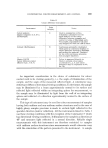
240 JOURNAL OF THE SOCIETY OF COSMETIC CHEMISTS OCCLUSIVITY OF TOPICAL VEHICLES The following preparations were assessed for occlusive potential by quantitively measuring their ability to suppress transepidermal water loss. All are used in clinical dermatological practice. 1. Ung. emulsificans B.P. 2. Anhydrous lanolin. 3. Ung. alc. lanae. 4. Soft white paraffin. 5. Soft white paraffin q- 5% propylene glycol. 6. Compound zinc paste N.F. 7. Polyethylene glycol 1500. Transepidermal water loss (TEWL) was measured in adult hospital patients on clinically normal flexor forearm skin which had been rendered anhidrotic by the previous application of poldine methosulphate (1). TEWL was measured by resistance hygrometry using methods previously described (2). After the TEWL and stratum corneum surface temperature had been measured and shown to be constant under resting laboratory conditions, the vehicle under test was applied liberally in a therapeutic manner, left for 15 min and then scraped off the stretched surface with the flat side of a wooden spatula in a standardised manner so as to leave a film on the surface. Water loss and surface temperature measurements were then repeated over the treated area. Similar experiments were performed on diseased forearm skin which was erythrodermic (eczematous) and where TEWL was greatly increased. Table I. Occlusivity of vehicles ranked in terms of degree of suppression of transepidermal water diffusion. No. of Complete Partial No Vehicle experiments suppression suppression suppression Soft white paraffin 14 9 5 0 Soft white paraffin q- 5 •o propylene glycol 5 3 1 1 Ung. emulsificans BP 9 0 4 5 Compound zinc paste 7 0 5 2 Anhydrous lanolin 4 0 0 4 Ung. ale. lanae 11 0 0 11 Polyethylene glycol 1500 3 0 0 3 In Table I the results of the applications on TEWL are expressed as "complete suppression" (defined as reduction of the normal TEWL to less than 0.06 mg cm-2 h-1 and the abnormal TEWL to less than 25% of its
Purchased for the exclusive use of nofirst nolast (unknown)
From: SCC Media Library & Resource Center (library.scconline.org)