EXPERIMENTAL STUDIES ON PERCUTANEOUS ABSORPTION 249 sisrance" is physically preferred. Quantitatively the "occlusivity" is perhaps repre- sented by the increase of the barrier quality as proposed in Table II. THE LECTURER: We did make some calculations on the thickness of these layers and in the case of soft white paraffin I estimated the layer thickness as about 0.05 ram. The reason why the results are not expressed in relation to a standard thickness of a vehicle is because although this may be desirable from the point of view of the physicist, in practice the thickness of a layer applied therapeutically is going to depend upon the nature of that material, its density and viscosity, and one wants to get a comparison of occlusive potentials as they would actually be in clinical circum- stances. With regard to occlusivity versus resistance, there is no doubt that your measurement of resistance is more precise from the physical-chemical point of view the reason that occlusivity was used is that this parameter--as I have defined it---is related to the amount of water diffusing across the stratum corneum. If transepider- mal water diffusion were negligible, it would not matter how high the resistance of a vehicle layer applied would be, this would not result in any significant hydration of the stratum corneum and, therefore, would not result in any increased percutaneous absorption of the penerrant. From the biological point of view, the thing that matters is the combination of the resistance with the transepidermal water loss and the result of these two factors on the hydration of the stratum corneum itself. MR. J. •,V. HADGRAFI: I was very interested in your results with tetrahydro~ furfuryl alcohol, dimethylacetamide and propylene glycol, and I wondered whether you had in fact done similar experiments with different concentrations of these solvents, since if it is an effect of the solvent on the area function of the skin, one might expect that it would be related to concentration. THE LEClURER: I think it is related to concentration you will remember that these experiments were done on the normal forearm skin of humans these in fact were patients who had conditions of various sorts elsewhere and who were acting as volun- teers. If one uses higher concentrations you may or do get into the realm of primary irritation reactions on the viable epidermis and the dermis therefore you are liable to produce a reaction which is intolerable to the patient, or one which is not fair to inflict on the volunteer. We have carried out some experiments with lower concen- trations, with 15% THFA, for instance, and lower concentrations of DMA, and found slight diminishing. 15% THFA, for instance, did not have any significant effect on the transepidermal barrier. With DMSO and DMA there is the problem of the hydration of the DMSO molecule itself and one has to maintain the concentration of DMA in relation to the amount of water in the system, otherwise one effectively has no material present. MR. N.J. VAN ABBg: Would you like to comment on the clinical significance of doing the measurements of occlusivity under conditions of suppressing sweating? Surely these bases would not normally be used in practice under such conditions, and it would be interesting to have your view on the clinical significance of this. THE LECTURER: For experimental purposes one has to try and separate the factors, and using this particular parameter one cannot, of course, work if there is sweating. If under normal circumstances the skin is sweating, in clinical circumstances this will

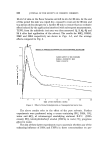
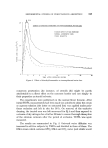
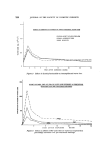
250 JOURNAL OF THE SOCIETY OF COSMETIC CHEMISTS rapidly increase the hydration of the stratum corneum, rapidly increase the con- centration gradient of water across the layer of vehicle and the actual percentage ooe occlusivity would vary in these circumstances. Nevertheless, the point can be made that if you can demonstrate under conditions of low stratum corneum hydration that your vehicle has occlusive properties, you know that this is going to be even greater under clinical circumstances, whereas if even with thick layers you cannot demon- strate any occlusivity at all, then probably conditions of sweating would have to be extreme for your vehicle in practice to influence stratum corneum hydration and increase penetration. MR. N.J. VAN ABBr.: It seems to me that there is a big assumption to talk in terms of a layer, as Dr. Spruyt was doing, taking into account things.like the topo- graphy of the skin's surface and saturation of the horny layer with the vehicle. What you are applying will be anything but a uniform layer of X gm thickness? THE LECTURER: I agree. One is not putting on an absolutely uniform layer, it depends how the skin is stretched it may be that in the areas of creases or of sweat ducts, aso, there is increased thickness. Nevertheless, I think that although one would want to study minute areas of uniform conditions individually, in practice the net clinical effect depends upon your treatment of a considerable area and, therefore, one has to have an approximation of what is happening. The fact that there are area- to-area variations within this piece of skin does not matter too much from the biological and clinical point of view. MR. J. M. B•,AK•.WA¾. You make no reference as to how long this anhidrosic con- dition of the skin persists I presume you have measured this and followed it for long periods. TH• LECTUR•-R: It depends, of course, on the concentration used. Using poldine methosulphate with one application applied overnight on normal human forearm one can get complete anhidrosis for periods varying from 16•30 h. If you want to work for a longer period, then you have to re-apply the poldine. The occasional patient will remain anhidrotic for 48 or even 60 h. We in fact repeat the application every 24 h, allowing a drying-out in between and, therefore, ensure that throughout the whole period of the experiment the skin is not sweating. This can be tested by thermal or emotional stress. MR. A. F. HEA•.D: Would you like to speculate on the state of hydration of the stratum corneum after application of DMSO. You have discussed occlusivity and your work is very impressive where the white soft paraffin reduces the transepidermal water loss with the solvents which are supposed to improve percutaneous absorption, we have completely opposite effects--an enormous transepidermal water loss. T•E LEc'ruRER: It is important to realise that the measurement of water loss from the surface is being used in two different ways in the first set of experiments the in- hibition of water loss was used to measure indirectly the resistance of the layer of vehicle applied on the surface, and this in turn will lead to hydration. The other use involves using transepidermal water loss as a parameter of the integrity of the stratum corneum, and •ve know that the movement of molecules across the stratum corneum is a passive process which does not depend upon any vital mechanisms and
Purchased for the exclusive use of nofirst nolast (unknown)
From: SCC Media Library & Resource Center (library.scconline.org)