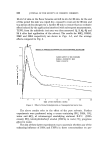
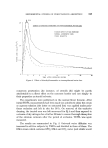
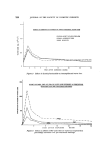
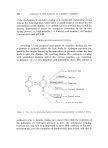
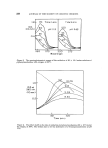
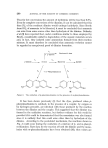
p--BENZOQUINONEDIIMINE 2{33 intermediate in the oxidation of p-phenylenediamine by hydrogen peroxide. (Received: 24th January 1969) REFERENCES (1) Corbett, J. F. Proceedings of the Joint Conference on Cosmetic Sciences Washington D.C. 159. (Toilet Goods Assoc.), (23 April, 1968). (2) Tucker, H. H., Am. Perfumer Cosmetics, 88, 59 (10, 1968). (3) Dolinsky, M., Wilson, C. H., Wisneski, H. H. and Demers, F. X., J. Soc. Cosmetic Chemists, •9, 411 (1968). (4) Brody, F. and Burns, M. S. J. Soc. Cosmetic Chemists, 19, 361 (1968). (5) Corbett, J. F. Benzoquinone-imines, Part I. J. Chem. Soc. B. in the press. (6) Corbett, J. F., Benzoc•uinone-imines, Part IV, J. Chem. Soc. B. in the press. (7) Corbett, J. F., Benzoquinone-imines, Part II, J. Chem. Soc. B. in the press. (8) Tucker, H. H. J. Soc. Cosmetic Chemists, 18, 609 (1967). (9) Frost, A. A. and Pearson, R. G., Kinetics and mechanism p. 154 (1953). John Wiley Inc., New York. (10) Corbett, J. F., Benzoquinone-imines, Parts V and VI, J. Chem. Soc. B. in the press.

J. Soc. Cosmetic Chemists 9,0 265-281 (1969) ¸ 1969 Society qf Cosmetic Chemists of Great Britain Instrumental and control colour measurement P. R. BUNKALL and M. QUINN* Presented at the symposium on "Technical developments in cos- metics packaging", organised by the Society of Cosmetic Chemists of Great Britain, at Harrogate, Yorks., on 27th March 1968. Synopsis--The introduction of instrumentally defined tolerances for colour control is a problem which is dependent on the availability of reliable colour measuring equipment, techniques to express instrumentally measured colour differences in visual terms and common agreement between manufacturer and customer on the size of acceptable tolerance limits. Some of the more reliable colorimeters are mentioned and their main features compared. Indication is given of some of the preferred colour difference oeormulae and particular reference is made to the use of the graphical method of Simon and Goodwin. Practical comparisons of this method with visual assessment are made. Sophisticated equipment for the automatic determination of colour differences is suggested and an automatic on-line colour monitor, which has been used in continuous colour control on a paper machine, is described. INTRODUCTION The aspect of manufacture termed quality control is of great im- portance to the packaging industry since it represents an activity in which significant productivity losses can result either through the use of in- adequately described colour tolerances or through inaccurate assessment of whether material is within tolerance. Traditional methods of colour control rely entirely on human response to shade variations of the manufactured article. A sample from a previous manufacture is frequently retained as a standard and the present manu- facture compared with it. The colourist has then to decide on a tolerance and, if this is exceeded, take the necessary corrective action to bring the *Imperial Chemical Industries Ltd., Dyestuffs Division, l•ianchester 9. 265
Purchased for the exclusive use of nofirst nolast (unknown)
From: SCC Media Library & Resource Center (library.scconline.org)