j'. Soc. Cosmetic Chemists 20 253-263 (1969) ¸ 1969 Society of Cosmetic Chemists of Great Britain p-Benzoquinonediimine - A vital ' ' dy' intermediate in oxdative hair enõ j. F. CORBETT* Synopsis--While it is almost certain that p-benzoquinonediimine is the vital intermediate in oxidative hair dyeing, kinetic studies indicate that it is unlikely that its formation can be unequivocably demonstrated under the conditions pertaining in the dyeing process. However, spectrophotometric studies show that the diimine is formed during the in vitro oxidation of p-phenylenediamine by molecular oxygen. Furthermore, studies of the oxidation of dilute solutions of p-phenylenediamine, in the presence of rn-phenylenediamine, with hydrogen peroxide at pFI 11.2, support the hypothesis that the diimine is an intermediate. INTRODUCTION In a recent lecture (1), I reported that indirect evidence had been obtained to indicate that p-benzoquinonediimine {II) was the vital but short-lived intermediate in the oxidative dyeing process. I also stated that kinetic considerations indicated that it was unlikely that the presence of the diimine would be detectable under practical dyeing conditions. In a subsequent paper (2), Tucker referred to this latter assertion and stated that Dolinsky {3) and Brody {4) had both detected the diimine during the oxidation of p-phenylenediamine (I) with hydrogen peroxide. Tucker thus concluded that its presence had missed detection by our analytical methods. In fact, Dolinsky (3) did not report the detection of the diimine, either "in the precipitate or in the solution". He did, however, isolate a compound to which the structure 2-{4'-aminophenylamino)-5-hydroxy-1, 4-benzo- quinonediimine was assigned, but this does not demonstrate that the simple diimine was formed. In view of the importance of this question to the proper understanding *Gillette Research Laboratory, Reading, Berks. 253

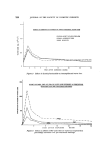
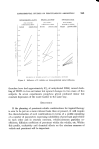
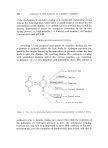
•,,54 JOURNAL OF THE SOCIETY OF COSMETIC CHEMISTS of the mechanism of oxidative dyeing, it is worthwhile elaborating on the reasons for believing that, while there is ample indirect evidence for the intermediacy of the diimine, it is unlikely that its presence has, or will be, directly demonstrated under the conditions pertaining in the in vitro dyeing process, i.e. high peroxide (~ 1.0 molar) and diamine (~0.1 molar) concentration and pH 9-10. PROPOSED MECHANISM OF DYEING According to the proposed mechanism of oxidative dyeing (1), the p-diamine is oxidised within the hair shaft by hydrogen peroxide (or, possibly, by oxygen formed by decomposition of peroxide within the hair shaft) to give the diimine. The resulting diimine then undergoes coupling with unoxidised diamine and/or the various couplers, e.g. resorcinol, m-diamines, etc. to give indamine and indoaniline dyes. This scheme is NH• NH Ox. NHz NH I Tr +1 m- D•amJnes /M•½ phenols •"• Resorcinol •j•- D•kefones or • Pyrazolones Ox Bandrowsk•'s base Indamines Indoanilines - Polymenc •ndoamhnes Azomefh•ne dyes • Azo- and nifro-dyes Figure 1. The role of p-phenylenediamine and p-benzoquinonediimine in oxidative dyeing. outlined in Fig. 1. Kinetic studies have shown that while the oxidation of the p-diamine by hydrogen peroxide is slow, the subsequent coupling reactions are very fast. It is important to stress that, contrary to Tucker's statement (2), even the formation of Bandrowski's base is fast, and that it
Purchased for the exclusive use of nofirst nolast (unknown)
From: SCC Media Library & Resource Center (library.scconline.org)