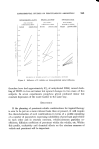
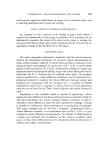
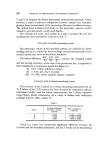
EXPERIMENTAL STUDIES ON PERCUTANEOUS ABSORPTION 245 TETRAHYDROFURYL ALCOHOL DIMETtIYL ACETAMIDE PROPYLENE GLYCOL (25% IN WATER' (25% CI•iAM ' (5qo IN 16 HOUI• OCCLUSION) [ 1• HOUI• OCCLUSION) 16 HOURS OCCLUSION) BEFOI• BEFORE 3 llOURS AFFER 3 HOL'• AFTER 0'9 1 •'9 0,3 0,3 0-2 • 0.1 •0, I INFLUENCE OF STEROID SOLVENTS ON !RANSEPIDERMAI, DIFFUSION Figure 5 Influence of 3 vehicles on transepidermal water diffusion. therefore have had approximately 5% of unhydrated DMA) caused doub- ling of TEWL in two and minor but upward changes in two more of five subjects. In seven experiments propylene glycol produced minor but constant depression of the water barrier in the same way. DISCUSSION If the planning of penetrant-vehicle combinations for topical therapy is ever to be put on a more rational basis than at present, it will require the characterisation of such combinations in terms of a profile consisting of a number of parameters expressing solubilities of penerrant and vehicle in each other and in stratum corneum, vehicle/corneum partition co- efficients, diffusion coefficient of penetrant within the vehicle, etc. Within this profile, occlusivity and chemical effects on the stratum corneum of vehicle and penetrant will be important.

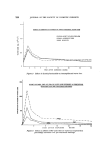
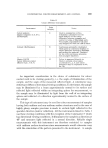
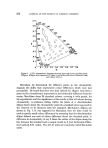
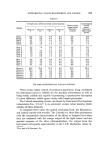
246 JOURNAL OF THE SOCIETY OF COSMETIC CHEMISTS Polythene occlusion lowers the threshold concentration of topical corticosteroids producing vasoconstriction on normal skin about one hundred fold (4). There can be no doubt of the importance of occlusion induced by ointment bases in increasing percutaneous absorption, irrespec- tive of whether the penetrant is water-soluble or not. The precise effect now needs to be measured for a variety of important penetrants in the various vehicles. The effects of vehicles on the stratum corneum, other than by hydration, have largely been neglected except for such substances as detergents and salicylic acid. The experiments described above show clearly that whether this effect is major or minor, this is a function which has to be measured under a variety of experimental conditions before conclusions can be drawn concerning the mode of action of any new clinically favoured vehicle. ACKNOWLEDGEMENTS Figs. 1-4 are published by kind permission of the Editor of the Journal of Investigative Dermatology. (Received: 19th September 1968) REFERENCES (1) Grice, K. A. and Bettley, F. R. Brit. J. Dermatol. 78 458 (1966). (2) Baker, H. and Kligman, A.M. Arch. Dermatol. 96 441 (1967). (3) Sarkany, I., Hadgraft, J. W., Caron, G. A. and Barrett, C. W. Brit. J. Dermatol. 77 569 (196s). (4) McKenzie, A. W. and Stoughton, R. B. Arch. Dermatol. 86 608 (1962). DISCUSSION DR. D. SrRVYT: The "complete suppression" of TEWL by soft white paraffin (SWP) is very impressive. As I doubted whether the occlusivity of SWP could have been caused by its own resistance against water permeation, I have carried out the same experiment as you and, in addition, I measured the specific resistance of SWP against evaporation according to the theories and measurements of Langmuir and Schaefer (5), Archer and La Mer (6), and La Mer (7) on monomolecular layers. The water vapour loss through a layer of SWP depends on temperature and is repre- sented in Figure 6. Even a very thin layer of SWP has a highly effective occlus- ivity. Therefore I estimated the probable thickness of the layer of SWP as applied upon 5x 10----50 cm2 forearm skin. It was applied in the way you have described, liberally in a therapeutic manner in a 0.3 mm thick layer, left for 15 rain and then scraped off the stretched surface with the flat side of a wooden spatula so as to leave a film on the (5) Langmuir, I. and Schaefer, V. J. J. Franklin Inst., 2115 119 (1943). {6) Archer, R. J. and La Mer, V. K. Ann. N.Y./Icad. Sci., 58 807 (1954). (7) La Mer, V. K. Retardation of evaporation by monolayers (1962) (Academic Press, New York).
Purchased for the exclusive use of nofirst nolast (unknown)
From: SCC Media Library & Resource Center (library.scconline.org)