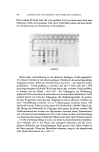
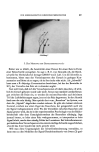
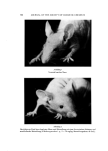
j. Soc. Cosmetic Chemists 21, 801-815 (1970) Die sogenannten Geruchsvernichter ERNST PAUKNER* [/orgetragen am 9. Mai 1970 in Gb'ttingen Synopsis-- So-called Odor Eliminators. Reactive chemicals used for the elimination of undesirable odors, such as fumaric acid or crotonic acid, react chemically with such substances as mercaptans, halogens, or aldehydes. Such materials are generally marketed in the form of room sprays, and subjective opinions concerning the efficacy of these materials are contradictory. It seemed desirable to determine whether claims made for two of these odor eliminators (o. e.) are justified. For this purpose an olfactometer described by Eyferth and Kriiger (Ref. 1) was utilized at the Institute of Psychology at the TH Darmstadt. 1. Description of the Olfactometer - The olfactometer consists of three majorparts - an air system, a carrier gas system, and a distribution system (Fig. 1). 1.1 The Air System (Fig. 2) is essentially a powerful air conditioning apparatus. Compressor (K) passes 1201. of air per minute through a charcoal filter (C) then through a water washing apparatus (W) and finally through silica gel (TR). The purified air is maintained at a constant temperature and humidity. A breathing valve (SV1) on the 501. container (L) maintains a constant excess pressure of 0.4 atmospheres. Air not used in the distribution system is carried immediately into the chamber in which the observer judges the odor. 1.2 The Carrier Gas System (Fig. 3) provides a steady stream of odorant (o.). Nitrogen from the vessel (N) flows in a carefully controlled stream of 0.4 to 1.0 1./min. through one or more wash bottles (F) which contain liquid o. A water bath maintains the temperature of the materials. The nitrogen leaves the o.-containing bottles saturated and the number of moles of o. per min. carried by the carrier gas can be determined. The concentrations range between 10-5-10 -• moles fl. 1.3 The Distribution System (Fig. 4) mixes the purified air with a precisely determined amount of the o.-saturated nitrogen. The system permits dilution of 1 part of o.-saturated nitrogen with in 6 parts of air up to 1 part of saturated nitrogen in 118.096 parts of air. For the purpose of preparing mixtures of o. s. the olfactometer is provided with two distribution systems. 1.4 The odorant gas is presented to the observer through two glass tubes in two cabinets through which pure air is allowed to pass (Fig. 5). 2. Determination of Odor Sensitivity - It has been customary to measure sensitivity to a stimulus by determining a threshold concentration. For example, the threshold concentration for methyl alcohol is reported to be 0.000019 moles/1. of air (Ref. 2). It is also known that there is considerable * Firma drom, 8 Mtinchen 71, BertelestraBe 75. 801

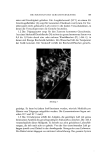
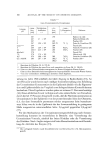
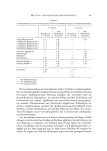
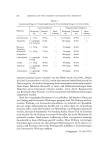
8O2 JOURNAL OF THE SOCIETY OF COSMETIC CHEMISTS "noise" in a system of this type and that it is difficult for individuals to differentiate between noise and signals. In order to avoid this difficulty, it is useful to use Swets's model of signal detection theory (Ref. 3, Fig. 6). On the abscissa (Fig. 6) the response intensity is plotted, i.e., the subjective certainty that a response is noted. The ordinate shows the frequency. The curve on the left shows the distribution ofa subject's estimates when only air is offered, whereas the curve on the right shows the distribution when a small concentration of an o. is offered. Where the curves cross, it is impossible to decide between signal and noise. Each subject must set his own criterion in deciding whether a stimulant is offered or not. Whenever the number of erroneous judgments in the case of air and of an o. is known, then the position of the critical range can be calculated. If one assumes a Gaussian distribution for the observations, then the difference (d') between the maxima of the two distributions is a measure of sensitivity which is independent of the judgment tendencies of the observer and is, therefore, superior to the threshold value. The standard deviation of the distribution was set equal to 1 thus d' ranges between 0 and 2. 3. Experimental Setup 3.1 The following stimulants were introduced: civet absolute mustard oil (allylisothiocyanate) n-butyric acid onion oil dimethylsulfide linalylacetate 3 x10 -s mol/1. of air 3.5 x 10 9 mol/1. of air 3.5 x 10 -9 mol/1. of air in diethyl phthalate 3.5x 10 -9 mol/1. of air 3 x10 8 molil. of air 3 X 10 -5 mol,'l. of air 3.2 The "odor eliminators" were two commercially available concentrates (Ref. 3, 4). 3.3 The sensitivity to the five unpleasant o.s and to linalylacetate was determined by four subjects. The calculations of d' requires about 100 tests by each subject. At first, that concentration for each individual was determined which was recognized correctly in 80% of the tests. Similarly, the o.e.s were offered alone to determine that concentration at which their odors could no longer be recog- nized. Thereafter the o. alone, mixtures of o. and o.e., and air alone were tested in a random fashion. The effect of the o.e. was read by determining the value of the sensitivity measure d' of the mixture of the o. and the o.e. as well as of the o. alone. 3.4 Two experimental procedures were used. In the first one the o. and the o. e. were offered to the individual immediately after mixing. 3.5 In a second setup (Fig. 7) the o. and the o.e. were mixed and retained for 10 minutes before they were offered to the subject. 4. Results 4.1 In this particular case civet (absolute), mustard oil, and n-butyric acid, and onion oil were tested. The results are shown in Fig. 8 in which values for d' for the pure o. (R) and for the same o. mixed with either o.e. M or o.e. N are given. The height of the columns d' indicated in all five cases that the pure o. was more readily discernible than if the o. was offered in the presence of either product M or N following test procedure 3.5. 4.2 The experiment with essentially no mixing period (procedure 3.4) was conducted with mustard oil, n-butyric acid, dimethylsulfide, and linalylacetate. The results are shown in Fig. 9, which indi- cates that under these conditions there is no evidence that the o.e. is effective. 5. Interpretation of Results 5.1 Whenever the o.e.s have time to interact with the o., they lower the sensitivity towards the o. It can be concluded therefore that the o.e.s do not act via anesthesia. 5.2 The slight increase in sensitivity for mixtures of o. and o.e. after brief mixing times is due to an additive effect which is well-known to perfumers. 5.3 The question of how effective the so-called o.e.s are can be answered on the basis of additional comments from the observers. From this information, it is concluded that the reductions of sensitivity
Purchased for the exclusive use of nofirst nolast (unknown)
From: SCC Media Library & Resource Center (library.scconline.org)