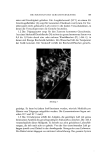
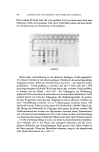
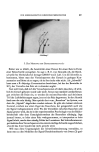
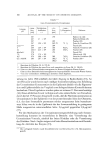
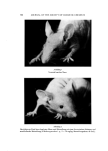
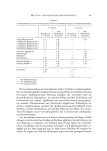
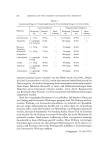
j. Soc. Cosmetic Chemists 21, 825-833 (1970) Prtifung von Kosmetik-Grundstoffen auf fototoxis&e Wirkung CHRISTIAN GLO XHUBER* Vorgetragen am 9. Mai 1970 in Ggttingen Synopsis--Phototoxicity Testing of Cosmetic Materials. Sunlight can cause chronic skin damage as well as malignancies. Certain individuals show greater sensitivity to sunlight than others (porphyria). Exogenous light damage also includes photo-allergic (Refs. 7, 21, 22) and phototoxic reactions (Refs. 1, 11). A particularly well-known phototoxic reaction is the so-called Bexloque dermatitis which is caused by furocumarins (Refs. 4,15, 20). Other phototoxic reactions have been associated with the use of tetracyclines• tars• and griseofulvin (Refs. 13, 14, 18). Animal testing procedures for assessing phototoxic activity have been used in the past (Refs. 8, 5). The method used by the author is simple. Individual hairless mice are irradiated with an Osram Ultravitalux lamp in wire cages at a distance of 50 cm. The intensity of the irradiation is attenuated through a glass plate, and it is necessary to irradiate continuously for 48 hours in order to initiate erythema in the experimental animals. The application of the test substance varies: Undiluted materials or dilute solutions are brushed on the skin of the back in other instances, the materials are injected intraperitoneally. One group of test animals is treated with the material and irradiated. A second group remains untreated but is exposed to the U.V. light. A second control group is treated with the test sub- stance but is not irradiated. After completion of the irradiation, the initial results are read, and delayed reactions are observed on the next day. The results of the tests are shown in Tables 1 and 2, which are concerned respectively with essential oils and a variety of drugs. Figure •_ shows the appearance of a normal hairless mouse, whereas Fig. 2 shows edema on the head ooe a hairless mouse after treatment with a phototoxic material and sub- sequent irradiation. Key to Table I: Horizontal: 1st Experiment 2nd Experiment Irradiation No Irradiation Irradiation No Irradiation 3 x 24 hrs. Control 4 x 24 hrs. Control Footnotes: * Two replications ** Fo•,r replications *** For light-protective agents o. B = no effect * Toxikoloõische Laboratorien der Henkel & Cie. GmbH, 4 Diisseldorf. 825

826 JOURNAl. OF THE SOCIETY OF COSMETIC CHEMISTS It is evident from Table I that native (original) bergamot oil exhibits phototoxic activity, whereas the modified (modifiziertes) bergamot oils do not suffer from this defect. Lime oil (Limette61) and tangerine oil (Mandarinen61) as well as patchouli oil show some evidence for phototoxic effects. Key to Table 2: Dosierung tgl. = daily dose Bestrahlungszeit = period of irradiation Beobachtung = observation ges•ittigte L6s. or L6sung = saturated solution std. = hours Table 2 shows that chlorpromazine, bithionol, and chlorthiazide have little effect upon cut- aneous applications beyond the effect of the control. However, chlorpromazine and tetracycline do show an effect upon injection. The rate of skin absorption may be responsible for this observa- tion. The effect of concentration was studied with 8-methoxypsoralen by application of different solu- tions twice daily to the skin. Even dilute solutions (0.04%) of 8-methoxypsoralen show phototoxic effects in this test situation. It is concluded that the hairless mouse is a good test animal for phototoxicity testing. The test is considered particularly useful for the examination of raw materials, especially those which are designed to be used in sun-bathing products. In the author's opinion, testing of individual compo- nents suffices, and the test of a finished formulation is of lesser importance. •BERSICHT Das Sonnenlicht ist nicht nur - wie vielfach angenommen wird - eine Quelle der Gesundheit und des Wohlbefindens, der man sich so viel als m6g- lich aussetzen sollte. Die Sonnenbr•iune ist oft weniger Ausdruck einer spru- delnden Gesundheit, als Ausdruck einer bestimmten Moderichtung, und wir k6nnen vielleicht morgen schon erieben, dab die weiBe Hautfarbe wieder hochmodern wird. Das Sonnenlicht als Ursache der Hautbr•iunung vermag auf der menschlichen Haut in zu hoher Dosierung akut den Sonnenbrand aus- zu16sen, bei lang andauernder Einwirkung aber auch chronische LichtscNiden bis zu b6sartigen Tumoren hervorzurufen. Unter gewissen Voraussetzungen kann das Sonnenlicht bei bestimmten Menschen und Versuchstieren schon in einer Dosierung zu ScNidigungen ftihren, die yon anderen reaktionslos vertragen werden. Solche LichtscNidi- gungen k6nnen ihre Ursache in krankhaften Prozessen haben wie z.B. bei der Porphyrie, bei der H•imatoporphyrin eine Rolle spielt, oder dadurch, dab durch Enzyminduktion, z.B. durch Hexachlorbenzol, eine Steigerung der Bildung von 8-Aminoliivulinsi[uresynthetase (10) erfolgt und dadurch ver- mehrt Porphyrin gebildet wird. Hexachlorbenzol spielt als Pflanzenschutz- mittel eine Rolle und wird gelegentlich bei Vergiftungen aufgenommen. Solche Ffille wurden in groBer Zahl vor einigen Jahren in der Ttirkei (17) beobachtet.
Purchased for the exclusive use of nofirst nolast (unknown)
From: SCC Media Library & Resource Center (library.scconline.org)