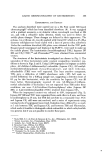
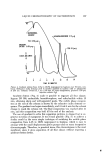
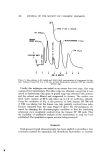
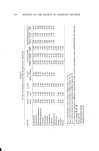
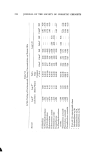
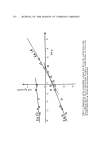
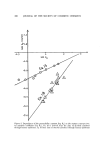
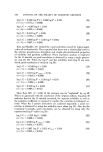
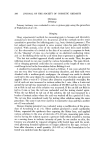
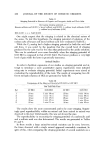
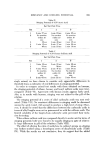
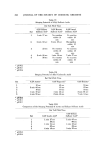
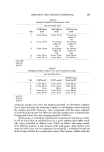
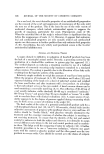
366 JOURNAL OF THE SOCIETY OF COSMETIC CHEMISTS IRGASAN CF$ 0.05/.c õ HEXACHLO90.50/.c 0.001 A UNITS 0.50/-c9 I ,! , , • , , 0 2 4 6 8 I0 12 TIME IN MINUTES Figure 2. Isocratic elution. Mobile phase: 11.0% isopropanol in heptane column: Corasil II, 1 m x 3.0 ram, at room temperature {low rate: 1.1 ml/min at 150 psi uv photometer at 254 nm injection volume: 5/xl IRSASAN -- DP 500 0.8/.cõ -TCC 0.4/.cg •, 0.004 ABS UNITS HEXACHLOROPHENE :•.8/.ccJ TIME IN MINUTES Figure 3. Isocratic elution. Mobile phase: 4.0% isopropanol in heptane column: Corasil II, i m x 3.0 ram, at room temperature flow rate: 2.4 ml/min at 300 psi uv photometer at 254 nm injection volume: 5/zl

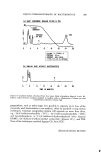
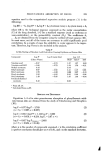
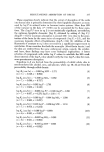
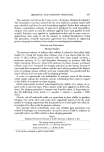
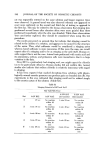
LIQUID CHROMATOGRAPHY OF BACTERIOSTATS 367 RI ISOPROPANOL SOLVENT IRGASAN TCC 0.50•g--• DP $00 0.25 0.004 ABS UNITS H•HLOROPH2.5/-/..9 TBS 2.5/../. g uv TIME IN MINUTES Figure 4. Gradient elution from 4.0% to 12.0% isopropanol in heptane over 6.5 min, non- linear. Refractive index detector used to monitor gradient in tandem with uv photometer at 254 nm. Column: Corasil II, 1 m x 3.0 mm, at room temperature pressure: 150 psi injection volume: 5/xl Gradient elution (Fig. 4) made it possible to separate all four classes: Irgasan DP 300, carbanilide, hexachlorophene, and salicylanilide within 15 min, obtaining sharp and well-separated peaks. The mobile phase composi- tion at the exit of the column is shown by the refractive index detector re- sponse. The gradient was begun immediately, and it took 4 min for the solvent change to reach the column exit. The final composition was reached after 11 min, and this composition was held till the end of the analysis. The use of gradient to solve this separation problem is elegant but is ex- pensive in terms of equipment. It was found possible (Fig. 5) to achieve a similar result by the more simple technique of switching the mobile phase composition from 4.4% to 12.0% isopropanol in heptane, which is easy to arrange with the small displacement piston pumps used on many inexpensive chromatographs. Therefore, in practical terms, this chromatogram is the most significant, since it gives separation of all four classes without requiring a gradient elution device.
Purchased for the exclusive use of nofirst nolast (unknown)
From: SCC Media Library & Resource Center (library.scconline.org)