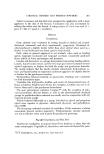
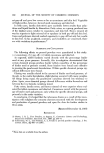
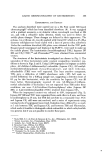
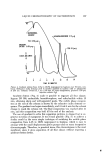
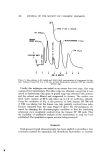
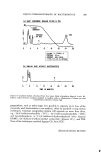
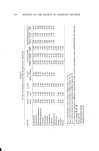
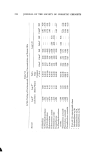
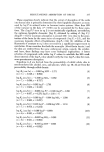
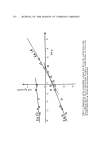
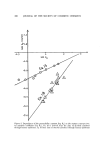
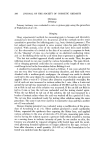
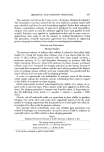
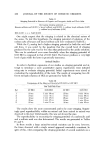
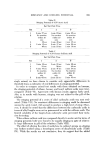
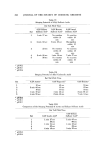
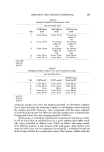
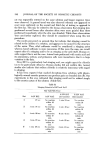
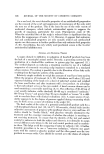
368 JOURNAL OF THE SOCIETY OF COSMETIC CHEMISTS TCC 0.50/•g-• IRGASAN DP$00 0.25•cj--• t 0.004 ABS UNITS UV I RI OF CONC. AT DETECTOR /-- HEXACHLOROPHE2,5 / TBS 2.5/.c , ,½_ TIME IN MINUTES Figure 5. Step elution. 4.4% initial and 12.0% final concentration of isopropanol in hep- tane. Column: Corasil II, I m x 3.0 mm, at room temperature pressure: 150 psi iniection volume: Finally, this technique was tested on an extract from two soaps. One soap contained two bacteriostats. The other soap was identical, except that it con- tained no bacteriostat. One gram of grated soap was extracted with acetone, and the extract was filtered and evaporated to dryness. The residue was dried under vacuum at 60øC and taken up in 1.0 ml methylene chloride. Using the conditions of Fig. 4, the presence of both Irgasan DP 300 and of TBS was shown, but the former was only partially resolved from inter- ferences extracted from the soap. Figure 6 shows the chromatograms ob- tained by changing the chromatographic condition so that the interfering substances were completely resolved from the Irgasan DP 300 peak. Thus the feasibility of qualitative analysis of the bacteriostats in soap has been established. The quantitative aspects are now being examined. SUMMARY High-pressure liquid chromatography has been applied in providing a fast, convenient method for separating and identifying bacteriostats in cosmetic

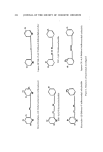
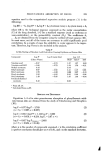
LIQUID CHROMATOGRAPHY OF BACTERIOSTATS 369 (a} SOAP CONTAINING IRGASAN DP300 6 TBS COLUMN: Im CORASIL :U: PRESSURE= 150 psi GRADIENT = NON-LINEAR, 0.4%-12% IPA IN HEPTANE (b) SIMILAR SOAP WITHOUT BACTERIOSTATS 6 ' •, ' • ' h ' • ' io ' TIME IN MINUTES Figure 6. Gradient elution of extract from two soaps. Start of gradient delayed 4 min. Re- tractive index detector monitors gradient in tandem with uv photometer. Column: at room temperature injection volume: 5/xl preparations, such as toilet soaps. It is possible to separate up to four of the commonly used bacteriostats in one analysis, either by gradient or step elution techniques. Constant composition elution will separate no more than three, e.g., 3,4,4'-trichlorocarbanilide (TCC), 3,4',5-tribromosalicylanilide (TBS), and hexachlorophene or g,',4,4'-trichloro-g-hydroxydiphenyl ether (Irgasan DP300), 4,4'-dichloro-3-tritluoromethyl carban •lide (Irgasan CF3), and TBS. None of the techniques resolved Irgasan CFa from TCC. (Received October 26, 1972)
Purchased for the exclusive use of nofirst nolast (unknown)
From: SCC Media Library & Resource Center (library.scconline.org)