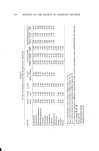
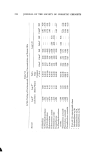
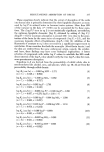
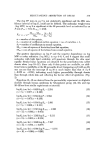
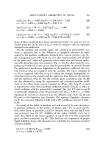
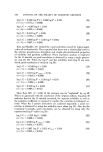
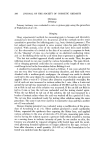
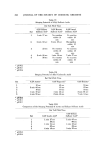
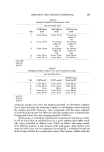
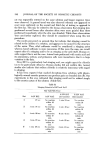
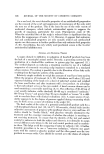
382 JOURNAL OF THE SOCIETY OF COSMETIC CHEMISTS log 1/C = 0.339 (log p,)2 + 0.502 log P' + 2.792 (24) (n = 8, r = 0.773, s = 0.656) log 1/C = -0.267 log S q- 1.194 (25) (n - 6, r - 0.252, s - 0.956) log 1/C = 0.431 log P' + 2.025 (26) (n = 6, r = 0.725, s = 0.680) log 1/C = 1.008 log P' + 1.230 log S + 6.604 (27) (n = 6, r = 0.967, s = 0.289) Katz and Shaikh (18) studied the vasoconstriction caused by topical appli- cation of corticosteroids. They reported that there was a relationship between the relative percutaneous absorption and simple physicochemical properties of solubility and partition coefficient. When regression analysis is employed for the 11 steroids, no good correlation is obtained by using a single parame- ter (eqs 28, 29). When the log P' and the solubility term (log S) are com- bined, good correlation is obtained ( eq 30): log 1/C = -0.542 log S q- 2.058 (28) (n - 11, r = 0.306, s = 0.931) log 1/C = 1.617 log P'(ether) q- 2.743 (29) (n = 11, r - 0.816, s = 0.566) log 1/C = 2.553 log P' q- 1.139 log S q- 6.101 (30) (n = 11, r - 0.924, s = 0.396) log 1/C = 0.736 log S q- 8.085 (31) (n = 3, r = 0.998, s = 0.017) More than 84% (r 2 • 0.84) of the variance can be "explained" by eq 30. This is in agreement with the conclusion of the original authors. Equation 30 indicates that for the 11 steroids examined, the aqueous solubility as well as the partition coefficient is required to explain the variation in biological ac- tivity. When the 3 acetate derivatives are analyzed separately, a good cor- relation is obtained by using .the solubility term alone (eq 31). Also, for the remaining 8 steroids, good correlation can be obtained by using only the experimental log P' values ( eq 33): log 1/C = -1.331 log S - 0.490 (32) (n = 8, r = 0.496, s -- 1.034) log 1/C = 2.166 log P'(et•er) = 2.611 (33) (n = 8, r = 0.943, s = 0.397) log 1/C ---- 2.007 log P' q- 1.831 er*(6_•) q- 1.914 (34) (n = 8, r = 0.985, s = 0.224)

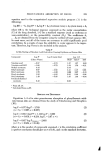
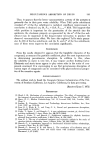
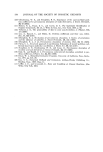
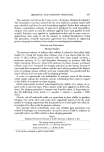
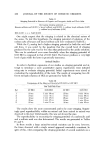
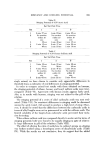
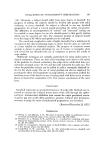
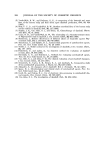
PERCUTANEOUS ABSORPTION OF DRUGS 383 Thus, it appears that the lower vasoconstriction activity of the acetates is primarily due to their poor water solubility. When Taft's polar substituent constant o'* of the 6-a substituent is included, significant improvement in correlation is obtained (eq 34, F•,5 = 13.8 F1,5o.9•5= 10.0). This suggests that while partition is important for the penetration of the steroids into the epidermis, the electronic property as represented by the o'* of the 6-a sub- stituent may be important in the drug-receptor interaction to produce the observed vasoconstriction effect. We have also explored Taft's steric param- eter E8 (21) of the 6-a substituent, and the E8 and o'* of the 9-a substituent none of these terms improves the correlation significantly. CONCLUSION From the results obtained it appears that the lipophilic character of the compound, as measured by partition coefficient, plays the most important role in determining percutaneous absorption. In addition to this, when the solubility in water is very low, it may impose another limiting factor. Electronic and steric terms appear to play minor roles in the series of com- pounds examined. It is encouraging to see that percutaneous absorption of various types of compounds can be correlated with physicochemical proper- ties of the causative agents. ACKNOWLEDGiV•ENT The authors wish to thank the Computer Science Laboratories of the Uni- versity of Southern California, Los Angeles, California, for data processing. (Received June 7, 1972) REFERENCES (1) Blank, I. H., Mechanism of percutaneous adsorption: The effect of temperature on the transport of non-electrolytes across the skin. J. Soc. Cosmet. Chem., 11, 57 (1960). (2) Harry, R. G., Modern Cosmeticology, Vol. 12, Leonard Hill, Ltd., London, 1962, Chap. 3. (3) Sagarin, E., Cosmetics, Science and Technology, Interscience Publisher, Inc., New York, 1957, pp. 1156-60. (4) Lien, E. J., Koda, R. T., and Tong, G. L., Buccal and percutaneous absorptions, Drug. Intell., 5, 38 (1971). (5) Fujita, T., Iwasa, J., and Hansch, C., A new $ubstituent constant, pi, derived from partition coefficients, 1. Amer. Chem. Soc., 86, 5175 (1964). (6) Iwasa, J., Fuiita, T., and Hansch, C., Substituent constants for aliphatic functions obtained from partition coefficients, 1. Med. Chem., 8, 150 (1965). (7) Lien, E. J., The use of substituent constants and regression analysis in the study of structure-activity relationship, Amer. 1. Pharm. Educ., 33, 368 (1969). (8) Hansch, C., A quantitative approach to biochemical structure-activity relationships, Accounts Chem. Res., 2, 232 (1969). (9) Hansch, C., Steward, A. R., and Iwasa, J., The correlation of localization rates of benzeneboronic acids in brain and tumor tissue with sustituent constants, Mol. Pharmacol., 1, 87 (1965).
Purchased for the exclusive use of nofirst nolast (unknown)
From: SCC Media Library & Resource Center (library.scconline.org)