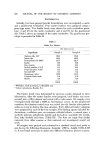
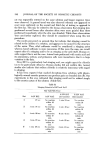
386 JOURNAL OF THE SOCIETY OF COSMETIC CHEMISTS METHODS Irritancy Primary irritancy was evaluated in rats or guinea pigs using the procedure of Finkelstein et al. (2). Stinging Many experimental methods for measuring pain in humans and laboratory animals have been described (3). In general, all of the methods involve some quantitative procedur• for inflicting pain (e.g., heat, electrical, pressure). The test subiect must then respond in some manner when his pain threshold is reached. With animals, some of the methods that have been used include: (a) the observation of a twitch in the skin of an animal in response to heat (b) the "dancing" of mice on a hot plate or on electrical conducting wires and (c) the flicking of the tail by a rat when heat or pressure is applied to it. This last test method appeared ideally suited to our needs. Thus, the pain inflicting stimuli in our case would be various formulations. The pain thresh- old or stinging potential could then be measured as the length of time a rat could keep its tail in the formulation before flicking it out. A standard test procedure was devised as follows: 5 rats were selected for any one test, they were placed in restraining chambers, and their tafis were abraded with a mediumsgrade sandpaper. An attempt was made to abrade each tail to the same degree by regulating the number of strokes and pressure applied. After a wait of 1-2 hours after abrasion or preferably overnight, the tail of each rat was immersed in isotonic saline oeor i min. After a 5-min rest period the rat tail was immersed in a solution of 3N HC1 and the time for the rat to flick its tail out of the solution was measured. If the rat did not flick its tail in 2 min or less, the tail was reabraded and the testing started again. When the rat flicked its tail out of the solution, the tail was immersed in a beaker of isotonic saline where the acid was washed off for a period of 3 min. The rat was then considered ready for testing other solutions using the same procedure. The same 5 rats were used for 3 consecutive days and then another set of 5 was selected. ttuman stinging potential was evaluated using a modification of the proce- dure of Armstrong et al. (4). These authors produced a small cantharidin blister, separated the epidermis thus exposing the blister base, and applied various solutions to the area at intervals of 5-10 min, measuring pain inten- sity by having the subiects squeeze a pressure bulb which recorded a tracing on a moving drum to indicate intensity of pain. In our studies on skin, the forehrm was abraded by repeated stripping with Scotch tape until the moist- •ned glistening denuded epidermis no longer adhered to the tape. At least 1 hour after abrasion, a small quantity (0.1-0.2 cc) of the formulation to be tested was swabbed onto the iniured area.

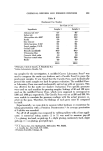
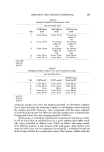
IRRITANCY AND STINGING POTENTIAL 387 The material was left on for 5 min or less (if intense stinging developed). The formulation was then washed off, the area bathed in isotonic saline until pain subsided, and then the next formulation applied. Rather than attempt to obtain a quantitative estimate of pain level produced by each formulation, subjects were asked to rank the solutions applied from most painful to least painful. Solutions were applied in randomized orders and in some cases re- applications were made to aid the subjects in ranking formulations. Using this procedure, virtually unanimous agreement was obtained in separating potent stinging formulations from modest or nonstinging formulations. RESULTS AND DISCUSSION Ituman Studies The primary irritancy of sodium alkyl sulfates is related to their alkyl chain length (5). Using the trypan blue irritancy test, it was shown that the irri- tancy of alkyl sulfonic acids increased with their chain length reaching a maximum irritancy at C•2 and thereafter decreasing in irritancy with the higher homologs. However, when 0.3N solutions of ethane, hexane, and lauryl sulfonic acids were evaluated for stinging potential on the human forearm it was found that compared to ethane sulfonic acid, which produced the highest level of stinging, hexane sulfonic acid was considerably less painful and the lauryl sulfonic acid was quite mild in stinging potential. A series of experiments was undertaken to examine some of the factors which might explain the structure activity relationship that exists in regard to the ability of materials to cause stinging. Initial experiments involved intercomparing the ability of a variety of or- ganic acids to generate pain. When organic acids were applied (as 0.3N solu- tions), the stinging potential in humans was found to show, in decreasing or- der, the following: citric, acetic aconitic tartaric ascorbic 0.9% NaC1. Clearly, not all carboxylic acids are equivalent in their ability to produce stinging. Two acids, citric and acetic, have repeatedly proven to be the most painful in stinging experiments but frequently have scored quite low when in- tercompared to other acids for primary irritancy. One question which immediately arose was whether pain generation was related to hydrogen ion concentration. As can be seen in Table I, solutions at equal pH values can differ widely in their stinging potential. Table I Stinging Potential in Humans of Acidic Solutions as Related to pH Decreasing stinging potential -- Citric acid pH 3.5 • • • g]uconic acid pH 3.5" Acetic acid (0.3N) • • H•PO• (0.3N) • 0.3N solutions adjusted to pH 3.5 with NaOH.
Purchased for the exclusive use of nofirst nolast (unknown)
From: SCC Media Library & Resource Center (library.scconline.org)