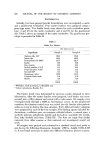
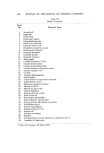
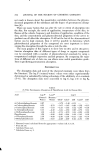
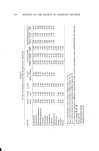
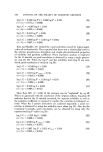
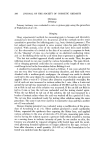
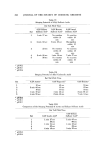
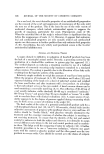
388 JOURNAL OF THE SOCIETY OF COSMETIC CHEMISTS Table II Stinging Potential in Humans of Organic and Inorganic Acids and Their Salts Decreasing stinging potential -- Hexane sulfonic acid (0.3N) lauryl sulfonic acid (0.3N) sodium hexyl sulfonate (0.3N) sodium lauryl sulfonate (0.3N) HCl (0.3N) NaC1 (0.3N) One might suspect that the stinging is related to the chemical nature of the anion. To test this hypothesis, the stinging potential of solutions of the sodium salts of hexane and lauryl sulfonic acid were evaluated (Table II ). While the Co analog had a higher stinging potential in both the acid and salt form, it was noted by the panelists that the overall level of stinging produced by the salts was far less than that produced by the acidic solutions. This can be reinforced even more forcefully when the stinging potential of 0.3N HC1 is compared to that of 0.3N NaC1. The former produces a very high level of pain while the latter is practically innocuous. Animal Studies In order to facilitate expansion of our studies on stinging potential and at- tempt to introduce a more quantitative aspect, experiments were initiated using rats to evaluate stinging potential. Initial experiments were aimed at evaluating the reproducibility of the tests. The results of comparing two dif- ferent strength solutions of HC1 are presented in Table III. Table III Comparison of the Stinging Potent. al of 3N HC1 to 0.3N HC1 Rat Tail Flick Time Rat 3N HC1 0.3N HC1 3N HCI 0.3N HC1 1 23 see 1 min 36 sec 23 see 3 min 16 sec 2 24 see 3 rain ( 0 scc 19 sec 2 min 55 sec 3 12 see 1 min 15 sec 25 see i min 05 sec 4 35 sec i min 45 sec 12 see i min 35 sec 5 12 sec 1 min C9 sec 10 sec 1 min 05 sec The results show the more concentrated acid to be more stinging. Surpris- ingly good reproducibility within an animal and from animal to animal was observed in this test. Unfortunately, this was not always the case. The reproducibility in measuring the stinging potential of a carboxylic acid and a sulfonic acid was also determined. The results are presented in Tables IV and V. In these results a large animal-to-animal variation can be seen however, the times observed with a single animal appeared reasonably consistent. In spite of this, when comparing the stinging potential of several materials on a

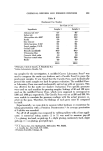
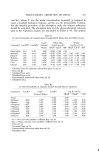
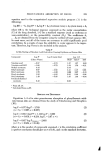
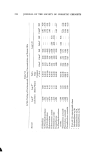
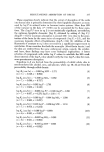
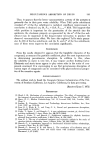
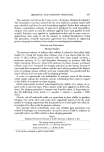
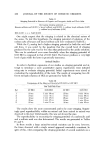
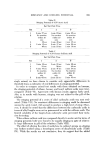
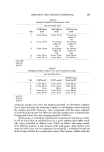
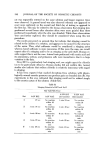
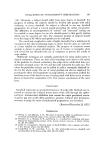
IRRITANCY AND STINGING POTENTIAL 389 Table IV Stinging Potential of 0.3N Acetic Acid Rat Tail Flick Time Rat 1 2 3 1 3 min 27 sec 1 min 20 see 4 min 05 sec 2 No reaction No reaction No reaction within 10 within 10 within 10 min rain min 3 30 sec i min 40 sec 1 rain 45 sec 4 i rain 15 sec 2 min 17 sec 1 min 26 sec 5 40 sec I min 18 sec 1 min 18 sec Table V Stinging Potential of 0.3N Hexane Sulfonic Acid Rat Tail Flick Time Rat 1 2 3 i 3 min 16 sec 3 rain 08 sec 3 min 22 sec 2 34 sec 36 sec 40 sec 3 4 min 44 sec 2 min 47 sec 1 rain 34 sec 4 No reaction No reaction No reaction within 10 within 10 within 10 rain rain rain 5 2 rain 02 sec 2 min 22 sec 2 rain 22 sec single animal, we have chosen to consider only appreciable differences in threshold times as indicative of real differences in stinging potential. In order to conapare animal test results with those obtained on humans, the stinging potential of ethane, hexane, and lauryl sulfonic acids were inter- compared (Table VI). Agreement with human results appears fairly good. Also, as in results with humans, stinging was not related to the pH of the solution. ,, The stinging potential of a series of alkyl carboxylic acids was next eval- uated (Table VII). No consistent differences in stinging could be discerned among the acids tested. (All seemed to produce a high level of sting.) How- ever, it should be noted that tl•e differences between the carboxylie acids in terms of alkyl lengths were not as pronounced as with the sulfonic acids. The limited solubility of the longer-chain carboxylic acids prevented their inclu- sion for testing. When ethane sulfonic acid was compared directly to acetic acid in terms of stinging potential, both were found to be equally stinging in spite of relative- ly large differences in pH of the solutions (Table VIII). The effect of altering the ratio of methylene to carboxyl groups on stinging xvas further studied using a homologous series of dicarboxylic acids (Table IX). While the results are not conclusive, they do suggest that the added
Purchased for the exclusive use of nofirst nolast (unknown)
From: SCC Media Library & Resource Center (library.scconline.org)