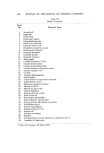
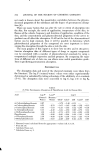
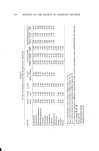
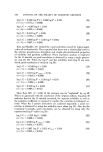
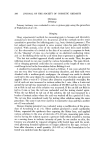
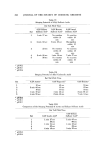
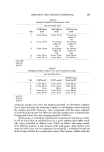
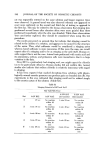
360 JOURNAL OF THE SOCIETY OF COSMETIC CHEMISTS Table III Binders Evaluated Binder No. Chemical Name 1. Avocado oil 2. Castor oil 3. Decyl oleate 4. Diisopropyl adipate 5. Ethoxyl.ated glycerine 6. Ethyl hexyl palmRate 7. Glycerine C.P./U.S.P. 8. Hexadecyl alcohol Cos. Grade 9. Hydroxyethyl cellulose" 10. Isopropyl isostearate 11. Isoprop•l lanolate 12. Isopropyl myristate 13. Karaya gum' 14. Lanolin (anhydrous, U.S.P.) 15. Lanolin alcohol acetate 16. Lanolin alcohol ethoxylated 17. Lanolin alcohols hydrocarbon extract 18. Lanolin isopropyl ester 19. Lecithin 20. Linoleic diethanolamide 21. Liquid lanolin 22. Liquid lanolin on magnesium carbonate 23. Liquid lanolin extract 24. Magnesium aluminum silicate" 25. Mineral oil 65/75 26. Mineral oil, heavy vise. 27. 2-Octyl dodecanol 28. Oleyl alcohol Cos. Grade 29. Peach kernel oil 30. Polyethylene glycol 1500 31. Polyoxyethylene 4 lauryl ether 32. Polyoxyethylene 20 sorbitan monooleate 33. Polyalkylene glycol 34. Polyvinyl pyrrolidone • 35. Propylene glycol, U.S.P. 36. Seasame oil 37. Sorbitan monooleate 38. Squalane 39. Triethanolamine stearate dispersion in propy]ene glycol 40. Vegetable oil triglyceride Used as 5% solutions. All others 100%.

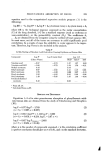
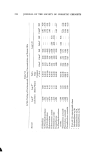
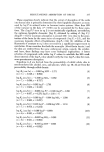
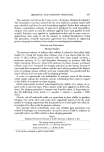
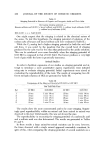
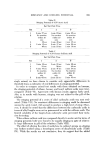
CHEMICAL BINDERS AND PRESSED POWDERS 361 Tablet creaminess and skin feel were compared by application with a foam applicator to the skin of the forearm. Creaminess was also ascertained by rubbing the tablet with the thumb. A rating system of 1 to 4 was used (1 -' poor, 2 --- fair, 3 = good, 4 = excellent). RESULTS Consistency Fatty alcohols were evaluated by testing hexadecyl alcohol and 2-octyl- dodecanol (saturated) and oleyl (unsaturated), respectively. Hexadecyl al- cohol produced a slightly harder tablet than oleyl alcohol when used as a binder 2-octyl dodecanol was about equal to oleyl alcohol. Fatty esters in general appeared to act similarly when used as binding agents. Isopropyl isostearate and isopropyl myristate consistently produced firmer tablets at lower percentages and pressures. Lanolin and derivatives as a group demonstrated interesting binding effects. Lanolin, liquid lanolin extract, and the two isop•:opyl esters evaluated showed marked superiority as binders for both the matte and pearleseent formulas. The results indicate that the lanolin alcohols ethoxylated, hydrocarbons ex- tract, and liquid lanolin on magnesium carbonate appear to be slightly inferior as binders for the pearleseent variation. Hydrocarbons behaved similarly on penetration. Findings were consistent for both formulation types. Vegetable oils, trigIyeerides, leeithin, and eastor oil demonstrated some ef- ficacy as binders. Peach kernel oil was the exception. Leeithin was not as ef- fective when used in the pearleseent formulation. The gum and polymer solutions, Veegum,©* with the exception of poly- vinyl pyrrolidone, did not behave as well as the aforementioned chemical groups. In production these materials are usually used in conjunction with oily materials for best results. Polyols behaved differently as a group. Polyalkylene glycol and propylene glycol were superior to glyeerine, ethoxylated glyeerine, and polyethylene glycol 1500. The last group evaluated consisted of emulsifiers. Of the nonionies, sorbitan monooleate showed marked superiority. Triethanolamine stearate (anionie) was not as effective when used to press the pearleseent prototype. Pay-off, Creaminess, and Skin Feel Pearlescent eyeshadows in general showed less tendency to glaze than the matte counterparts. Vegetable oil, derivatives, and castor oil showed the poor- * R. T. Vanderbilt Co., Inc., 30 Park Ave., New York, N.Y.
Purchased for the exclusive use of nofirst nolast (unknown)
From: SCC Media Library & Resource Center (library.scconline.org)