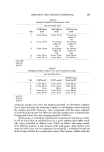
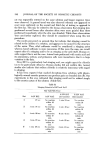
362 JOURNAL OF THE SOCIETY OF COSMETIC CHEMISTS est pay-off and gave low scores as far as creaminess and skin feel. Vegetable oil triglycerides, however, showed good creaminess and skin feel. In both cases, lanolin derivatives gave markedly better results than anhy- drous and liquid lanolin by themselves. Fatty esters, as a group, produced one of the highest scores relative to creaminess and skin feel. Heavy mineral oil was far superior to light mineral oil or squalane in both pay-off and skin feel. Gums and polymers showed marked superiority in pay-off but only fair results in skin feel. As far as glycols, nonionics, and emulsifiers are concerned, there are wide variations in performance.* SUMMABY AND CONCLUSIONS The following effects on pressed powders were quantitated in this study: (a) consistency, (b) pay-off, (c) tablet creaminess and skin feel. As expected, tablet hardness varied directly with the percentage binder used at any given pressure. Secondly, this investigation demonstrated that certain chemical groups produce harder tablets regardless of the percentage of binder used or pressure exerted. Some binders were found more effective in pressing the pearlescent formulations. Within specific chemical groups sig- nificant differences were found. Glazing was usually related to the amount of binder used and pressure, al- though, in the matte formulation, slight glazing occurred with many samples. All things being equal, the pearlescent variations showed less tendency to glaze. Again, some chemical groups showed differences within themselves and between the two formula variations tested. Fatty esters, lanolin esters, and heavy mineral oil were superior when eval- uated for tablet creaminess and skin feel. Creaminess varied with the percent- age of binder used and pressure, only within the specific chemical groups, and primarily in the matte variation. In conclusion, it is hoped that the inferences drawn as a result of this inves- tigation will enlighten the cosmetic chemist concerned with the development and production of pressed powders and open the door for further studies in these areas. (Received December 12, 1972) REFEBENCES (1) Martin, J. R. L., Face Powders, in Sagarin, E., Cosmetics: Science and Technology, Interscience Publisher, New York, N.Y., 1057, pp. 9.45-0. (2) Schlossman, M. L., and Feldman, A. J., Trends in pressed powder technology, J. Soc. Cosmet. Chem., 22, 000-14 (1071). * TheseSdata are available from the authors.

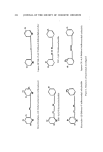
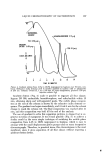
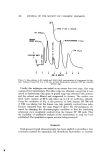
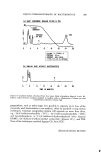
J. $oc. Cosmet. Chem., 24, 363-370 (May 23, 1973) Rapid Liquid Chromatography of Bacteriostats THOMAS WOLF, Ph.D., and DYMITRI SEMIONOW, B.A.* Presented October 9, 1972, Ioint Syml•osium of the Society of Cosmetic Chemis• and the Association of O•cial Analytical Chemists, Washington, D.C. Synopsis-High-pressure LIQUID CHROMATOGRAPHY has been applied in providing a fast, convenient method for separating and identifying BACTERIOSTATS in cosmetic preparations, such as toilet soaps. It is possible to separate up to four of the commonly used bacteriostats in one analysis, either by GRADIENT or STEP ELUTION techniques. Constant composition elution will separate no more than three, for example, 3,4,4'- trichlorocarbanilide (TCC), 3,4',5-tribromosalicylanilide (TBS), and hexachlorophene or 2',4,4'-trichloro-2-hydroxydiphenyl ether, 4,4'-dichloro-3-trifiuoromethyl carbanilide (CF•), and TBS. None of the techniques resolved CFs from TCC. Chromatography required 15 minutes and the limit of detection was 0.1/xg or better. ]'NTHODUCTION It is of considerable interest to have a fast, convenient method of separating and identifying bacteriostats. Analyses have been listed (1) that depend on ultraviolet spectroscopy, colorimetry, and polarography. However, these meth- ods are genera]ly not applicable to mixtures of bacteriostats. More recently several qualitative thin-layer separations have been described (1-4). Karles- kind et al. (5) have described quantitation following preparative tic, with an overall accuracy of about -4-_20%. This involves scraping the component streaks from tlc plates, which is an exacting and tedious task. It was thought that high-pressure liquid chromatography (HPLC) could provide an elegant qualitative and quantitative tool for bacteriostat analysis. The advantages sought from HPLC were direct quantitative response, short- ened time per analysis, greater sensitivity, and greater convenience. The bacteriostats tested are based on halogenated aromatic compounds and are thus ideally suited for measurement with a uv photometer detector. This note describes the qualitative aspects. *R & D Center, Colgate-Palmolive Co., Piscataway, N.J. 08854 363
Purchased for the exclusive use of nofirst nolast (unknown)
From: SCC Media Library & Resource Center (library.scconline.org)