EFFICACY OF ANTIDANDRUFF FORMULATIONS 83 until the oil-horn matrix is reconstituted. This may explain why bland sham- poos initially lower the corneocyte counts slightly. The contrasting behavior between heavy dandruff and nondandruff sub- jects after a single shampoo without further washing for 12 days is note- worthy. In dandruff, the counts approximately reached the initial level by 3 days and by 6 were 40% higher than originally. They leveled off thereafter though steadily increasing. The grades also returned to the prewash level (5.7) by the third day, reaching 7.4 by six. Clinical severity intensified fur- ther reaching grade 8 by 9 days. This represents tremendous scaling and was offensive to the subjects. In short, in heavy dandruff subjects, counts and grades were restored in less than 4 days, and continued to increase for the next 8. However, the counts leveled off rather sharply after 6 days, evidently reflecting an equilibrium between the production and loss of horny cells. The grades, however, did not really level off until day 9 the eye perceived a worsening that was not matched by proportionate increases in the counts. This discordance suggests that the larger scales are trapped and therefore easily visualized while the very small ones are shed and are therefore not sampled in the scrubbing procedure. With nondandruff on the other hand, the counts took about 6 days to be restored to the prewash levels and leveled off thereafter at the equilibrium state. Even by the end of 12 days without washing there was not a trace of dandruff. Grades showed no tendency to increase after the first few days. Bland shampooing of grade 5 dandruff subjects every 4 days did not sig- nificantly decrease the grades or the counts. There was a slight decrease in the counts after the first two shampoos washing evidently has some effect initially, though limited. Four days is just about the restoration time for mod- erate dandruff, compared to 3 for severe dandruff. As expected, shampooing grade 5 subjects every 2 days for 4 times sharply decreased the counts and the grades. Too frequent shampooing obliterates the signs of dandruff. Finally, we did one further test to demonstrate the contrast between dan- druff and nondandruff subjects. Five grade 5 subjects and 5 grade 3 ones wore bathing caps sealed to the skin for 21 days. Disregarding squamae in the hair, dandruff did not develop in grade 3 subjects. This belies our previous as- sertion that nonwashing leads to signs of dandruff (16). The nondandruff subject will not convert through bad hygiene. Horrendous scaling developed in the dandruff subjects who wore caps for 3 weeks. All achieved grades of 9 or 10 realodor became great enough to create personna non grata status for the subjects. Procedures for Assaying Antidandruff E•icacy Wc propose to outline here some schemes which, based on the foregoing findings, have proved valuable for estimating the effectiveness of antidan- druff shampoos and hair grooming preparations.

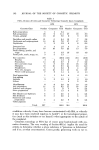
84 JOURNAL OF THE SOCIETY OF COSMETIC CHEMISTS An important tactic has been the repeated evaluation of agents of known efficacy. This type of experience has established the reproducibility of the method and has provided benchmarks for ranking materials comparatively. The bulk of our experience is with shampoos, the most popular form. Subjects Institutionalized volunteers are preferable for rigorous control then be- comes possible. Women are perhaps less suitable for two reasons: (a) dan- druff is probably less severe in the female and hence good subjects are harder to come by and (b) if the assay includes corneocyte counts, two sites must be clipped, a procedure not cordial to most women. For routine assays, clinical grading alone is sufficient provided that the subjects have at least grade 5 dandruff. For more conclusive results and es- pecially for comparing agents of differing effectiveness, a complete analysis is preferable this entails corneocyte counts as well as clinical grading. Procedure The procedure for a complete analysis is given in Table I. Ten subjects are sufficient for most purposes. The scheme entails two pretreatment bland shampoos to achieve baseline levels followed by twice weekly washing with the test material for 8 applications. The test terminates on the 28th day but it is often illuminating to return to twice weekly shampooing with the bland detergent for a follow-up period of several weeks. With highly effective sham- poos, it may take 4 to 6 weeks before scaling returns to the pretreatment level. Our bland shampoo is a local product* whose ineffectiveness has been es- tablished innumerable times. Most nonmedicated shampoos have little or no activity, but it is wise to determine this beforehand. Shampooing consists of two 1-min latherings with rinsing between and afterward. We find it con- venient to shampoo every Monday and Thursday that is at 3- and 4-day in- tervals alternately. Observations are always made 4 days after shampooing. *Triethanolamine ]auryl sulfate in a mixture of long carbon-chain amides formulated with color and perfume (Druco Shampoo, The Drug House, Inc., 1011 Butler St., Phila- delphia, Pa.). Table I Protocol for Complete Analysis of a Shampoo Pretreatment Treatment Post-Treatment Day --7 --4 0 3 7 10 14 17 21 24 28 Bland shampoo x x Test shampoo x x x x x x x x Grade x x x x x Corneocyte count x x x
Purchased for the exclusive use of nofirst nolast (unknown)
From: SCC Media Library & Resource Center (library.scconline.org)