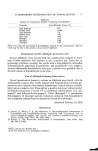
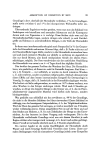
EFFICACY OF ANTIDANDRUFF FORMULATIONS 87 o q) (2 o : --ZPT o,- - - - -oHO Weeks Figure 5. Comparison o{ nonmedicated cream (Hydrophfiic Ointment U.S.P.) with an antidandruff grooming cream containing 0.5% zinc pyrithione in both dandruff and nondandruff subjects gle manifestation, scaling. The latter is the resultant of two processes: in- creased production of horny material and increased size of squamae. The condition is perceived because of accelerated epidermopoiesis accompanied by desquamation in large flakes. Epidermal turnover is normally much faster on the head than on the trunk and extremities (7). The exfoliation of horny cells is, of course, a physiologic phenomenon and becomes visible on the scalp because of the protection provided by the hair. Merely shaving the scalp masks dandruff. There cannot be a sharp division between dandruff and nondandruff since one is dealing with a continuum, a physiologic spectrum. Dandruff is merely an intensified state of desquamation the difference is quantitative not quali- tative. Dandruff is not a disease in this sense.

88 JOURNAL OF THE SOCIETY OF COSMETIC CHEMISTS It is sounder to use the term nondandruff in lieu of normal. Since dandruff blends smoothly into nondandruff, the point on the scale where dandruff be- gins is necessarily an arbitrary choice. Individuals will view the amount of scaling they have by purely subjective criteria according to their social sta- tion, esthetic sensibilities, personal ideas of cleanliness, etc. In a popular poll one would doubtless find that self-estimates of the prevalence of dandruff would increase steadily as one proceeded up the status ladder. This accounts for the very different estimates of the incidence of dandruff. By our criteria, we would regard Roia and Vanderwyks' estimate of 70% (12) to be too high while 2.5% given by Bourne and Jacobs seems too low (11). The vast subjec- tive element is revealed when one puts out a general call for subjects com- plaining of dandruff. in our experience about 60% of these will be grade 3, that is, with minimal scaling. The consumership for dandruff products prob- ably includes many individuals in this marginal class. By our criteria about 20% of a young male population will have dandruff of a sufficient degree, grade 5, to warrant their inclusion in panels for antidan- druff assays. The mean count for grade 5 is 700,000/cm 2. It is important to appreciate that individual counts may vary from the mean by a good deal. Not all persons with counts higher than this have clinical dandruff while, in- deed, some with lower counts do have dandruff. The latter circumstance is considerably more frequent than the former, that is to say, high counts almost always signify dandruff while low ones are not so well correlated with non- dandruff. More study is required of the factors which influence the size of the des- quamating flakes. When horny cells separate in large aggregates the subject will have clinical dandruff whether or not the corneocyte count is higher than the average. In the last analysis, the recognition of dandruff is by clinical criteria, by grading. The special value of corneocyte counting is to follow the effect of treatment by objective means and not for classifying individuals. The counts for a given individual are highly reproducible from week to week whether or not dandruff is present. Corneocyte counting is not only more objective but permits fine focusing beyond the resolving power of the eye. It is more discriminating with regard to judging the rapidity of the response (slope of the curve) and the magni- tude of the effect. The corneocyte count has a special capability for detecting cytostatic agents. These directly suppress mitotic activity, an effect which in- evitably abolishes dandruff. Topical corticosteroids and nitrogen mustards are effective for this reason (though not indicated in simple dandruff). Among conventional antidandruff agents selenium sulfide is not only antimicrobial but slows down epidermal turnover. This can be demonstrated in two ways. After treatment the counts usually fall to well below the mean for nondan- druff subjects. In addition, starting with grades i or 2, the counts can be low- ered still further to levels never exhibited by an untreated subject, that is, below "normal."
Purchased for the exclusive use of nofirst nolast (unknown)
From: SCC Media Library & Resource Center (library.scconline.org)