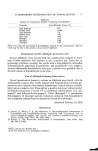
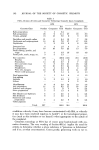
REGULATORY ACTIVITIES IN COSMETICS 101 of reacting the formaldehyde with acetylacetone and ammonia, to yield a di- hydrolutidine derivative which is intensely fluorescent. The method is highly sensitive, and can easily determine 0.001% of formaldehyde in a product. In other aspects of our methods research, we are making some use of nuclear magnetic resonance for the identification of ethoxylated compounds, and are trying to apply the highly specific techniques of enzymatic analysis to cosmetics ingredients. As noted earlier, cosmetic chemists at FDA perform sample analyses and voluntary registries work, as well as the methods development just discussed. Parenthetically, the voluntary registries workload has grown so much that it was necessary to divert some extra manpower into it, at the expense of the laboratory projects on methods and sample analysis. The cosmetics sample analysis work grows out of our consumer complaint system, which is based on the following rationale. In order to provide protec- tion against unsafe cosmetics, it is not enough to monitor products for the presence of previously recognized poisonous or deleterious substances. In ad- dition, it is necessary to identify new safety hazards which may be associated with the use of a novel ingredient, or an unrecognized toxicity of a familiar ingredient, or combinations of ingredients which may interact chemically or biologically to produce an adverse reaction in the consumer. To accomplish this objective, we maintain a central file of all cosmetics injury complaints received by FDA and we use this epidemiological data as a basis for much of our effort aimed at increased safety. In 1970, we received 227 complaints of adverse reactions to cosmetics, and in 1971, the number increased to 314 their distribution by product category is shown in Table I. The annual number of complaints continues to increase: in 1972, there were 377, and we have already received close to 300 in the first five months of 1973. This rapid rise is probably attributable more to a grow- ing public awareness of FDA activities in cosmetics than to any sharp in- crease in the safety hazard of cosmetic products. In any ease, a larger num- ber of complaints provides a broader data base and greater validity for our attempts to pinpoint safety hazards of cosmetics as reflected in actual human experience. (That is' why we are looking forward to the proposed voluntary reporting by manufacturers of their own data on consumer product experi- ence. ) Each complaint that comes in to FDA under the present system is reviewed by a panel consisting of the dermatologist and the senior cosmetics chemists. In some cases (about 120 per year) a decision is made to perform laboratory examination of a sample of the product associated with the complaint. Most often, this is a chemical analysis for the major components and for any es- pecially significant substances, such as lead in toothpaste or mercury pre- servatives. In addition, some samples are examined for microbiological con- tamination (under Section 601c which states that a cosmetic is deemed to be adulterated "If it has been prepared, packed, or held under insanitary

102 JOURNAL OF THE SOCIETY OF COSMETIC CHEMISTS Table I FDA--Division of Colors and Cosmetics Technology Cosmetic Iniury Complaints 1970 1971 Per Cosmetic Class Per Number Companies Cent Number Companies Cent Baby preparations 1 1 0.4 Bath preparations 25 9 11.1 '• Creams-general 15 13 6.6 9 6 2.8 Dentrifices and mouth washes 21 6 9.4 12 7 3.8 Deodorants and antiperspirants 16 10 7.0 37 17 11.8 Depilatories 3 3 1.3 2 2 0.6 Detergent bars 4 4 1.8 4 3 1.3 Eye preparations 16 16 7.0 22 13 7.0 Facia] makeup, powder, and rouge 8 8 3.5 15 15 4.8 Facial packs, masks, straps, etc. 3 3 1.3 ......... Hair cosmetics: (67) .. (29.5) (19.2) (61) (38.9) Bleaches 3 • 1.3 6 4 1.9 Preparations 13 12 5.7 9 7 2.9 Dyes and color rinses 8 8 3.5 31 15 9.9 Shampoos 19 10 8.5 44 16 14.0 Straighteners 5 4 2.2 6 4 1.9 Wave sets, ]acquers 19. 10 5.3 18 11 5.7 Waves-cold/permanent 7 5 3.1 4 4 1.3 Hand preparations I I 0.4 4 4 1.3 Leg makeup .... Lipsticks '• '• '2'.•. Lotions ......... 4 3 1.3 Miscellaneous 6 6 2.6 12 10 3.8 Nail preparations 14 11 6.2 11 10 3.6 Peroeumes and colognes 2 2 .9 7 6 2.2 Shave preparations 3 3 1.3 4 4 1.3 Skin bleaches and lighteners 6 3 2.6 9 4 2.8 Skin oeresheners 6 3 2.6 4 3 1.3 Sunscreens and suntan preparations 5 4 2.2 7 5 2.2 Tattoo pigments .................. Totals 227 100.0 314 100.0 conditions whereby it may have become contaminated with filth, or whereby it may have been rendered iniurious to health") or for toxicological proper- ties (such as skin irritation or eye hazard) when appropriate to the nature of the complaint. Cosmetics toxicology at FDA has of course gone hand-in-hand with cos- metics chemistry. The very wording of Section 601(a) implies the need for criteria to determine whether a given substance is "poisonous or deleterious" and if so, at what concentrations. Conseqaently, pioneering work on eye ir-
Purchased for the exclusive use of nofirst nolast (unknown)
From: SCC Media Library & Resource Center (library.scconline.org)