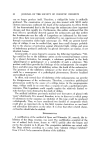
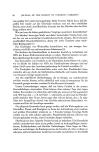
REGULATORY ACTIVITIES IN COSMETICS 103 ritation tests and other toxicological characteristics of cosmetics ingredients was carried out by Draize and others (4) methodology in this area is still undergoing further refinements. Some other subiects of current interest in cosmetics toxicology at FDA are: sensitization phenomena, percutaneous ab- sorption, and aerosol inhalation toxicity. In addition, one of the most im- portant aims at this time is to define the types of safety testing for each class of cosmetics, which should be used by the manufacturer to assure himself of the safety of his product. SCIENCE AS BASIS FOR REGULATIONS After this brief survey of FDA scientific activities relating to cosmetics, let us consider next the process of utilizing scientific knowledge in the establish- ment of offlcia] regulations or in other regulatory decisions. The transition from science to regulatory decision is not always easy and straightforward, because of any of a nmnber of reasons, such as: 1. Incomplete factual information on toxicity. 2. Difficulty of extrapolating laboratory animal testing to humans. 3. Absence of an adequate analytical method for a suspect substance, which may be present only in traces. 4. The difficulty in setting limits in each individual case for the frequency and severity of adverse reactions beyond which corrective action must be taken. In other words, if our goal is "safe" cosmetics, quantitatively how safe is "safe"? 5. A new product will often generate a wave of complaints, which may gradually subside ( Fig. 1 ) even if corrective action is delayed. Inevitably, then, judgmental factors as well as factual scientific data are sometimes involved in the regulatory process. Some recent examples can il- lustrate this. One example is the prohibition by FDA of the use of mercury preserva- tives in cosmetics, except for eye-area cosmetics where up to 65 ppm of mer- cury is permitted if no safe and effective substitute is available. This regula- tion was published in the Federal Register in January 1973, after extended consideration of the subiect. The scientific informaion available as a basis for this regulatory action included data showing that some mercury compounds are absorbed through the intact skin, data on the levels of mercury preserva- tives ttsed in cosmetics (typically between 5 and 50 ppm), and some data on the differential toxicity of inorganic mercury, phenylmercury, and methyl- mercury compounds. Further, we had the benefit of a iudgment by FDA in 1970 that the safety limit for ingestion of methyhnercury in fish corresponded to 30/xg of mercury per adult per day. Simple calculations showed that the use of 0.1 g of mercury-preserved eye makeup daily would not contribute more than 10% or 20% of the permissible mercury exposure, but the daily use of ]0 g of a mercury-preserved body lotion could potentially far exceed the

104 JOURNAL OF THE SOCIETY OF COSMETIC CHEMISTS TIME Figure 1. Complaint rate on a new product safety limit. Even though it might have been simpler to prohibit the use of mercury preservatives in all cosmetics, we made the judgment that the out- standing efficacy of mercury against such dangerous eye pathogens as Pseu- domonas aeruginosa conferred a benefit which greatly overbalanced the small risk of systemic mercury toxicity, in the use of mercury preservatives in eye cosmetics. Approval was asked by one company for the use of mercury preservatives in protein shampoos and other hair preparations. It is quite possible that mercury in products applied to the hair is fixed by cystinc and other sultk•r compounds in hair, and becomes unavailable for systemic adsorption. How- ever, in the absence of definitive scientific data showing this to be true, FDA was unable to give approval for the use of mercury preservatives in hair prep- arations. A second example of incomplete scientific knowledge in the face of a regu- latory problem has to do with the use of ionizing radiation (such as cobalt-60 gamma rays) for the sterilization of cosmetics ingredients and/or finished products. Claims were made, for example, that color additives used in cosmet-
Purchased for the exclusive use of nofirst nolast (unknown)
From: SCC Media Library & Resource Center (library.scconline.org)