408 JOURNAL OF THE SOCIETY OF COSMETIC CHEMISTS Bleached Hair Detergent-washed European brown hair (10 g) was weighed into a 1-1. beaker and treated with a solution containing 60 ml of 30% hydrogen peroxide and 240 ml of aleionized water, and adiusted to pH 10.2 with con- centrated ammonium hydroxide. After 30 rain the solution was decanted and Reduced-Oxidized Hair the h.qir was thoroughly rinsed with deionized water. Detergent-washed European brown hair was reduced for 30 min with 6% ammonium thioglycolate at pH 9.2 using a 33:1 solution-to-hair ratio followed by oxidation for 5 min with 1.4% sodium perborate using a 40:1 solution-to- hair ratio. Methyl Methacrylate* Monomer was washed with dilute alkali and distilled prior to use. All other chemicals were of reagent grade or of the highest purity available. Procedures Polymerization with TGA-Cumene Hydroperoxide The hair was immersed in 6% ammonium thioglycolate at pH 9.2 for 10 (unless otherwise specified) using a 20:1 solution-to-hair ratio at room tem- perature. The solution was then decanted and the fibers were rinsed for 2 rain with deionized water and immersed at room temperature in water-alcohol (60:40) mixtures of MMA (10%) and CHP (3%) using a 20:1 solution-to- hair ratio (unless other concentrations are specified). After 30 min reaction time, the solution was decanted and the hair was rinsed with water and dried. The amount of add-on was estimated by weight pickup measured at 55% RH before and after reaction. Polymerization with BisullSte-Cumene Hydroperoxide The fibers were immersed in 5% sodium bisulfite dissolved in 45% ethanol for 10 min using a 20:1 solution-to-hair ratio at room temperature. The solu- tion was then decanted and the fibers were rinsed for 2 nfin with deionized water and immersed in a solution of MMA and CHP as described in the above section. Isolation o[ Polymer by Acid Hydrolysis Polymer (PMAA)-containing hair was refiuxed for 11/2hours in 5N hydro- chloric acid using a 50:1 solution-to-hair ratio. The solution was decanted and the fibrous solid was washed with deionized water, filtered, and washed sev- *Borden Chemical Co., Philadelphia, Pa.

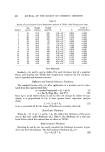
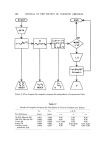
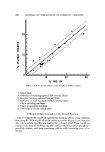
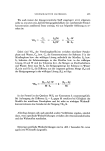
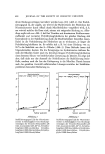
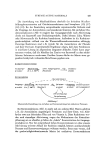
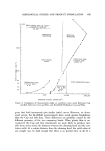
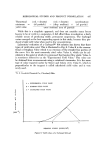
POLYMERIZATION INTO HUMAN HAIR 409 eral times again. The fibrous solid was then dried to a constant weight in a desiccator before microscopical examination. Molecular Weight Determination Flow times for oe% and lower concentrations of the polymer (PMMA) in benzene, as isolated above, were determined in a Ubbelohde-Cannon Dilution Viscometer Size 75* to provide an estimation of the viscosity average mole- cular weight (3). Isolation of Fibrous Solid from Sodium Sulfide Reaction Polymer-containing hair was shaken in 0.6M sodium sulfide in 1% sodium hydroxide solution for 18 hours using an 80:1 solution-to-hair ratio. The solu- tion was decanted, the solid filtered, washed with water, and dried. RESULTS AND DISCUSSION Add-On and its Relation to the Amount Synthetic Polymer Formed in Hair Previous publications (1, 4) describing reactions of human hair with vinyl monomers, under conditions conducive to polymerization, refer to add-on or polymer deposit as the amount of weight gain measured under conditions of constant temperature and relative humidity. Add-on is generally assumed to be synonomous with the amount of synthetic polymer deposited and/or grafted (incorporated) per unit weight of fibers. In order to test this assump- tion, we attempted to measure these two parameters in our reaction system. Figure i summarizes the results of this effort showing a linear relation be- tween add-on and the per cent of polymer (PMMA) isolated up to 30% add- on. Over this range, the per cent polymer isolated generally corresponds to more than 80% of the total add-on. Therefore, we conclude that per cent add- on is a reasonable approximation to the amount of PMMA incorporated in the hair under these reaction conditions. In the initial stages of this investigation, we decided to use moderate solu- tion-to-hair ratios (25:1) where solution measurement could be made and where concentrations of the various reagents might be affected by depletion effects, permitting study of this important rate limiting factor. The Reaction Scheme Polymerization of a vinyl monomer into human hair via the reaction sys- tems used in this study is a complicated multistep process summarized by the following nine-step reaction scheme: 1. Diffusion of reducing agent into the fibers 2. Chemical reaction with disulfide bonds in the fibers *Cannon Instrument Company, State College, Pa.
Purchased for the exclusive use of nofirst nolast (unknown)
From: SCC Media Library & Resource Center (library.scconline.org)