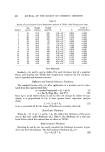
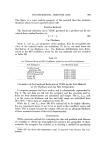
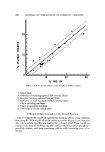
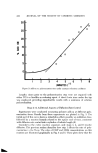
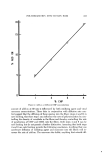
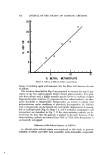
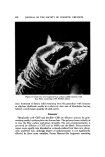
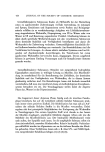
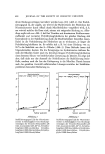
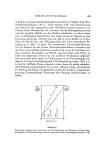
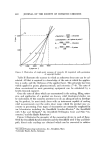
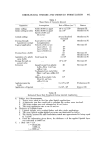
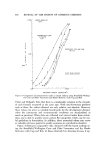
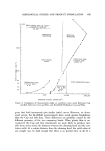
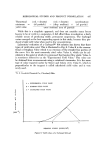
416 JOURNAL OF THE SOCIETY OF COSMETIC CHEMISTS 10- I I o IO 2o I 3o 40 50 60 70 % ALCOHOL Figure 8. Solvent effects on add-on Figure 8 shows the influence of the ethanol-•vater ratio on polymer add-on. This plot shows an increase in add-on with an increasing amount of •vater in the solvent system. The more water in the system, the greater the fiber swell- ing and the greater the driving force for deposition of water insolubles onto the fibers and, therefore, diffusion of these same species (CHP and MMA) into the hair. One might also postulate that the greater the amount of water in the solvent, the greater the tendency for emulsion polymerization, •vith polymer and/or hair serving as the internal phase. However, this suggestion is a moot point and we wish to stress the importance of diffusion to each of the steps which we feel provides a pragmatic explanation to the entire re- action scheme. Polymerization into Reduced-Oxidized Hair Extensive reduction followed by mild oxidation increases the penetrability of hair •vithout producing an appreciable change in the disulfide content. Table I provides data sho•ving polymer add-on under fixed conditions with the bisulfite polymerization system (reduction for 10 min followed by poly- merization for 30 min) into reduced-oxidized hair. As predicted from our

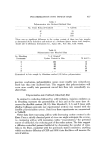
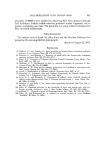
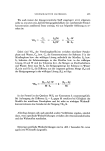
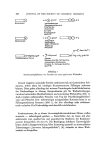
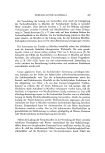
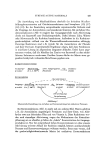
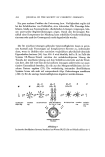
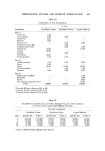
POLYMERIZATION INTO HUMAN HAIR Table I Polymerization into Reduced-Oxidized Hair No. Times Reduced•Oxidized % •id-On 417 15 103 116 aThere was no significant difference in the cystine content of these two hair samples as determined (9) by hydrolysis and analysis on a Beckman Spinco Amino Acid Analyzer, Model 120-C (Beckman Instruments Inc., Spinco Div., Palo Alto, Calif. 94303). Table II Polymerization into Bleached Hair No. Bleaching % of Original" Treatments Cystine Content in Hair % Add Cn 100 12 88 18 85 21 8O 25 ... 38 aDetermined in hair sample by Shinohara method (12) b•oe0re polymerization. previous conclusions, polymerization occurs more readily into reduced-oxi- dized hair than into unaltered hair. This suggests that polymerization will occur more readily into permanent waved hair than into cosmetically un- altered hair. Polymerization into Oxidized (Bleached) Hair In contrast to reduction followed by mild oxidation, vigorous oxidation as in bleaching increases the penetrability of hair and at the same time de- creases the disulfide content (10, 11). Hair bleached 1, 2, 3, and 5 times with alkaline hydrogen peroxide (see experimental section) was treated with the bisulfite polymerization system. Data from these experiments are summarized in Table II. These data show increasing add-on with decreasing cystinc content in the fibers. From a strictly chemical point of view one might anticipate the reverse, i.e., increasing add-on with increasing cystinc "concentration," the potential source of sulfhydryl, the reducing part of the redox system. The data suggest a diffusion-controlled process facilitated by decreasing the number of cross- links in the fibers, consistent with the previously stated conclusion anything which accelerates diffusion of CHP and MMA into the fibers will increase the rate of add-on.
Purchased for the exclusive use of nofirst nolast (unknown)
From: SCC Media Library & Resource Center (library.scconline.org)