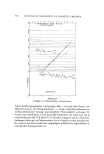
UPTAKE AND EXCRETION OF AEROSOL ANTIPERSPIRANT 653 2.4 2.0 1.8 1.6 •.4 1.2 •.0 0.8 0.6 0.4 [] MONKEY C o o o o o MONKEY D o o o o o o o o o o [] o o o o o o o o o 4 5 6 7 8 9 10 11 12 13 14 15 16 17 18 19 20 21 22 23 24 25 TIME (HR S.) Figure 3. Exhalation of IPM vironment of Man" in which numerous books, reports, and articles were as- sembled and abstracted. These authors conclude that after consideration of the wide distribution of aluminum in the normal environment, e.g., soil, at- mosphere, vegetation, and water, as well as in food, food processing, food containers, and medicinal agents, there are "no problems associated with aluminum in the environment of man and that none appeared on the hori- zon." Estimates of the quantity of alumimxm in the diet of the ordinary adult, including amounts derived from aluminum utensils, range from 10 to 100 mg per day. Recalling that aluminum is the third most abundant element on the earth's surface and widely distributed as soft, low density materials, these estimates appear reasonable. The two most likely routes by which aluminum enters the body are oral ingestion and inhalation. No evidence for topical absorption has been reported (3). The major component of the vehicle is a commercial grade of isopropyl myrisate, a colorless and practically odorless liquid. It contains 95.0% iso- propyl myristate. The remainder is mainly isopropyl pahnitate (up to 4%), isopropyl laurate (up to 1.5%), and traces of isopropyl tridecanoate and iso- propyl pentadecanoate. It is widely used in cosmetic formulations and drugs.

654 JOURNAL OF THE SOCIETY OF COSMETIC CHEMISTS A summary of its toxicity evaluation indicates it is nontoxic and neither a primary irritant nor a sensitizer (4). The other component of the formulation is the anticaking ingredient, Ben- tone-34. This is a proprietary composition which is a reaction product of a bentonite clay and dimethyl distearyl ammounium chloride. A toxicological examination (5) by the supplier indicates no evidence of .local or systemic reactions resulting from chronic topical exposure. It is nontoxic and approved for use as a food additive. SUMMARY It has been shown that direct exposure of the face to this aerosol spray an- tiperspirant from a distance of about 12 in. leads to the uptake of only 0.25% of the spray formulation concentrate. About 10% of this (0.02%) reaches the lower respiratory tract. About 85% of the absorbed IPM is excreted in 24 hours, mainly as carbon dioxide in the breath. Very little reaches any of the tissues other than the lungs. Since only i mg of the formulation concentrate is absorbed and the toxicity of the components is reported to be low, it is un- Fkely that a hazard exists. ACKNOWLEDGMENT The authors gratefully acknowledge the able technical assistance of Mr. Charles Ulrich of Huntingdon Research Center, Baltimore, Md. (Received May 24, 1974) (1) Altman, P. L., and Dittmer, D. S., Biology Data Book, FASEB, Washington, D.C., 1964. (2) Campbell, I. R., Cass, J. S., Clolak, J., and Kehoe, R. A., Aluminum in the environ- ment of man, Ind. Health, 15, 359-448 (1957). (3) Blank, I. H., Jones, J. L., and Gould, E., A study of the penetration of aluminum salts into excised human skin, Proc. Sci. Sec. Toilet Goods Ass., 29, 32-5 (June 1958). (4) Deltyl Extra Bulletin, Givaudan Corp., 125 Delawanna Avenue, Clifton, N.J. 07014. (5) Toxicological Examination of Bentone-34, N. L. Industries, P.O. Box 420, Hightstown, N.J.
Purchased for the exclusive use of nofirst nolast (unknown)
From: SCC Media Library & Resource Center (library.scconline.org)