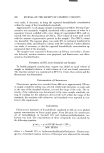
FLUOROMETRIC DETERMINATION OF PRESERVATIVES 657 formaldehyde by reacting it with 2,4-pentanedione and ammonia to form 3,5- diacetyl~l,4-dihydrolutidine (DDL) which he measured spectrophotometri- cally. The equation for this reaction is shown in Fig. g. The Hantzsch re- action has been applied to the determination of formaldehyde in cosmetics (4). In the present study the necessary conditions were developed for oxidation of the hydroxymethylene groups of these preservatives. The formaldehyde produced became a reactant in the Hantzsch reaction. The DDL formed was measured fluorometrically because fluorometry is considerably more sensitive than spectrophotometry. Sensitivity becomes critical for certain of these com- pounds because of the low concentrations used in many cosmetic products. EXPERIMENTAL Apparatus A fluorescence spectrophotometer,* xenon lamp, xenon power supply 150, were used. Optimal excitation was 410 nm and emission 510 nm. Slit widths were set at 10 nm. Reagents The preservatives were Bronopol (mp 128-132øC), hydroxymethyldimeth- ylhydantoin (top 97-100øC) and Germall 115 (decomposed above 160øC). Stock solutions containing 0.05-2.0 mg of preservative per ml in 10% metha- nol were prepared as required. Solvents were ACS or equivalent grade. A 2M aqueous ammonium acetate buffer solution was prepared daily, the pH was adjusted to 6.00 with glacial acetic acid, and the buffer was then made 0.02M in acetylacetone (2,4-pentanedione,t purified by distillation, and the fraction boiling at 134-137øC collected product should be clear, color- less, and nonfluorescing before use). To prepare 100 ml of the buffer solution, the required amounts are 15.4 g of ammonium acetate, 0.30 ml of acetic acid, and 0.20 ml of acetylacetone. Formaldehyde standard solutions were prepared daily from 36.8% certified ACS formaldehyde* in 10% methanol (0.1 to 0.8/xg of formaldehyde per ml). Preparation of Sa•nple Approximately 100 mg of clear sample containing from 0.02 to 1.0 mg of preservative was accurately weighed, transferred to a volumetric flask with 10% methanol, and diluted to volume with 10% methanol. Further dilutions *Perkin-Elmer Corp., Norwalk, Conn., Model MPF-3. •'Ana]abs Inc., North Haven, Conn. *Fisher Scientific Co., Pittsburgh, Pa.

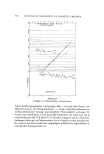
658 JOURNAL OF THE SOCIETY OF COSMETIC CHEMISTS were made, if necessary, to bring the expected formaldehyde concentration within the range of the formaldehyde standards. Approximately 1 g of opaque sample containing from 0.05 to 10.0 mg of pre- servative was accurately weighed, transferred with a minimum of water to a separatory funnel, acidified with a few drops of concentrated HC1, and ex- tracted with two 30-ml portions of CHC13. (The volume of water used varied with the amount of preservative present in the sample.) The CHC13 extract was discarded. The aqueous phase was made 10% in methanol, transferred to a volumetric flask, and diluted to volume with 10% methanol. Further dilution was made, if necessary, so that the expected formaldehyde concentration ap- proximated that of the standards. The samples were scanned for fluorescence at 510 nm (see below). If none was detected, reaction mixtures were prepared, and fluorescence was deter- mined as described below. Formation o[ DDL [rom Standards and Samples To freshly prepared acetylacetone reagent was added an equal volume of sample or standard solution. A total volume of 4 ml was found convenient. The reaction mixture was maintained at 00øC for 1 hour, then cooled, and the fluorescence was determined. Determination of Fluorescence Fluorescence spectra were recorded from 420 nm to approximately 700 nm. A sample sensitivity setting was selected which kept intensities on scale and, in the case of the standard solutions, covered the range of the scale. The in- tensity of the unknowns was determined at the same sample sensitivity set- ting. If readings for the unknowns did not fall well within the range of the standards, the reactions with unknowns and standards were repeated to con- form to this requirement. Calculations Fluorescence intensities of formaldehyde standards at 510 nm were plotted against concentration on linear graph paper. From this plot, the amount per ml of formaldehyde in Germall 115 and hydroxymethylhydantoin un- knowns was read. The concentration of these compounds was calculated by thc following equation: g/ml(•) = g/ml HCHO found x MW(.•) MW HCHO where x= Germall 115 or hydroxymethyldimethylhydantoin. Fluorescence spectra of standard reaction mixtures of Bronopol xvere obtained, the intensity
Purchased for the exclusive use of nofirst nolast (unknown)
From: SCC Media Library & Resource Center (library.scconline.org)