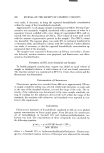
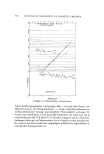
HAIBLESS MOUSE FOB EVALUATING SUNSCBEENS Table I Grades of Skin Reactions a Observed in Hairless Mice Protected Against Various Amounts of UV •vith 8 Commercial Sunscreens Exposure Conditions b 20 rain 15 rain 10 min 5 rain Preparation (10 MED) (7.5 MED) (5 MED) (2.5 MED) 643 B ++++ +++ ++ -- C D + -- -- -- F + -- -- -- G +++ ++ -- -- H ++++ +++ ++ Control aSkin reactions: -- = none q- = mild q-q- = moderate +q-q- = strong q-q-+q- = very strong. øMED = minimal erythema dose. relatively ineffective when tested on man. Willis and Kligman (7) reported that homomenthyl salicylate (concentration not stated) was protective for humans against 5 MED using a Xenon light as UV source. In the present experiments, 7.7% homomenthyl salicylate protected mice against 2.5 MED but failed against 5 MED. Furthermore, these investigators reported that 2- hydroxy-4-methoxybenzophenone-5-sulfonic acid (concentration not stated) provided protection against 9 MED in humans. In the present experiments 11.2% of this agent protected mice at 7 MED but failed at 10 MED. Finally, Willis and Kligman reported protection against 12 MED with a mixture of 2,2-dihydroxy-4-methoxybenzophenone and 2-hydroxy-4-methoxybenzophe- none. In the present studies a related sunscreen preparation (F) protected mice at 7 MED but failed at 10 MED. That there is not complete agreement in the matter of sunscreen protection is seen when the results of Katz (8) are compared with both those of Pathak et al. (5) and the work reported here. Katz (8) reported that 5% PABA in 70% ethanol, a cream with benzophenone derivatives of oxybenzone and dioxybenzone, and 3% 2,2-dihydroxy-4-methoxybenzophene in a cream base were superior to preparation C containing 9,.5% isoamyl p-N,N-dimethyl- aminobenzoate in 65% ethanol, when tested on buttocks or suprapubic skin for protection against Florida midday sun. At this point, comments are in order with regard to the response of mice and humans to UV irradiation. The clinical impression is that erythema de- velops and clears more slowly in humans than in mice. Mouse skin appears to be more extensively damaged, and the dmnage often involves subcutaneous

644 JOURNAL OF THE SOCIETY OF COSMETIC CHEMISTS tissue. Pronounced edema and an inflammatory halo with necrosis were not observed in humans at UV doses which produce these effects in hairless mice. The greater vulnerability of the mouse skin is thought to be related to the thinner horny layer, thinner epidermis, and lack of epidermal pigment. This greater sensitivity may enhance the value of this species as a model for humans. CONCLUSIONS 1. Skin reactions •vere reproducible and virtually the same minimal erythema doses were obtained repeatedly when hairless mice were exposed to identical amounts of solar simulating UV irradiation. 2. In hairless mice, the best protection against UV irradiation (10 MED) was obtained with 2 commercial sunscreens, one containing 5.4% PABA, the other 2.7% alkyl p-dimethylaminobenzoate. A preparation containing 1.6% alkyl p-dimethylaminobenzoate and one containing 4.4% homomenthyl salicylate were ineffective. 3. Although not compared directly, the response of hairless mouse skin to UV irradiation appeared to be more intense and may involve deeper (sub- cutaneous) tissues than the response of humans under similar conditions of exposure nevertheless, comparative (sunscreen) results for the two species appear to be consistent with one another. 4. The hairless mouse appears to be a promising model for providing a basis for comparing the effectiveness of sunscreen preparations on skin ,in vivo. (Received April 4, 1974) REFERENCES (1) Epstein, J. H., Fukuyama, K., and Dobson, R. L., Ultraviolet Light Carcinogenesis, in F. Urbach, ed., The Biologic Effects of Ultraviolet Radiation, Pergmnon Press, Oxford, 1969, p. 551. (2) Kligman, A.M., Early destructive effect of sunlight on human skin, J. Amer. Med. Ass., 210, 2377 (1969). (3) Harber, L. C., Clinical evaluation of quantitative differences in ultraviolet absorption of compounds containing the substituted benzoic acid nucleus, J. Invest Dermatol., 23, 427 (1954). (4) MacLeod, T. M., and Frain-Bell, W., The study of the efficacy of some agents used for the protection of the skin from exposure to light, Brit. J. Dermatol., 84, 266 (1971). (5) Pathak, M. A., Fitzpatrick, T. B., and Frank, E., Evaluation of topical agents that pre- vent sunburn. Superiority of p-aminobenzoic acid and its ester in ethyl alcohol, N. Engl. J. Med., 280, 1459 (1969). (6) Langner, A., and Kligman, A.M., Further sunscreen studies of aminobenzoic acid, Arch. Dermatol., 105, 851 (1972). (7) Willis, I., and Kligman, A.M., The evaluation of sunscreens by hmnan assay, J. Soc. Cosmet. Chem., 20, 639 (1969). (8) Katz, S. J., Relative effectiveness of selected sunscreens, Arch. Dermatol., 101, 466 (1970).
Purchased for the exclusive use of nofirst nolast (unknown)
From: SCC Media Library & Resource Center (library.scconline.org)