J. Soc. Cosmet. Chem., 27, 63-72 (1976) Water and the Horny Layer THOMAS S. SPENCER, Ph.D.* Presented, May 29, 1975, SCC Annual Seminar, St. Louis, Missouri Synopsis: WATER content of HUMAN STRATUM CORNEUM (SC) has been studied by grav[metric analysis in vitro as a function of TEMPERATURE, RELATIVE HUMIDITY (RH), and AQUEOUS EXPOSURE. SC samples obtained by trypsin digestion and can- tharidin blister techniques have similar hydration properties, while sunburn exfoliated tissue absorbs •nore xvater at 97 per cent BH and is more susceptible to damage by aque- ous solution. As one increases the hmnidity from 30 to 60 per cent, there is little change in water content of SC. Low temperature and low relative humidity reduce the bound water fraction in the SC, which has been identified as one of the factors in dry skin observed during cold dry weather. INTRODUCTION An understanding of water binding in the SC is necessary to develop pre- ventive measures for dry skin for without a minimum water content of 0.10 to 0.15 mg water per milligram dry skin, the corneum is less pliable, which contributes to the mechanical cracking and fissuring of dry skin (1,2). The current paper is an evaluation of hydration studies involving samples obtained using various harvest methods.? In addition, kinetic analysis of hydration and previous results (3), indicating direct relation between temperature and wa- ter content of SC, are related to water binding in SC. MATERIALS AND METHODS The SC was obtained by three methods: cantharidin blister trypsinization of autopsy skin and sunburn exfoliated tissue. Cantharidin blister tops were formed by application of cantharidin at 0.1 mg/cm 2 under an occlusive dress- *Department of Dermatology Research, Letterman Army Institute of Research, Presidio of San Francisco, CA 94129. •'J. M. Mueller, T. S. Spencer, and W. A. Akers, Stratum corncure harvest methods and hydration, Technical Report, Department of Dermatology Research, Letterman Army Institute of Research, Presidio of San Francisco, CA 94129. 63

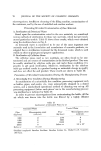
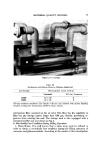
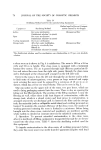
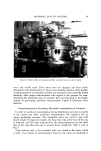
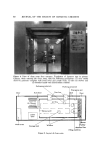
64 JOURNAL OF THE SOCIETY OF COSMETIC CHEMISTS ing on the backs of human subjects. After 6 hours of occlusion, treated sites were covered with a sterile bandage and the blister tops were allowed to fill overnight. Blister tops were cut off with scissors, remaining epidermal tissue was removed with a wool-tipped stick, and samples were stored in a desic- cator. Trypsinized SC was obtained from the abdominal region of cadavers and separated by the method of Kligman and Christophers (4). Epidermal tissue was gently removed with a wool-tipped stick and samples were stored in a desiccator until they were used. Sunburn exfoliated tissue was obtained in a single sheet from the back of an individual 10 days after 1.5 hours of ex- posure to summer sun and was stored in a desiccator. Hydration measurements were carried out .on 6 or 8 mm punches of dry SC mounted on nichrome wire hooks. Samples were weighed in one of two 15 x 15 x 20 cm chambers which had controlled environments. Within the chambers, up to 6 SC samples could be manipulated from storage hooks to a balance wire extending down from a Cahn RG Electrobalance • mounted on top of the chambers. In addition, samples could be transferred from one cham- ber to the other with a slidewire via a sliding door so that all measurements could be made without disturbing the environment in the chamber. Humidity was maintained by a salt solution within each chamber, which generated a constant RH (5). The following saturated solutions were used: magnesium nitrite (RH equals 30 per cent), potassium carbonate (RH equals 40 per cent), sodium nitrite (60 per cent), sodium chloride (75 per cent), potassium chloride (83 per cent), potassium nitrite (93 per cent), and potas- sium sulphate (97 per cent). The hydration chamber was mounted within a modified Hydro-Jac* incubator, which was coupled with a water bath to regu- late the temperature of the incubator (-0.2øC). The temperature was moni- tored with a 46-TU Telethermometer Thermistor and the humidity was mon- itored by means of Hygrodynamics • narrow-range sensors located within the chamber. Changes in temperature, humidity, and sample weight were re- corded simultaneously throughout the experiments on strip-chart recorders. Water content was measured as milligram H20 per milligram dry SC (mgl H20/mg SC). To study the effects of heat exposure, two 8 mm punches were cut from one sample harvested by each of the 3 methods. A dry weight was taken for each sample. The samples were transferred to the second chamber at 97 per cent RH for 48 hours, and hydrated weights were recorded. The samples were then wrapped in plastic and immersed in water at 60øC for 10 min. after which dry •Ventron Instruments Corp., Paramount, Calif. 90723. ]'Forma Scientific, Marietta, Ohio 45750. $Yellow Springs Instrument Co., Yellow Springs, Ohio 45387. •Hygrodynamics Inc., Silver Springs, Md. 20910.
Purchased for the exclusive use of nofirst nolast (unknown)
From: SCC Media Library & Resource Center (library.scconline.org)