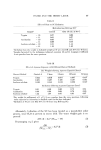
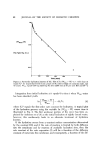
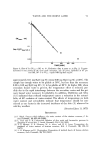
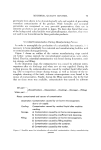
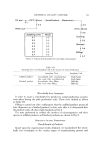
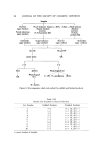
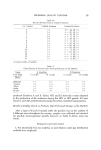
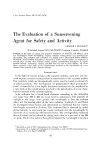
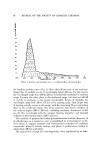
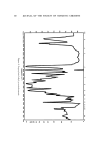
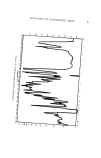
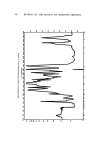
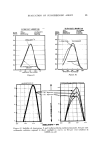
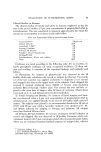
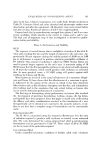
EVALUATION OF SUNSCREENING AGENT 95 ULTRAVIOLET ABSORPTION OPTI CA L ,•OL VEN•' •oeN$1T¾ EI•IiICoelVTRATI•A/ 0,0005'/, 0,? , 2?0 290 310 330 •V•L ENCrH- •/ZZ Figure 9. I,? 0.3 0,1. 0,0 ULTRAVIOLET ABSORPTION :ELL: i,o •,• •t/A•TZ SOLVENT: /4ErNA•OL t#l•tlT.MrlON I ' •7_ _% ' /1 - -1 *• ...... Figure 10. AMERSCREEN P v. • .......... •0--- / i ! ',• :Co.•o• i '"• ......... ...... ø'1 o. •60 285 3]0 335 0.2 Z60 _ Ethoxyethyl- p- methoxyclnnamat e 285 •10 335 Figure 11. Stability of Amerscreen P and 2-ethoxyethyl-p-methoxycinnamate. 0.5 per cent methanolic solutions exposed to direct sunlight uv curves on 0.5 per cent solutions in 0.0025 cm cell

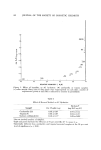
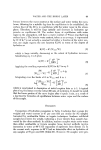
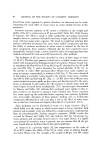
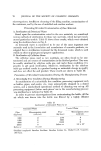
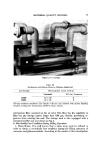
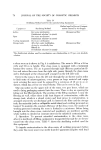
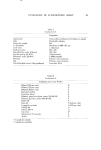
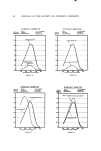
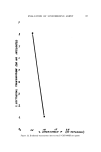
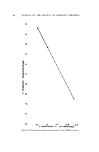
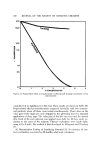
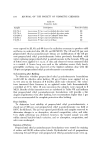
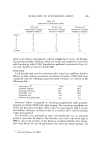
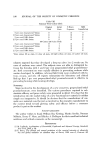
96 JOURNAL OF THE SOCIETY OF COSMETIC CHEMISTS p-aminobenzoate remains unchanged when treated under similar conditions. Figure 12 is a plot of erythemal transmission versus concentration using an 0.0025 em quartz cuvette, which approximates a use application. A 1 per cent concen.tration of propoxylated ethyl p-aminobenzoate in methanol trans- mits only 1 per cent of the erythemic radiation (290 to 320 nm integrated) by this procedure. Figure 13 is a plot of tanning wavelength transmission versus concentration again using the 0.0025 cm quartz cuvette. A 1 percent concentration o{ propoxylated ethyl p-aminobenzoate in methanol permits transmission of 68 per cent of the desirable tanning rays (320 to 375 nm integrated), while cut- ting 99 per cent of the undesirable erythemic rays. Cumpelik (5) has developed a simple analytical procedure to evaluate sun- screens. Per cent transmittance is determined for several concentrations at wavelength increments from 2900 to 3750 A. Each wavelength is weighted by its erythemal effectiveness factor and the erythemal and tanning fluxes in- tegrated over the wavelength range to determine the total per cent of erythe- mal and tanning transmiss'on. A plot of concentration versus both erythemal and tanning transmission can be used as a gu/•de to sunscreen concen.tration. Erythemal and tanning transmission curves were developed for propoxylated ethyl p-aminobenzoate following Cumpelik's procedure. These are presented in Fig. 14. Phase 2-Toxicity and Safety Propoxylated ethyl p-aminobenzoate was selected for further testing to de- tem•ine its •toxicity and safety in use. With the need for proof of safety upper- most in mind, we elected to undertake a rather extensive testing program. At each step of phase 2, the candidate compound could have been eliminated, forcing a return to the phase 1 screening program. Animal Studies The first step was to determine acute oral toxicity. We tested 100 per cent propoxylated ethyl p-aminobenzoate on 5 groups of albino rats consisting of 5 male and 5 female rats in each group of Sherman-Wistar strain. The acute oral LD,•o is 13.3 ml/kg. For comparison, the LD3o of benzocaine is calcu- lated to be 10.9 ml/kg (6) and of PABA 6 ml/kg. Five per cent propoxylated ethyl p-aminobenzoate in Carbowax ointment was then tested for pr:mary skin and eye irritation. This concentration, which represents about five times the normal recommended level in most suntan formulations, was selected to exaggerate the test. No cases of skin and eye ir- ritation were noted on 6 albino rabbits. Comedogenicity of 5 per cent propoxylated ethyl p-aminobenzoate was evaluated by applying the agent daily to the external ear canal of 3 rabbits for 3 weeks. No sign of o-nnedones or irritation was observed.
Purchased for the exclusive use of nofirst nolast (unknown)
From: SCC Media Library & Resource Center (library.scconline.org)