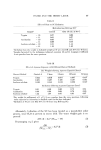
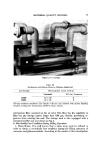
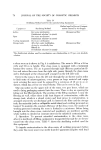
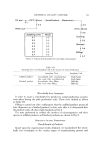
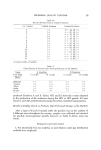
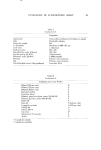
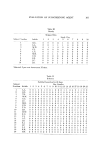
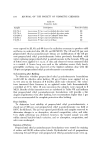
EVALUATION OF SUNSCREENING AGENT 99 Clinical Studies on Humans The clinical studies of toxicity and safety on humans employed, as was the case in the animal studies, a 5 per cent concentration of propoxylated ethyl p- aminobenzoate. This was considered to represent approximately five times the normal use concentration as is shown in the table below. 5 Per cent Propoxylated Ethyl p-Aminobenzoate Lotion Atnerscreen© P* 5.0 Alcohol SDA-40 20.0 Amerchol© L-500* 3.0 Isopropyl Lanolate 1.0 Polyoxyl 40 Stearate 2.0 Propylene Glycol Monostearate 3.0 Carbopol© 934? 0.5 Triethanolamine, 10 per cent solution 5.0 Water 60.5 Der cent Erythema was rated according to the following code: (0) no reaction (1) barely perceptible erythema (2) easily recognized erythema (3) deep red- ness and swelling. A summary of the important findings and methods used follows. (1) Photoxicity: No instance of phototoxicity was observed in the 10 healthy adnlt male volunteers who served as subjects for this test. Two-tenths ml of the test material was applied occlusively to duplicate 2 cm 2 normal and stripped skin sites on the upper backs of the subjects. Each stripped si•e received 6 minimal erythemal doses (MED) of Xenon$ solar-simulating radiation filtered through window glass. The normal site was similarly ex- posed to the same dose of long-uv after 24 hours of occlusion. Observations were made at 1-, 3-, and 24-hour intervals after irradiation. (2) Facial St'nging and Burning: No instance of facial stinging and burn- ing was observed when a 5 per cent concentration of propoxylated ethyl p- aminobenzoate was applied liberally to the face of 15 healthy adult male vol- unteers. The subjects were placed in an environmental chamber for 30 rain at 115øF with 50 per cent relative humidity. Subjects were checked at 5-, 10-, and 30-rain intervals for stinging or burning and irritation. All subjects were then checked 24 hours later. (3) Primary Derreal Irritation: No instance of primary derreal irritation on normal and stripped skin was observed on 10 healthy Caucasian adult male volunteers treated with 5 per cent propoxylated ethyl p-aminobenzoate lotion. There was an occasional transient mini,mal response on stripped skin, which is * Amerchol, Edison, N.J. •' B. F. Goodrich Chemical Co., Akron, Ohio. $Macbeth Sales Corp., Newburgh, N.Y. 12553.

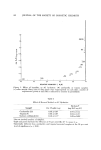
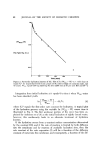
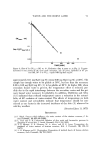
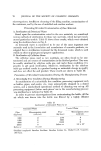
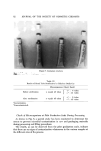
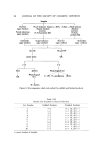
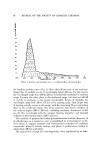
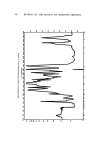
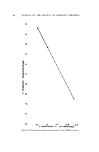
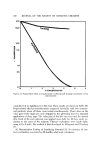
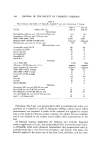
lOO 100. JOURNAL OF THE SOCIETY OF COSMETIC CHEMISTS 50.0 10.0 5.0 1.0 0.5 O.1 O I 2 3 4 5 6 % CONCENTRATION Figure 14. Propoxylated ethyl p-aminobenzoate erythemal and tanning transmission versus concentration considered of no significance in this test. These results are shown in Table III. Propoxylated ethyl p-aminobenzoate compared favorably with two cormner- cial products when all three were res,ted simultaneously. Three sites on the volar part of the right arm were stripped to the glistening layer by repeated application of clear tape. The volar part of the ]eft arm was used for normal skin. Each of the test materials was applied once daily for 10 days under oc- clusion to the arms of the subjects. Clinical evaluations were made daily, using a 0 to 4 scale. The method is that developed by Klingman and Wooding (7). (4) Maximization Testing o[ Sensitizing Potential (8): No instance of con- tact sensitization was noted on 25 healthy adult male volunteers.
Purchased for the exclusive use of nofirst nolast (unknown)
From: SCC Media Library & Resource Center (library.scconline.org)