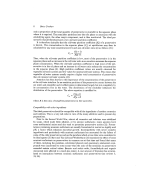
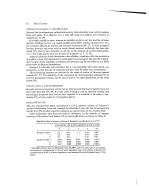
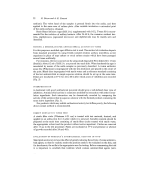
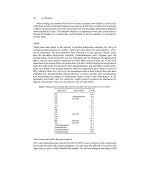
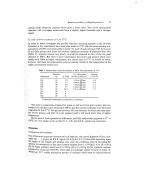
12 Betty Croshaw 2-Bromo-2-nitropropane-1, 3-diol (Bronopol) Bronopol has broadspectrum antibacterial activity with somewhat lower activity against fungi and yeasts. It is effective over a wide pH range and inhibits most bacteria at 25gg/ml (52, 53, 54). It is highly soluble in water, whereas its solubility in oils is very low and the oil/water partition coefficient is low e.g. liquid paraffin/water 0.043 arachis oil/water 0-11. It is not adversely affected by anionic and nonionic surfactants (44, 52, 55) and synergism between Bronopol and some octyl or nonyl phenol nonionic surfactants has been des- cribed (55). Since it also maintains its activity in the presence of protein hydrolysates, it is a very useful preservative for all types of shampoos (5, 7, 37, 56). Aqueous solutions slowly decompose when alkaline, sometimes with the production of a yellow colour. Decomposition is accelerated by increasing the pH and the tempera- ture. In spite of this instability at alkaline pH, BronopoI can be very effective as a labile preservative in alkaline formulations. Bronopol is odourless and colourless but it is incompatible with some metals, e.g. aluminium, so that the type of container and liner must be taken into consideration. Thiol-containing enzymes are involved in the mode of action of Bronopol against bacteria (52, 57). The selectivity of the compound for microorganisms indicated by its very low mammalian toxicity, may be due in part to its rapid metabolism by the body tissues (58). 5-Bromo-5-nitro-1, 3-dioxan (Bronidox) Bronidox has broad spectrum activity but its physical and chemical properties have not been fully described (59, 60). It is still under evaluation and its chemical stability and toxicological properties have not yet been reported. It is available as Bronidox L con- taining 10 •o of active agent in 1-2 propylene glycol. Kathon 886 (or CG) This new antimicrobial agent, consisting of a 12.8 • aqueous solution of 5~chloro-2- methyl-4-isothiazolin-3-one and 2-methyl-4-isothiazolin-3-one, also has broad spectrum activity (61). The product requires evaluation as a preservative in the cosmetic field. Some preliminary data from the author's laboratory on the stability of aqueous solutions of Bronidox L and Kathon CG at various pH levels are shown in Table II. TaMe 1I. Stability of aqueous solutions of Bronidox L and Kathon CG at 37øC * Concentration (•) of active ingredient at time in weeks 0 1 2 4 14 Bronidox L pH 4 0-2 0.14 --•' 0'14 0'09 6 0-2 0-16 -- 0'14 0-09 8 0'2 0.14 -- 0.12 0.05 Kathon CG pH 4 0'011 0'011 0'011 0'011 0'011 6 0'011 0'010 0'010 0'009 0.007 8 0'011 0-008 0'0075 0'005 0-0011 * The buffer solution used was McIlvaine's 0.2td NaaHPOa and 0'Dn citric acid. A 2• solution of Bronidox L, corresponding to 0-2 •o of active ingredient, and a 1 •o solution of Kathon CG, corresponding to 0.011 •o of active ingredients, were examined by microbiological assay. 1' Not tested.

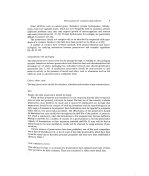
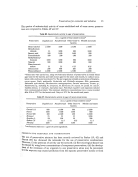
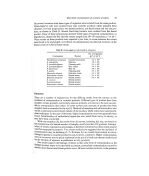
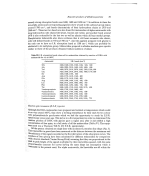
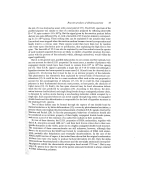
_Preservatives for cosmetics and toiletries 13 The spectra of antimicrobial activity of some established and of some newer preserva- tives are compared in Tables III and IV. Table HI. Bacteriostatic activity in agar of preservatives Preservative m.i.c. (txg/ml) of least sensitive strain* Staphylococci Pseudomona& Other Gram-re Moulds and yeasts bacteria Benzyl alcohol 3200 3200 3200 3200 Benzalkonium chloride 3'1 3200 800 1600 Benzoic acid 100 1600 1600 800 Formaldehyde 100 200 •100 200 Methylhydroxy- benzoate 3200 3200 800 1600 Nipastat 800 3200 800 800 Phenylmercuric acetate 3'1 25 6-25 6'25 Chlorocresol 200 400 200 200 Phenoxyethanol 3200 3200 3200 3200 * These tests were carried out, using two-fold serial dilution of preservatives in Oxoid blood agar base for the bacteria and malt extract agar for the yeasts and moulds, by surface inocu- lation with a multi-point inoculator (73). The test organisms included several strains of Staphylo- coccus aureus, Staph. epidermidis, Escherichia coli, Klebsiella aerogenes, Kleb. pneumoniae, Salmonella typhi-murium, Flavobacterium meningosepticum, Serratia marcescens, Proteus sp., t'seudomonas sp., including Ps. aeruginosa, t's. fluorescens, t's. cepacia, Ps. putida, Ps. stutzeri, Candida albicans, C. tropicalis, Aspergillus niger, t'enicillium roqueforti and organisms isolated from contaminated products. The minimum inhibitory concentrations (m.i.c.) were recorded after 48 h at 32øC for the bacteria and 5 days at 30øC for the moulds and yeasts. Table IV. Bacteriostatic activity in agar of newer preservatives Preservative m.i.c. (•g/ml) of least sensitive strain* Stalvhylococci Pseudomonads Other Gram-re Moulds and yeasts bacteria Germall 115 800 1600 800 3200 Dioxin 1600 1600 1600 800 Dowicil 200 200 1600 400 1600 Bronopol 25 25 25 3200 Bronidox L 501` 100 50 200 Kathon CG 12'51' 12-5 6'25 12'5 Phenonip 1600 3200 3200 1600 * see footnote Table HI. l' lzg/ml of active ingredients. PRESERVATIVE MIXTURES AND COMBINATIONS The use of preservative mixtures has been recently reviewed by Parker (19, 62) and :.• Garrett (63) has discussed the rationales for the use of preservative combinations. ß •: These are (i) the spectrum of activity can be increased (ii) the toxicological hazard can be reduced by using lower concentrations of component preservatives (iii) the develop- ment of the resistance of an organism to one preservative alone may be prevented : (iv) the response may exceed prediction from the separate preservative action or from ß
Purchased for the exclusive use of nofirst nolast (unknown)
From: SCC Media Library & Resource Center (library.scconline.org)