10 .Betty Croshaw

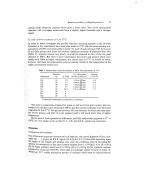
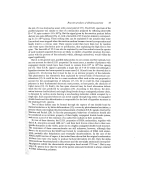
Preservatives for cosmetics and toiletries 11 6-Acetoxy-2, 4-dimethyl-m-dioxane (Dioxin) Dioxin has broad spectrum activity of a fairly low order (625 gg/ml) so that its recommended use concentration is up to 0.2 •o. It is reported to be effective over a wide pH range and is not inactivated by nonionic surfactants (13, 19, 43, 44). The compound is a water soluble Iiquid which is also miscible with oils, and there is a danger that it will migrate into the oil phase. In aqueous systems the ester group hydro- lyses to produce acetic acid which results in a slight lowering of the pH. It is claimed to be non-irritant and non-sensitizing at 1.0• concentration although, as already men- tioned, there is some more recent evidence that Dioxin may be a sensitizer (24). The main disadvantage of Dioxin is its strong odour which may affect the fragrance of the cos- metic product. Dioxin, at concentrations of 0.1-0.2 •o, was one of the compounds recom- mended for the preservation of anionic and nonionic lotions by Jacobs et al (45). Cis isomer of 1-(3-chloroallyl)-3, 5, 7-triaza-l-azonia-adamantane chloride (Dowicil 200) Dowicil 200, a type of quaternary ammonium compound, has broad spectrum (13) activity being rather more effective against bacteria (m.i.c. of 50-500 gg/ml) than against :': fungi and yeasts. Parker has found some fungi to be more tolerant of this preservative (46). It has very high water solubility and low oil solubility the oil/water partition coefficient for all the oils tested was 1.0 (47). It is unaffected by pH, nonionic and anionic snrfactants and is said to be non-irritant and non-sensitizing at concentrations up to 2-0 •o. Solutions of Dowicil 200 should not be held at high temperatures. It releases .i formaldehyde in aqueous solution (48), a factor which explains its broad spectrum activity over a wide pH range and its retention of activity in the presence of surfactants. •i'•.,'-• However, the possibility of irritancy and sensitization due to the release of formaldehyde ?.•' cannot be overlooked. ß •" :,:• Dowicil 200 is used for the preservation of shampoos (5) and at 0-1 •o was found to ?"':! be relatively effective against bacteria in a test cream, suspension and solution but . ::':,•:: ":ineffective against yeasts in the Barnes and Denton capacity test (49). It is recom- .:!i:'. :: mended as an effective preservative at 0' 1 • for an anionic and a nonionic lotion although some discoloration occurred in the anionic lotion (45). Dowicil 200 has been used :::•:?•i': . satisfactorily in Germany for the preservation of cosmetic creams, lotions and hair care ß :11:'•' iii:'Preparations because of its wide pH range and good protein compatibility (50). ß lmidazolidinyl urea compound (Germall 115) ß ,': Germall 115 is more active against bacteria than against fungi and yeasts. It is effective ,. :::: :?' over a wide pH range and is claimed to demonstrate its maximum preservation potency .: ? i .? not in screening experiments but in tests with formulations it often shows synergism •with other antibacterial preservatives (28, 51). Germall 115 is very soluble in water and :'i::::i:i.• ' almost insoluble in oils so that it remains in the aqueous phase. It is colourless, odourless, :•.::' tasteless, stable and retains its activity in the presence of proteins and surfactants. It is - said to be non-toxic, non-irritating and non-sensitizing. , A key property of Germall 115 is probably its ability to act effectively with other preservatives (51). This was confirmed by Jacobs et al (45) who found that Germall 115 ' •'with parabens preserved their nonionic and anionic lotions whereas Germall on its own i:ii-• did not. .?
Purchased for the exclusive use of nofirst nolast (unknown)
From: SCC Media Library & Resource Center (library.scconline.org)