J. Soc. Costnet. Chem. 28 25-35 (1977)¸ 1977 Society of Cosmetic Chemists of Great oeritain A spectroscopic study of the reaction products dihydroxyacetone with aminoacids A. MEYBECK Laboratoires Jeanne Gatineau, 27 rue Salvador Allende, 95870 Bezons, France Synopsis Dihydroxyacetone (DHA) has been allowed to react with a series of' aminoacids in water solution. The dark solutions or suspensions obtained, were dialysed giving brown 'pigments' (melanoidins) which were subjected to instrumental analysis. Visible absorption spectra of' their water solutions have no special features, while u.v. spectra show at best a slight maximum around 310-330 nm. I.R. spectra of all the products studied show broad bands around 3400, 1600 and 1400 cm-L All these melanoidins exhibit a strong Electron Spin Resonance (E.S.R.) signal. The E.S.R. spectra recorded in the solid state are single lines of 6-12 gauss linewidth, centred around g=2, which correspond to rather inert unpaired electrons since they can be observed in water solution as well. These data suggest that the reaction products of DHA with aminoacids, are conjugated polymers. The mechanism of skin tanning by DHA is discussed in view of these results. Introduction Although the first mention that dihydroxyacetone (DHA) makes human skin brown was published almost 50 years ago (1), still very little is known about the nature of the pig- ments formed. Soon after the first suntan-simulating cosmetic preparations appeared on the market, it was found that aminoacids were able to form brown or black products with DHA (2-4) and it is generally admitted now, that its tanning effect on skin is due to a : ::'.:•-•i' condensation with amino groups of keratin and aminoacids released by sweat. The purpose of the present work was to isolate the ultimate coloured pigments formed in the .reaction of aminoacids with DHA, which are very similar to the melanoidins formed in their so-called MAILLARD reaction with sugars (5), and to carry out a complete i•: i: i: i::' • ..spectroscopic study of these products in order to gain more information about their i structure. •.. ??':: Experimental and results I. REACTIONS CARRIED OUT AT 100øC :i/:?,i. Equimolar quantities (0.1 or 0.05 tool) of DHA and aminoacids usually in 25 ml of water, :ii. •:i! were allowed to react at 100øC on a steam bath for 4 h with refluxing. In some cases ?!ii:?•11 (especially when the aminoacid was not soluble enough) a greater amount of water was ?:'/':?used (50 or 100 ml) and, or, an equimolar quantity of alkali (triethanolamine or sodium :?:•:'! hydroxyde) was added. The reaction started almost immediately with formation of •:/? :•:.::colour: yellow, then red and finally dark brown. In most cases a gas evolution was :i)?! i:' noticeable Some experiments have also been carried out at 37øC using the same quan- ::i•::i ,!:f ?• tities of reactants but for longer periods, usually 24 h. 25

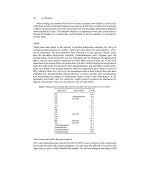
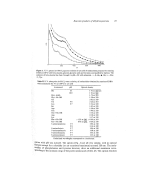
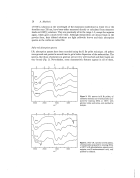
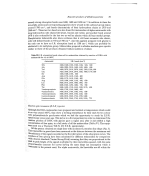
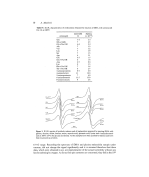
26 A. Meybeck After cooling, the resultant dark brown viscous mixtures were diluted to about four times their volume and dialysed against tap water for at least 48 h. All the lower molecular weight coloured products were thus eliminated and only the highly polymerized pigments were retained for study. The dialysed solutions or suspensions were then evaporated to dryness by heating on a steam bath, and the black or brown residues were ground to powder form. Yields Yields have been taken as the amount of purified melanoidin collected, for 100 g of starting material (aminoacid + DHA). Table I gives the values thus calculated for a num- ber of aminoacids. The best yields have been obtained for lysine, glycine, alanine, serine and the non-alpha aminoacids, especially 6-aminohexanoic acid. Arginine gave the poorest yield, a result which does not very well agree with the finding by Wittgenstein (4) that it was the most reactive aminoacid towards DHA and probably one of the most important in its tanning effect on human skin. It is also worth noticing that for glycine at least, less melanoidin was produced when triethanolamine and especially sodium hydro- xyde, was added to the reaction medium. Only two aminoacids gave values in excess of 20• which is rather low, but it is to be remembered that at least some of the acids have probably been decarboxylated with production of carbon dioxide, that condensations and polymerizations leading to melanoidins imply at least some dehydration of the molecules, and finally that low molecular weight reaction products are eliminated by dialysis, all processes which can account for loss of solid matter. Table I. Melanoidins recovered after reaction of DHA with aminoacids for 4 h at 100øC Aminoacid Alkali added • Yield Gly 16-4 Gly triethanolamine 9'9 Gly Na OH 5-8 Ala 12-3 Val 9.5 Leu 6.5 Set 12.2 Asp 2-3 Glu 3.0 Glu Na OH 5-2 Arg 1.7 Lys 29.7 Phe Na OH 10'7 Tyr Na Olt 2'4 3-aminopropionic 11.7 4-aminobutyric 14.3 5-aminopentanoic 10.8 6-aminohexanoic 23.0 Ultra-violet and visible absorption spectra U.V. and visible absorption spectra of 0-005 or 0.01 •o water solutions of the melanoidins have been recorded with regular equipment. In some cases the pH had to be raised with ammonia in order to fully solubilize the samples. No obvious change in the shape of the
Purchased for the exclusive use of nofirst nolast (unknown)
From: SCC Media Library & Resource Center (library.scconline.org)