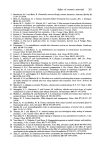
The mechanism of skin pigment production 401 9 Mason, H. S., Ingram, H. E. and Allen, B. Free radical property of melanins. Arch. Biochern. Biophys. 86 225 (1960). 10 Pullman, A. and Pullman, B. The band structure of melanins. Biochem. biophys. Acta 54 384 (1961). 11 Van Woert, M. H. Oxidation of reduced nicotinamide adenine dinucleotide by melanin. Life Sci. 6 2605 (1967). 12 Van Woert, M. H. Reduced nicotinamide-adenine dinucleotide oxidation by melanin: inhibition by phenothiazines. Proc. Soc. Exp. Biol. Med. 129 165 (1968) 13 Gan, E. V., Haberman, H. F. and Menon, I. A. Electron transfer properties of melanin. Arch. blochem. biophys. 173 666 (1976). 14 Sarna, T., Hyde, J. S. and Swartz, H. M. Ion-exchange in melanin: An electron spin resonance study with lanthanide probes. Science. 192 1132 (1976). 15 Slater, T. F. and Riley, P. A. Photosensitisation and lysosomal damage. Nature 209 151 (1966). 16 Pathak, M. A. and Stratton, K. Free radicals in human skin before and after exposure to light. drch. Biochem. biophys. 123 468 (1968). 17 Riley, P. A. Dendritic Cells of the Epidermis. ln: Physiology and Pathophysiology of the Skin (ed. A. Jarrett) pp. 1101-1235. Academic Press, London (1974). 18 Proctor, P., McGinness, J. and Corry, P. A hypothesis on the preferential destruction of melanised tissues. J. theoret. biol. 48 19 (1974). 19 Fling, M., Horowitz, N.H. and Heinemann, S. F. The isolation and properties of crystalline tyro- sinase from Neurospora. J. Biol. Chem. 238 2045 (1963). 20 Gutteridge, S. and Robb, D. The catecholase activity of Neurospora tyrosinase. Eur. J. Biochern. 54 107 (1975). 2l Jolley, R. L., Evans, L. M., Makino, N. and Mason, H. S. Oxytyrosinase. J. Biol. Chem. 249 335 (1974). 22 Mason, H. S. The structure and functions of the phenoluse complex. Nature 177 79 (1956). 23 Lerch, K. and Ettlinger, L. Purification and properties of a tyrosinase from Streptomyces glaucescenr. Pathol. microbiol. (Basel) 38 23 (1972). 24 Holstein, T. J., Quevedo, W. C. and Burnett, J. B. Multiple forms of tyrosinase in rodents and lagomorphs with special reference to their genetic control in mice. J. exp. Zool. 177 173 (1971).

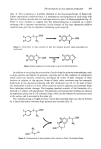
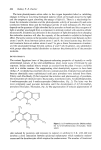
J. Soc. Cos•net. Chem. 28 403-406 (1977) ¸ 1977 Society of Cosmetic Chemists of Great Britain Enhancement of pigmentation: psoralens RODNEY P. R. DAWBER Consultant Dermatologist, Radcliffe Infirmary and Slade Hospital, Oxford Presented at the Joint Symposium with the Pharmaceutical Society of Great Britain "Cosmetic and Pharmacological Aspects of Colour" 9-11 November 1976, at Stratford upon Avon. Synopsis Biological extracts of various common plants have been used in depigmenting conditions for many centuries to enhance pigmentation. Specific photodynamic chemicals have been extracted from such sources--psoralens. Synthesis of these substances in 1947 led to detailed laboratory and clinical investi- gation of their mode of action and effectiveness in increasing normal pigmentation and repigmenting vitiliginous skin. The theoretical fear that long-term psoralen and ultraviolet radiation treatment might induce skin turnours has not so far been realised in practice. INTRODUCTION Psoralens belong to a group of heterocyclic compounds known as furocoumarins and are found in many edible plants, e.g. celery, caraway and figs. They have formed the basis of many herbal remedies used in recent centuries, mostly extracted from the two plant families Umbelliferae and rutaceae, though furocoumarins are somewhat ubiquitous throughout the plant kingdom. These substances appear to have a variety of physio- chemical properties which in general contribute towards the survival of the plant syn- thesising them. Specifically they inhibit the growth of certain potentially harmful parasitic plants, possess natural growth regulating properties, and some have important antifungal, antibacterial and antiviral actions. Figure 1. Psoralen. CHEMICAL STRUCTURE AND PHOTODYNAMIC ACTIVITY Furocoumarins are formed from coumarin which is produced by the fusion of a pyrone ring with a benzene nucleus. A furan ring may be condensed with a coumarin molecule in twelve different ways producing compounds which can each become the parent of a family of psoralen-like derivatives. However, only those with a linear tricyclic structure resembling psoralen (Fig. 1) have important photodynamic, photosensitising and pig- menting actions. 332'/4• i I '1' 0 '/ '0' ""' 0 403
Purchased for the exclusive use of nofirst nolast (unknown)
From: SCC Media Library & Resource Center (library.scconline.org)