Activity and safety of Bronopol 15 time for the Bronopol diacetate (relative retention time = 1.00) to that for n-pentadecane (relative retention time = 1.54) was calculated and compared with the ratio for a standard containing purified Bronopol which had been similarly treated. The relative standard deviation of the method was found to be 1'5•o. Based on the trimethylsilylatedmaterial. The sample (about 0.15 g, accurately weighed was dissolved in 15 ml of chloroform with the aid of minimum heating, 4 ml of a 1.4•o solution of n-tridecane (as internal standard) in chloroform was added and the solution diluted to 25 ml. To 1 ml of this solution in a vial was added 0.1 ml of silylating reagent (prepared by mixing trifluoroacetic acid (1 part) and hexamethyldisilazane (2 parts) and filtering the mixture rapidly under dry conditions), the vial was sealed and then heated on a steam bath for 1 h. The mixture (1 •tl) was subjected to g.l.c. in a glass column (152 cm x 3 mm) packed with 10•o of silicone JXR on Gas Chrom Q (80 to 100 mesh), operated at 125 ø C. with nitrogen (40 ml min -x) as carrier gas and flame ionisation detection. The ratio of the product of the peak height and retention time for Bronopol di(trimethylsilyl)ether (relative retention time= 1.92) to that for n-tridecane (relative retention time= 1.00) was calculated and compared with the ratio for a standard con- taining purified Bronopol which had been similarly treated. Thin Layer Chromatographic Assay. 10}/o Bronopol solution was examined by t.l.c. and bioautography using 0.25 mm Kieselgel 'G', with chloroform/methanol (4: 1) as developing solvent. 2 [tl aliquots of the solution were spotted on the plates. A similar method for ointment formulations has been devised using an initial water:chloroform extraction system to remove excipients, followed by chromatography on Kieselgel GF•.5• using isopropanol as the developing solvent. Determination of Bromide ion. Bromide ion was determined by potentiometric titration. Bronopol solution (5 ml) was acidified and titrated with 0.02M silver nitrate solution. Determination of Formaldehyde. Formaldehyde was determined by reaction with chromo- tropic acid. 0'2•o Bronopol solution (0.5 ml) was diluted to 25 ml with 12N sulphuric acid. To this solution (1 ml) was added a 5•o solution of chromotropic acid in 12•q sulphuric acid (1 ml) and the mixture heated at 100øC for 30 min. Concentrated sulphuric acid (2 ml) was added and the absorbance at 570 nm measured against the appropriate blank. Determination of Nitrite and Nitrate. Nitrite and nitrate were determined by reaction with 2,6-xylenol before and after decomposition of nitrite with sulphamic acid. This method was not used after the preliminary work as the results were in good agreement with the polarographic estimation of alkyl nitro-groups. TOXICOLOGY Metabolism After oral administration of [•C]Bronopol, radioactivity was rapidly absorbed and evenly distributed in tissues of the rat and dog, Moore et al. (19). Excretion was also rapid, the majority of the dose being excreted within 24 h. Bronopol was rapidly and extensively metabolised so that no unchanged compound was detected in plasma and urine. It has been shown in vitro that Bronopol is unstable in

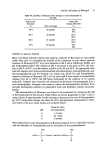
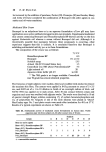
16 D. M. Bryce et al. plasma. The major urinary metabolite, accounting for more than 40}/o of administered radioactivity, was 2-nitropropane-l,3-diol. Other minor metabolites have not been identified. Complete metabolism was demonstrated by the finding of significant amounts of radioactivity in expired air and the appearance of a small amount of radioactivity in the tissues of dosed animals. When applied in acetone solution to rat skin, a smaller proportion of the dose was absorbed than when dosed orally, Moore et al. (20). This may in part be due to the small area of skin to which the dose was applied. When p4C]Bronopol was applied in acetone solution to the skin of rabbits, the radioactivity was mainly localised on the epidermis around hair follicles, suggesting that limited percutaneous absorption may occur through the hair follicles. The pattern of urinary metabolites was similar when the compound was administered orally or percutaneously, indicating no difference in metabolism related to the route of administration. Acute Toxicity Bronopol administered in single doses by the oral and intraperitoneal routes to rodents caused gastrointestinal lesions and peritonitis. The LD50 values are shown in Table VII. A small number of rats were injected subcutaneously with Bronopol and those that died had haemorrhage and oedema at the site of injection, stomach lesions and lung congestion and oedema. The LD50 was approximately 200 mg/kg. After dermal application to rats of acetone solutions of Bronopol using the procedure of Noakes and Sanderson (21), death occurred at 160 mg/kg or more. Oral administration of single doses of 40 or 100 mg/kg to dogs caused gastric irrita- ion but no permanent injury. No methaemoglobinaemia was observed in cats over a 24 h period following a maximum single oral dose of 25 mg/kg of Bronopol, whereas a marked rise in blood methaemoglobin concentration followed 20 mg/kg of acetanilide. Chronic Toxicity In repeated-dose studies the observations and laboratory investigations generally included signs of poisoning, body-weight, food consumption, haematology, blood biochemistry, ophthalmoscopy, organ weights, macroscopic appearance at autopsy and histopathology, Gastrointestinal lesions, respiratory distress and some deaths resulted from daily admini- stration of 80 or 160 mg/kg of Bronopol by oral intubation to male and female rats for 90 days whereas doses of 20 mg/kg were well tolerated. When Bronopol was given in the drinking water, rats maintained on 160 mg/kg/day for six weeks had a reduced water intake and slightly enlarged kidneys while among those given the highest dose level of 300 mg/kg/day a few deaths occurred. In dogs given a maximum daily dose of 20 mg/kg by oral intubation for 90 days, apart from some vomiting, there were no significant toxic reactions. Aqueous 2'5•o methyl cellulose solutions containing 0.2 or 0'5•o Bronopol were applied once daily at a dosage of 1 ml/kg for 3 weeks to the clipped and abraded dorsal skin of rabbits. The vehicle alone and the 0.2• Bronopol solution elicited local skin erythema and the 0.5•o Bronopol solution produced moderate erythema, oedema and scabbing, otherwise the rabbits showed no ill-effects clearly attributable to treatment.
Purchased for the exclusive use of nofirst nolast (unknown)
From: SCC Media Library & Resource Center (library.scconline.org)