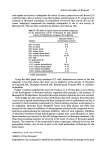
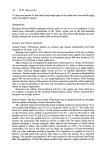
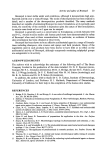
Activity and safety of Bronopol 7 such agents are known to antagonise the action of many preservatives and Brown (15) confirmed that a plot of activity versus the log phase concentrations of Ps. aeruginosa for solutions of Bronopol containing 1• polysorbate 80 showed that activity did not de- crease. Sulphydryl compounds are markedly antagonistic to the in vitro activity of Bronopol (3). This has been confirmed by Stretton and Manson (I6). Table IV. The effect of organic matter and possible antagonists on the bacteriostatic activity of Bronopol by Agar dilution (strains of Pseudornonas aeruginosa test organism) Decrease (-fold) in Additive bacteriostatic activity* 10•o ox serum 0-2 50•o ox serum 4-8 10• human serum 2 50•o human serum 4 10• oxalated horse blood 4-8 50•o oxalated horse blood 32-64 10•o milk 0 1• polysorbate 80 0 0.1Yo lecithin 0 0.1 •o cysteine hydrochloride 16-64 0'1•o sodium thioglycollate 8-16 0'1•o sodium thiosulphate 4-16 0.01% sodium metabisulphite 8-16 * 2-fold serial dilution. Using the filter paper strip technique (17) with Staphylococcus aureus as the test organism, it has been shown that there was no inhibition of the activity of Bronopol by Cetrimide BP, Domiphen Bromide BP, Benzalkonium Chloride BPC or trichloro- carbanilide. Further work has confirmed the report by Croshaw et al. (3) that there is no evidence of the development of Bronopol-resistant organisms after passage in the presence of Bronopol for 20 subcultures. In practice Bronopol-resistant organisms have not occurred. Some insight into the mode of action of Bronopol has been obtained. Since Bronopol is more active against metabolising cells than resting cells and its antibacterial activity is reversed by thiol-containing compounds (3), thiol-containing enzymes would appear to be implicated. Bronopol forms disulphide bonds from thiol groups and these may account for the observed inhibition of dehydrogenase activity by the compound at con- centrations approximating the minimum inhibitory value for each organism. Inhibition of microbial membrane-bound dehydrogenase enzymes may cause alterations in mem- brane structure and account for the cell leakage observed on Bronopol treatment (16). Thus thiol-containing enzymes are involved in the mode of action of Bronopol against bacteria. The selectivity of the compound for micro-organisms, indicated by its very low mammalian toxicity, may be due in part to the rapid metabolism of Bronopol by the body tissues. CHEMICAL AND ANALYTICAL Stability of Pure Bronopol Experiments were conducted to establish the stability of Bronopol on storage in the pure

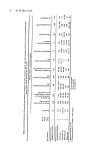
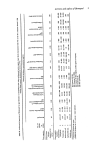
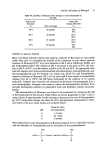
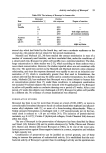
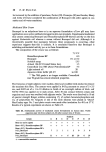
8 D.M. Bryce et al. solid state. The results, shown in Tables V and VI, demonstrate no evidence of instability over a period of one year's storage at temperatures up to 45 ø, and at elevated humidity. No photodecomposition was observed at room temperature over this period. Samples of Bronopol stored in the dark at room temperature over periods up to 2 years also show no evidence of decomposition. All the assays were carried out by gas-liquid chromato- graphy (g.l.c.) using the trimethylsilylation procedure described later in the section on analytical methods. Both the internal standard and normalisation methods were utilised. Initial assays were by g.l.c. using n-pentadecane as the internal standard after acetyla- tion. Since that time, the trimethylsilylation procedure described later has been developed in order to achieve an improvement in precision. Assays after storage were done by this latter method, using the internal standard technique. Table V. Stability of Bronopol during storage g.l.c. (internal standard method) g.l.c. (normalisation method) Bronopol Bronopol Impurity at RT(rel) 0.62 Storage conditions % % •o Initial 100.0 99.6 0.45 weeks, at 20 to 25øC (a) at normal RH 99.5 99.6 0.43 (b) at 90•o RH 100.3 99.6 0.41 at 37øC 99.9 99.6 0.39 at 45øC 99.7 99.6 0.39 in north window 100.4 99.6 0.43 weeks at 20 to 25øC (a) at normal RH 99.7 99.6 0.40 (b) at 90•o RH 99.9 99.6 0.39 at 37øC 100.0 99.6 0.41 at 45øC 99.4 99.6 0.41 in north window 100.1 99.6 0.44 12 weeks at 20 to 25øC (a) at normal RH 99.8 99.5 0.49 (b) at 90•o RH 100-1 99.6 0.41 at 37øC 100.2 99.5 0.46 at 45øC 99.6 99.6 0.44 in north window 99.8 99.6 0.44 52 weeks at 20 to 25øC (a) at normal RH 100.2 99.5 0.50 (b) at 90•o RH 99-2 99-5 0.47 at 37øC 100.3 99.5 0.46 at 45øC 100-3 99.5 0.46 in north window 99.3 99.4 0.51 RH =relative humidity. Rx(rel)--relative retention time.
Purchased for the exclusive use of nofirst nolast (unknown)
From: SCC Media Library & Resource Center (library.scconline.org)