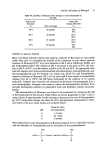
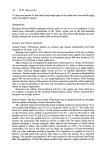
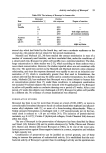
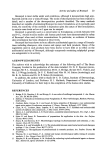
Activity and safety of Bronopol Table VIII. The irritancy of Bronopol to human skin 19 Base Bronopol Positive concentration • skin response Degree of reaction Soft Paraffin 0 0/10 -- 0.5 0/10 -- 1 2/10 both slight erythema 2 4/10 all moderate erythema Aqueous 0 0/10 -- buffer 0.50 0/10 -- pH 5.5 0.1 0/10 -- 0.25 1/10 slight erythema second day which had faded by the fourth day, and one a moderate erythema on the second day this patient did not return for the second examination. Marzulli and Maibach (23, 24) have studied the contact sensitisation in man of a number of commonly used biocides and have concluded that, under the conditions of a closed patch test, Bronopol in yellow soft paraffin was a potential sensitizer. The chal- lenge concentration in these studies was 2'5•o which according to these authors was a non-irritant concentration. However, the studies reported above are not consistent with this view. The patch tests carried out by Marzulli and Maibach showed a dose-response relationship, and since the response decreased very rapidly to zero at an induction con- centration of 2•o which is considerably greater than that used in formulations, the authors inferred that Bronopol may be safely used in cosmetic formulations. In a further study, Maibach (25), has confirmed that Bronopol was a direct irritant to human skin at concentrations greater than 15/o under these conditions. A subsequent sensitisation test included 93 normal subjects who were induced with 10 applications of 5•o Bronopol in yellow soft paraffin under an occlusive dressing over a period of 3 weeks. After a rest period of 2 weeks the subjects were challenged at 0'25•o Bronopol in yellow soft paraffin at a different site. No evidence of contact sensitisation was observed. FORMULATION STUDIES Bronopol has been in use for more than 10 years at a level of 0.01-0.02• or more in conventionally formulated shampoos based on sodium lauryl ether sulphates and alkanol- amine alkyl sulphates with 2• or more of a foam-boosting alkanolamide. When a freshly prepared formulation is challenged with 1 x 10 ø pseudomonads per ml the bac- terial count is reduced to 10 per ml within 24 h. The inclusion of protein-derived materials, e.g. 0.1-0.$• Crotein C (hydrolysed collagen, Croda Chemical Ltd) does not affect this result. The use of Bronopol in the preservation of shampoos has been described by Bryce and Smart (14), Schuster (26) and in protein shampoos by Tuttle, Phares and Chiostri (27). Barnes and Denton (28) found Bronopol at 0.02• to be one of the most satis- factory preservatives against Gram-negative bacteria in a cream, suspension and solution in their capacity test. Combinations of preservatives can be justified on several grounds, one of these being to increase the spectrum of antimicrobial activity. It is established that the anti- bacterial activity of Bronopol is greater than its antifungal activity and its spectrum can

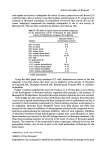
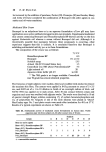
20 D.M. Bryce et al. be increased by the addition of parabens, Parker (29). Proserpio (30) and Jacobs, Henry and Cotty (31) have considered the combination of Bronopol with other agents in cos- metics and oil-water emulsions. Medicated Skin Cream Bronopol in an anhydrous base or in an aqueous formulation of low pH may have applications as an active antibacterial agent in skin care products. Experimental medicated skin creams containing Bronopol and Hexachlorophane BP showed activity on the skin against Escherichia coli whereas a cream without Bronopol did not. Although it is theoretically possible that synergism between these compounds is occurring, other experience suggests that this is unlikely. It is concluded therefore that Bronopol is exhibiting antibacterial activity per se in these formulations. The composition of the cream was as follows: % w/w Hexachlorophane BP 0.5 Bronopol 0.1 or 0.2 Sorbitol syrup 13.5 Arlacel 186 (ICI United States Inc.) 1.5 Cosmolloid wax 70H (Astor Petrochemicals)* 7.5 Light mineral oil 20 Aqueous citrate buffer pH 4.5 to 100 * The 70H grade is no longer available. Cosmolloid wax 70 grade has almost identical properties. The forearms of eight subjects were washed, dried and swabbed with alcohol to remove the transient skin flora. The creams were applied in 0.05-g amounts to areas of 5 x 2.5 cm, and 0.025 ml of a 1 in 10 dilution in broth of an overnight culture of Esch. coli NCTC 5934 was applied on to each cream. After 30 rain contact between cream and organism each area was swabbed with alginate swabs. The swabs were dissolved in 10 ml of quarter strength Ringer solution containing 1 •o of sodium hexametaphosphate and 1•o of polysorbate 80. Aliquots (1 ml) of the swab diluents were plated in 'Oxoid' MacConkey agar No. 3 and plate counts were made after incubation for 48 h at 37øC. Results of a typical experiment are shown in Table IX. Table IX. Antibacterial activity of medicated cream formulations on human skin. Viable organisms (per ml) from subjects (A-H) after contact time of 30 min Subjects Cream A B C D E F G H Base (no active agen0 + + + + + + + + Base+ 0'5•o Hexachlorophane BP + + + + + + + + Base+ 0'5•o Hexachlorophane BP+ 0.2•o Bronopol 7 2 1 1 2 0 3 9 Base + 0'5•o Hexachlorophane BP+ 0-1•o Bronopol 11 + + 6 20 20 0 29 + = uncountable numbers.
Purchased for the exclusive use of nofirst nolast (unknown)
From: SCC Media Library & Resource Center (library.scconline.org)