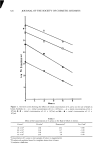
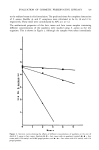
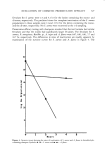
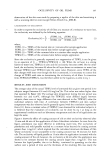
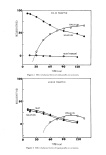
EVALUATION OF COSMETIC PRESERVATIVE EFFICACY 331 5. aureus and P. aeruginosa 2) bacteria not known to be pathogens and 3) yeasts and molds. It is believed that pathogens should be inactivated completely in 24 hr in multiple-use products intended for application in or around the eye and for baby products. Thus, a product should have a D-value of _4 hr so that 106 pathogens/g will be inactivated completely in 24 hr. The 24-hr timing is considered appropriate because this provides time for the product to "cleanse" itself before use one day later. The CTFA guidelines for acceptable microbial levels in cosmetic products allow no recognized pathogens and different levels of nonpathogenic organisms in cosmetics for general use and in cosmetics intended for use in and around the eye or on babies (9). It seems appropriate that general use products would not need to have the same preservative requirements as those used on sensitive skin or in sensitive areas. Although specific guidelines need to be established for each product, it is believed that D-values of _28 hr are realistic and attainable for nearly all nonpathogenic bacteria, yeasts and molds. This would enable the preservative system to inactivate 106 organism/g in one week. The linear regression method is offered as an alternate procedure to current methods of preservative efiScacy testing. The rapid method offers the advantages of obtaining results in a few days, quantitation of the rates of death of specific organisms in products, and estimation of the time required for complete destruction of any size microbial population. It is believed that this method will be useful in determining additive vs. synergistic effects of combinations of cosmetic preservatives, and in other areas where quantitative information about the antimicrobial properties of cosmetic formulations is desired. The data presented in this report used linear regression analysis to determine D-values and to estimate the time for complete destruction of microbial populations. Similar information may be obtained by graphical means. ACKNOWLEDGMENT The author thanks Dr. Jon Kabara for supplying the Lauricidin ©. REFERENCES (1) R. A. Cowen and B. Steiger, Antimicrobial activit¾--a critical review of test methods of preservative efficiency, J. Soc. Cosmet. Chem., 27,467-481 (1976). (2) Anon, "Microbiological tests, antimicrobial preservatives--effectiveness," United States Pharmacopeia XIX, The United States Pharmacopeial Convention, Rockford, Md., 1975 pp 587-592. (3) Preservation Subcommittee of the CTFA Microbiological Committee, A guideline for the determina- tion of adequacy of preservation of cosmetics and toiletry formulations, TGA Cosmet. Journal, 2, 20-23 (1970). (4) M. Barnes and G. W. Denton, Capacity tests for the evaluation of preservatives in formulations, Soap, Perfumery & Cosmetics, 42,729-733 (Oct. 1969). (5) H. S. Bean, Preservatives for pharmaceuticals,J. Soc. Cosmet. Chem., 23,703-720 (1972). (6) O. Rahn, Physical methods of sterilization of microorganisms, Bacteriol. Rev., 9, 1-47 (1945). (7) C. R. Stumbo, Thermobacteriology in Food Processing, Academic Press: New York, N.Y., 1965 pp 56-59. (8) B. Croshaw, Preservatives for cosmetics and toiletries,J. Soc. Cosmet. Chem., 28, 3-16 (1977). (9) Microbial Content Subcommittee of the CTFA Microbiology Committee, Microbiological limit guidelines for cosmetics and toiletries, CTFA (1973).

j. Soc. Cosmet. Chem., 30, 333-343 (November 1979) Transepidermal water loss from dry and normal skin J. L. LEVEQUE, J. C. GARSON and J. de RIGAL Groupe de Physique, Laboratoires de Recherche de L'OREAL, I, avenue de Saint- Germain 93600 AULNA Y- sous- BOIS, FRANCE. Received April 30, 1977. Synopsis In order to study the physical and chemical properties of the STRATUM CORNEUM (S.C), a new method for the MEASUREMENT of TRANSEPIDERMAL WATER LOSS has been developed. The method is based on the increase of the dielectric permittivity of air with increase in water vapor content. The method is very sensitive and affords a means of investigating the phenomenon of transepidermal water loss with a good degree of precision and thus of examining the clinical problem of "DRY SKIN." MEASUREMENT OF TRANSEPIDERMAL WATER LOSS (TEWL) INTRODUCTION If we pull off an adhesive paper which has been applied to the skin, we tear off some cornified cells from the epidermis. By repeating this operation (stripping) on the same site, we pull away the whole of the stratum comeurn (S.C.). The TEWL value after each stripping increases slowly at first, then more rapidly, finally attaining the value obtained when water vapor is released from a water surface. This experiment, conducted for the first time in 1953 by Blank (1), showed clearly that the main function of S.C. is to limit exchanges between the human body and its close environment in an efficient manner. Thus, in order to obtain information on the functional state of S.C., TEWL is a very important parameter to measure. However, it is difficult to determine TWEL with accuracy for several reasons: 1. The small amount of water vapor involved (0.5 mg/cm2/hr) is difficult to measure. 2. Measurement devices often interact with the horny layer. 3. Physical parameters (relative humidity and temperature), and biological and/or/psy- chological conditions need to be monitored strictly. The first devices employed for the measurement of TEWL were based on dry nitrogen flow collecting water vapor while passing over the skin surface. No matter which device was used to measure the amount of water vapor present in the gas flow, the results were questionable, thus: ß measured amounts of water are partly TEWL and partly water of hydration (free and bound). 333
Purchased for the exclusive use of nofirst nolast (unknown)
From: SCC Media Library & Resource Center (library.scconline.org)